AI Security Architecture: Building Adaptive Defences for Intelligent Threats
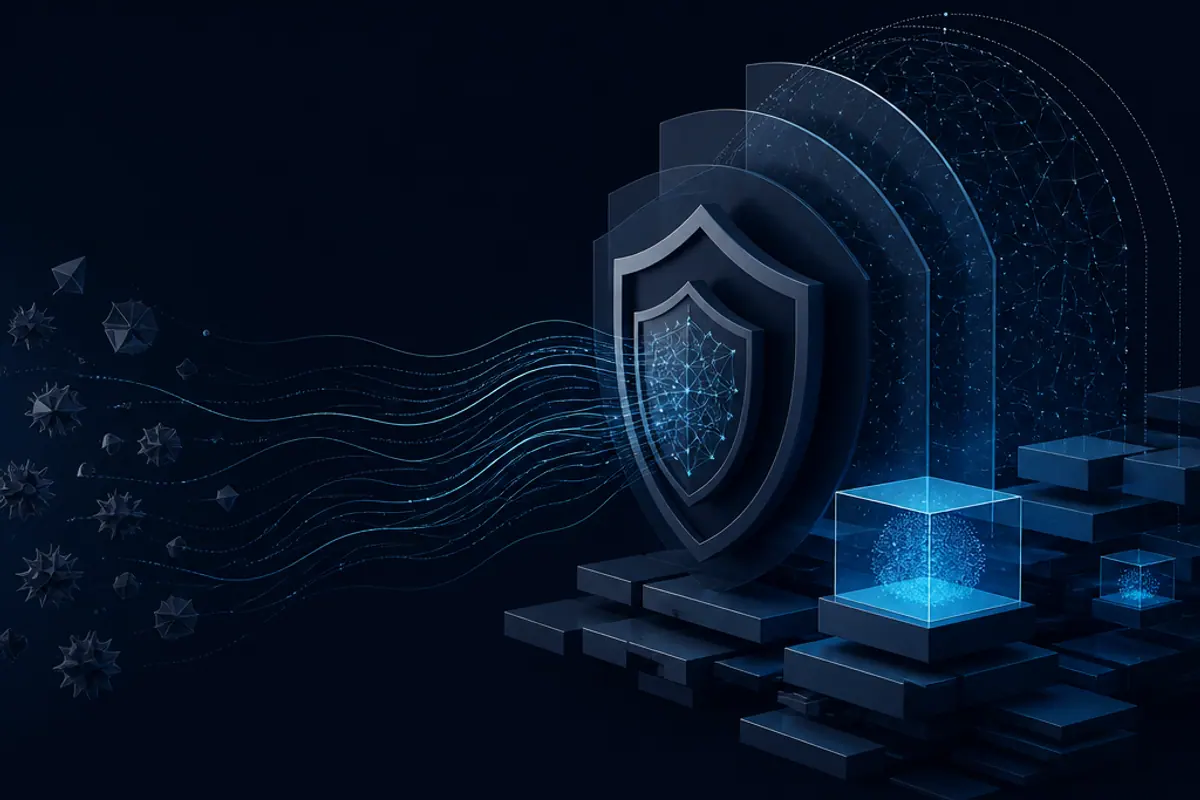
Adaptive AI security architecture is a defensive design approach that lets systems learn, adjust, and respond to attacks as they evolve, rather than relying on fixed rules and known threat signatures.
The organisations that successfully defended against the SharePoint attack weren't those with the most expensive security tools - they were those with adaptive security architectures that could evolve defensive strategies in real-time. Traditional security architectures prove inadequate against AI threat evolution because they assume static attack patterns and human-speed threat development.
For security leaders implementing comprehensive AI governance and preparing for intelligent attacks, security architecture represents the foundational capability that determines whether defensive investments create genuine protection or expensive false security.
The Architecture Evolution Imperative
Traditional security architectures create static defences that become obsolete the moment AI attacks begin adapting. This architectural mismatch represents the fundamental reason why increased security spending often fails to improve protection against sophisticated threats.
Static Architecture Limitations
Perimeter-Based Defence Obsolescence Conventional security architectures assume attackers must penetrate defined perimeters to access valuable assets:
Network Boundary Assumptions: Traditional architectures assume network perimeters can be defined and defended, whilst AI attacks exploit cloud services, mobile devices, and IoT systems that transcend network boundaries
Inside-Outside Trust Models: Conventional architectures assume internal systems and users are trustworthy, whilst AI attacks manipulate trusted insiders and compromise internal systems for extended periods
Checkpoint-Based Validation: Traditional architectures validate access at specific checkpoints, whilst AI attacks adapt credentials and permissions dynamically to avoid detection
Static Policy Enforcement: Conventional architectures enforce predetermined policies, whilst AI attacks identify and exploit policy gaps and inconsistencies in real-time
Signature-Based Detection Failure Traditional architectures rely on recognising known attack patterns that AI systems bypass through continuous adaptation:
Known Threat Pattern Matching: Conventional architectures detect attacks by matching against databases of known threat signatures, whilst AI attacks generate novel signatures continuously
Update Cycle Dependencies: Traditional architectures depend on periodic signature updates, whilst AI attacks evolve faster than update cycles can deploy countermeasures
Binary Classification Limitations: Conventional architectures classify activities as malicious or benign, whilst AI attacks operate in grey areas that exploit classification limitations
Context-Independent Analysis: Traditional architectures analyse activities in isolation, whilst AI attacks coordinate activities across multiple systems and timeframes to avoid detection
Understanding how AI attacks exploit these architectural limitations reveals why organisations need fundamentally different defensive approaches.
The Adaptive Architecture Paradigm
Intelligence-Based Defence Evolution AI security architecture uses artificial intelligence to defend against artificial intelligence, creating defensive systems that adapt as fast as the attacks they face:
Behavioral Pattern Learning: Defensive AI systems learn normal operational patterns and identify deviations that indicate potential attacks, adapting their understanding as organisational operations evolve
Attack Strategy Prediction: AI defensive systems model attack progression and predict likely attack evolution, enabling proactive defensive measures before attacks fully develop
Real-Time Adaptation: Defensive architectures modify their protective strategies in real-time based on attack behaviour and environmental changes
Cross-Domain Intelligence Integration: AI defensive systems correlate information across technical systems, human behaviour, and business processes to identify coordinated attacks
Resilience-Focused Architecture Design Rather than preventing all attacks, adaptive architectures build organisational capacity to function effectively even when sophisticated attacks succeed:
Graceful Degradation: Systems that maintain critical functions even when components are compromised or under attack
Rapid Recovery: Architectural components that restore normal operations quickly after attacks, with lessons learned integrated into improved defensive capabilities
Attack Isolation: Architecture that prevents attack spread whilst maintaining business continuity for unaffected systems and processes
Strategic Continuity: Business process architecture that maintains strategic decision-making capability even when supporting systems are compromised
The VerityAI Security Architecture Framework
Effective AI security architecture requires systematic integration across defensive intelligence, adaptive response, resilience engineering, and strategic protection layers.
Layer 1: Defensive Intelligence Foundation
AI-Powered Threat Detection The foundation layer provides intelligent threat detection that adapts to evolving attack patterns:
Behavioral Analysis Systems
Normal Pattern Learning: AI systems that learn normal operational patterns across technical systems, user behaviour, and business processes, adapting to legitimate changes whilst identifying anomalies
Attack Behavior Recognition: Machine learning systems that identify attack behaviors based on pattern analysis rather than signature matching, recognising novel attack techniques
Cross-System Correlation: AI systems that correlate activities across multiple systems and domains to identify coordinated attacks that might appear benign in isolation
Temporal Pattern Analysis: AI systems that analyse activity patterns over time to identify long-term attack campaigns and persistent threats
Predictive Threat Intelligence
Attack Evolution Modelling: AI systems that model how current attacks might evolve and predict likely attack progression to enable proactive defensive measures
Vulnerability Prediction: Machine learning systems that predict likely vulnerabilities based on system configurations, usage patterns, and threat evolution trends
Impact Assessment: AI systems that predict attack impact across business operations, enabling priority-based defensive resource allocation
Threat Landscape Analysis: AI systems that analyse global threat intelligence to predict threats that might target the specific organisation
Intelligence Integration Systems
External Threat Intelligence: Integration of external threat intelligence sources with internal analysis to provide comprehensive threat awareness
Industry-Specific Intelligence: Integration of industry-specific threat intelligence that addresses sector-unique attack patterns and vulnerabilities
Regulatory Intelligence: Integration of regulatory requirement changes and compliance intelligence that affects security architecture requirements
Strategic Intelligence: Integration of strategic business intelligence that enables defensive architecture to support business objectives whilst managing threats
Layer 2: Adaptive Response Orchestration
Real-Time Defence Coordination The response layer coordinates defensive actions across multiple systems and domains at machine speed:
Automated Response Systems
Threat Response Orchestration: AI systems that coordinate defensive responses across multiple systems simultaneously, adapting responses based on attack evolution
Containment and Isolation: Automated systems that isolate compromised systems whilst maintaining business continuity for unaffected operations
Counter-Attack Capability: Defensive systems that actively interfere with attack operations through legal and ethical counter-measures
Recovery Orchestration: Automated systems that coordinate recovery operations across multiple systems and business processes
Human-AI Collaboration Integration
Decision Support Systems: AI systems that provide human decision-makers with real-time analysis and recommendations during attack response
Escalation Management: Systems that escalate threats to appropriate human decision-makers based on threat severity and organisational impact
Override and Control: Human override capabilities that allow strategic decision-making to direct AI defensive systems when necessary
Approval Workflows: Integration of human approval processes for defensive actions that have significant business or legal implications
Cross-Domain Response Coordination
Technical System Response: Coordination of defensive responses across network systems, applications, and infrastructure components
Business Process Response: Integration of defensive responses with business process continuity and stakeholder communication
Regulatory Response: Coordination of defensive responses with regulatory reporting and compliance requirements
Strategic Response: Integration of defensive responses with strategic decision-making and stakeholder relationship management
Layer 3: Resilience Engineering
Systemic Failure Resistance The resilience layer ensures organisational capability continues even when defensive systems are compromised:
Redundant System Architecture
Multi-Path Critical Functions: Business-critical functions that can operate through multiple independent paths, preventing single points of failure
Diverse Technology Stacks: Technology infrastructure that uses diverse platforms and vendors to prevent correlated failures from single vulnerabilities
Independent Backup Systems: Backup systems that operate independently of primary systems and cannot be compromised through the same attack vectors
Offline Capability Maintenance: Critical functions that can operate without network connectivity or AI system support during extended attacks
Adaptive Capacity Engineering
Resource Reallocation: Architectural capability to rapidly reallocate resources to address emerging threats or attack impacts
Function Substitution: Capability to substitute alternative processes when primary systems are compromised or unavailable
Scaling and Expansion: Architecture that can rapidly scale defensive capabilities when facing sophisticated or sustained attacks
Innovation Integration: Capability to rapidly integrate new defensive technologies and techniques as they become available
Recovery and Learning Systems
Rapid Recovery Processes: Systematic processes that restore normal operations quickly whilst capturing lessons learned from attack experiences
Improvement Integration: Architecture that systematically integrates lessons learned from attacks into improved defensive capabilities
Knowledge Preservation: Systems that preserve institutional knowledge and expertise even when personnel or systems are affected by attacks
Strategic Adaptation: Capability to modify strategic approaches and business processes based on attack experience and threat evolution
Layer 4: Strategic Protection Integration
Business-Aligned Security Architecture The strategic layer ensures security architecture supports business objectives whilst providing genuine threat protection:
Strategic Asset Protection
Intellectual Property Security: Specialised protection for intellectual property, trade secrets, and competitive advantage information
Customer Relationship Protection: Security measures that protect customer relationships and data whilst maintaining service quality and trust
Brand and Reputation Protection: Defensive measures that protect organisational reputation and brand value during and after security incidents
Strategic Partnership Security: Protection for strategic partnerships and joint ventures that could be targeted to affect multiple organisations
Competitive Advantage Preservation
Innovation Protection: Security measures that protect research and development activities and innovation pipelines from competitive intelligence attacks
Market Position Security: Defensive measures that protect market position and competitive intelligence from attacks designed to benefit competitors
Strategic Decision Protection: Security for strategic decision-making processes and information that could be targeted to influence business strategy
Operational Excellence Maintenance: Security architecture that maintains operational excellence and efficiency whilst providing comprehensive threat protection
Stakeholder Relationship Security
Customer Trust Protection: Security measures that maintain customer trust and confidence even during security incidents and attack response
Investor Relationship Security: Protection for investor relationships and financial information that could affect market confidence and valuation
Regulatory Relationship Management: Security architecture that maintains positive regulatory relationships and compliance even during attack response
Partner and Vendor Security: Security measures that protect relationships with strategic partners and vendors who could be affected by attacks
Architecture Implementation Methodology
Implementing adaptive security architecture requires systematic progression through assessment, design, deployment, and evolution phases.
Phase 1: Current Architecture Assessment (Months 1-2)
Architecture Maturity Evaluation Comprehensive assessment of current security architecture capability and limitations:
Technical Architecture Analysis
System Integration Assessment: Evaluation of how current security systems integrate with business operations and technology infrastructure
Detection Capability Analysis: Assessment of current threat detection capabilities including signature-based and behavioral analysis systems
Response Coordination Evaluation: Analysis of current incident response and defensive coordination capabilities across systems and domains
Recovery and Continuity Assessment: Evaluation of current recovery capabilities and business continuity architecture
Adaptive Capability Assessment
Learning and Evolution Capability: Assessment of current security architecture capability to learn from attacks and evolve defensive strategies
Threat Intelligence Integration: Evaluation of current threat intelligence integration and predictive capability
Human-AI Collaboration: Assessment of current human-AI collaboration in security operations and decision-making
Strategic Integration: Evaluation of how current security architecture supports strategic business objectives and stakeholder relationships
Phase 2: Adaptive Architecture Design (Months 3-4)
Architecture Blueprint Development Systematic design of adaptive security architecture that addresses identified gaps and requirements:
Defensive Intelligence Architecture
AI Detection System Design: Design of AI-powered threat detection systems that learn normal patterns and identify attacks through behavioral analysis
Predictive Intelligence Integration: Architecture for integrating predictive threat intelligence and attack evolution modelling into defensive operations
Cross-Domain Correlation Design: Design of systems that correlate threat intelligence across technical, human, and business process domains
Intelligence Sharing Architecture: Design of secure threat intelligence sharing with industry partners and regulatory authorities
Response and Resilience Architecture
Automated Response Design: Architecture for automated defensive responses that adapt to attack evolution whilst maintaining human strategic oversight
Resilience Engineering Design: Design of redundant systems and adaptive capacity that maintains business operations during sophisticated attacks
Recovery and Learning Architecture: Design of systems that rapidly recover from attacks whilst integrating lessons learned into improved defensive capabilities
Strategic Protection Integration: Architecture design that protects strategic assets and stakeholder relationships during attack response and recovery
Phase 3: Architecture Deployment (Months 5-8)
Systematic Implementation Phased deployment of adaptive security architecture with minimal business disruption:
Foundation System Deployment
Core AI Detection Systems: Deployment of foundational AI-powered threat detection and behavioral analysis systems
Intelligence Integration Platforms: Implementation of threat intelligence integration and correlation systems
Monitoring and Analysis Infrastructure: Deployment of comprehensive monitoring and analysis infrastructure that supports adaptive defensive operations
Communication and Coordination Systems: Implementation of secure communication and coordination systems for defensive response
Response and Resilience Implementation
Automated Response Systems: Deployment of automated defensive response systems with human oversight and strategic direction
Redundancy and Backup Systems: Implementation of redundant systems and backup capabilities that function independently during attacks
Recovery Process Integration: Deployment of systematic recovery processes that restore operations whilst capturing improvement opportunities
Business Process Integration: Integration of adaptive security architecture with critical business processes and stakeholder relationships
Phase 4: Continuous Evolution (Months 9+)
Adaptive Capability Maturation Ongoing development of adaptive security architecture that evolves alongside threat development:
Learning and Adaptation
Attack Pattern Learning: Continuous learning from attack experiences and integration of lessons into improved defensive capabilities
Threat Evolution Tracking: Systematic tracking of threat evolution and integration of new attack patterns into defensive architecture
Technology Integration: Integration of emerging defensive technologies and techniques as they become available and proven effective
Performance Optimisation: Continuous optimisation of security architecture performance based on operational experience and threat intelligence
For organisations implementing AI defence strategies and threat assessment frameworks, security architecture provides the technical foundation that determines implementation success.
Architecture Success Metrics
AI security architecture effectiveness cannot be measured using traditional security metrics because success depends on adaptive capability rather than static protection levels.
Adaptive Capability Metrics
Threat Detection Evolution Measuring security architecture capability to detect and respond to novel attacks:
Novel Threat Recognition Speed: Time required to identify and respond to attack techniques not previously encountered
Attack Pattern Learning Rate: Speed of integrating new attack patterns into defensive detection and response capabilities
False Positive Reduction: Improvement in detection accuracy through learning and adaptation rather than manual tuning
Cross-Domain Correlation Effectiveness: Capability to identify coordinated attacks across multiple systems and domains
Response Adaptation Capability Measuring security architecture capability to adapt defensive responses as attacks evolve:
Response Strategy Evolution: Speed of adapting defensive responses when attacks change strategies during incidents
Coordination Effectiveness: Capability to coordinate defensive responses across multiple systems and business domains
Recovery Time Improvement: Reduction in recovery time through learning and improved processes following attack experience
Business Continuity Maintenance: Capability to maintain business operations during sophisticated attacks and defensive responses
Strategic Protection Metrics
Business Value Preservation Measuring security architecture effectiveness in protecting strategic business value:
Strategic Asset Protection: Effectiveness in protecting intellectual property, competitive advantages, and strategic information
Stakeholder Relationship Resilience: Maintenance of customer, investor, and partner relationships during and following security incidents
Operational Excellence Preservation: Capability to maintain operational efficiency and quality whilst providing comprehensive threat protection
Innovation Capability Protection: Protection of research and development activities and innovation processes from competitive intelligence attacks
The VerityAI Architecture Advantage
VerityAI's security architecture framework goes beyond traditional security system integration to create adaptive defensive capability that evolves alongside AI threat development.
Our architecture implementation provides:
AI-Powered Adaptive Defences: Security systems that learn, adapt, and evolve defensive strategies as fast as the attacks they face
Cross-Domain Integration: Comprehensive protection across technical systems, human behaviour, and business processes that AI attacks exploit simultaneously
Business-Aligned Protection: Security architecture that protects strategic business value whilst enabling innovation and growth
Continuous Evolution: Architecture that improves defensive capability through attack experience rather than requiring reactive updates
The question isn't whether your organisation needs better security - it's whether your security architecture can adapt and evolve as fast as the intelligent threats you face.
Frequently asked questions
What is adaptive AI security architecture?
It's a security design approach built around systems that learn from attack behaviour and adjust their defences accordingly, rather than relying on fixed rules or known attack signatures. The aim is a defensive posture that keeps pace with how attacks change, not one frozen at the point it was built.
How is this different from traditional cybersecurity?
Traditional security architecture assumes a defined perimeter, known threat signatures, and human-speed attackers. Adaptive architecture assumes none of that holds: it treats attacks as capable of changing tactics mid-incident and builds in the capacity to change defensive strategy alongside them.
Does adaptive architecture replace existing security tools?
No. It sits alongside and coordinates existing tools, adding a layer of behavioural analysis, cross-domain correlation, and adaptive response orchestration. Firewalls, endpoint protection, and access controls remain part of the stack; adaptive architecture determines how they respond together when an attack evolves.
Who should own adaptive security architecture inside an organisation?
Ownership typically sits with the CTO or CISO function, but effective adaptive architecture requires input from risk, legal, and executive leadership, since defensive decisions during an active attack often carry business and reputational consequences beyond the technical system itself.
Ready to build adaptive security architecture for AI threats? Develop your intelligent defensive capability before static architectures become obsolete against evolving attacks.
This is the kind of work our board-level AI governance handles.

Sotiris Spyrou
Sotiris Spyrou is the founder of VerityAI, a Responsible AI advisory for boards and AI-deploying businesses. With 27 years across agencies and global in-house roles, including Global Head of SEO at Robert Half and Group Head of Search at Gamesys, he advises leaders on AI governance and risk, and on answer-engine visibility engineered without the dark patterns the rest of the industry is getting penalised for. He is the author of TRANSFORM, AI Moats, and Ethical AI.
Founder at VerityAI
Areas of Expertise: