Ransomware 2.0: How AI Weaponises Cyber Attacks
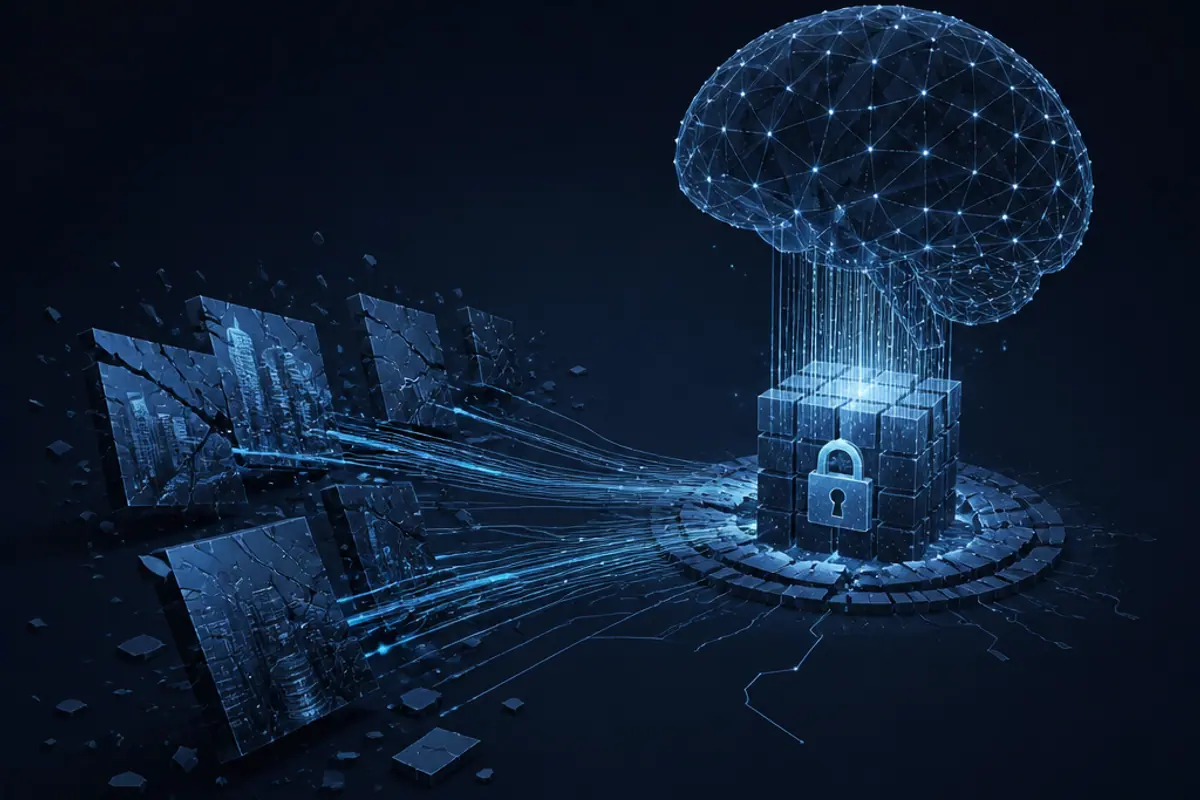
AI-powered ransomware doesn't just encrypt your files - it studies your business, learns your weaknesses, and adapts faster than your security team can respond.
The ransomware that hit your competitor last month bears little resemblance to the AI-enhanced attacks targeting organisations today. Whilst security teams still prepare for human-speed threats, artificial intelligence has fundamentally transformed how ransomware operates, making traditional defences not just inadequate - but dangerously obsolete.
This isn't simply faster malware. It's predatory intelligence that thinks, learns, and evolves.
From Spray-and-Pray to Surgical Precision
Traditional ransomware operated like a sledgehammer - crude but effective through sheer volume. Attackers would blast thousands of organisations hoping a few would fall victim. The approach was wasteful, noisy, and ultimately limited by human capability.
AI-powered ransomware operates like a surgeon's scalpel. It studies target environments, identifies optimal attack vectors, and crafts bespoke approaches for maximum impact whilst minimising detection risk.
In cases with this profile, the AI system can spend weeks silently mapping an organisation's network topology, identifying critical servers, analysing backup procedures, and studying employee communication patterns before it strikes. Because the reconnaissance is thorough, the attack itself can be precisely targeted, crippling operations quickly whilst also corrupting backup systems.
Human attackers simply cannot operate at this level of sophistication and scale.
The Five-Stage Evolution of AI Ransomware
Stage 1: Intelligent Reconnaissance
AI systems conduct automated reconnaissance that would take human attackers months to complete. They analyse public information, social media profiles, job postings, and technical documentation to build comprehensive target profiles.
The system identifies:
Network architecture through passive scanning
Employee hierarchies and communication patterns
Critical business processes and dependencies
Security tool deployment and configuration
Backup procedures and recovery capabilities
Stage 2: Adaptive Penetration
Unlike traditional malware that uses fixed exploitation techniques, AI-powered systems adapt their approach based on encountered defences. If one vulnerability fails, the system automatically tries alternative methods.
Real-time adaptation includes:
Switching attack vectors when detection risk increases
Modifying payload characteristics to evade security tools
Adjusting communication protocols to avoid network monitoring
Altering timing and behaviour patterns to mimic legitimate traffic
Stage 3: Surgical Targeting
AI systems prioritise targets based on business impact analysis. Rather than encrypting everything, they focus on systems and data that cause maximum operational disruption.
The targeting process evaluates:
Revenue-generating systems and processes
Regulatory compliance requirements
Operational dependencies and single points of failure
Recovery time objectives and business continuity plans
Stage 4: Psychological Manipulation
Advanced AI ransomware incorporates psychological warfare, analysing victim behaviour to optimise pressure tactics. The system monitors victim responses and adjusts demands accordingly.
Manipulation techniques include:
Personalised messages targeting specific executives
Gradual pressure escalation based on victim responses
Strategic information release to increase panic
Exploiting known organisational vulnerabilities and fears
Stage 5: Continuous Evolution
Perhaps most concerning, AI-powered ransomware learns from each attack, improving its techniques and sharing knowledge across campaigns. Every successful breach makes subsequent attacks more sophisticated.
The learning process encompasses:
Defence mechanism analysis and countermeasure development
Attack vector optimisation based on success rates
Victim psychology profiling for improved manipulation
Network architecture patterns for faster exploitation
Why Traditional Cybersecurity Fails
Conventional security approaches assume human attackers with human limitations. These assumptions are now dangerously outdated.
Human Assumption: Attackers work business hours and take breaks.
AI Reality: Attacks operate continuously, 24/7, without fatigue or distraction.
Human Assumption: Attack patterns remain consistent and predictable.
AI Reality: Attack signatures evolve in real-time to avoid detection.
Human Assumption: Security teams can respond faster than attacks progress.
AI Reality: AI systems operate at machine speed, completing attacks in minutes rather than days.
Human Assumption: Defence systems can learn and adapt.
AI Reality: Attackers learn and adapt faster than defenders, maintaining persistent advantage.
Understanding how cognitive warfare complements these technical attacks reveals the full scope of modern AI-enhanced threats.
The Business Impact Reality
AI-powered ransomware creates disproportionate business impact compared to traditional attacks:
Financial Damage: Ransom demands have risen sharply as AI enhancement has become more widespread, with some organisations facing demands running into the tens of millions of pounds.
Recovery Complexity: AI systems specifically target backup and recovery infrastructure, extending recovery times from weeks to months.
Regulatory Exposure: Enhanced data exfiltration capabilities mean GDPR violations and regulatory penalties often exceed ransom demands.
Reputational Consequences: Precise targeting of customer data and business secrets creates lasting competitive disadvantage beyond immediate operational disruption.
For organisations already struggling with AI dependency creating intelligence decline, these attacks represent existential threats to business continuity.
Building AI-Immune Defences
Protecting against AI-powered ransomware requires fundamentally rethinking cybersecurity architecture:
Assumption-Based Security Must Die: Stop assuming human-speed attacks and human-limited capability. Design defences for machine-speed, machine-intelligence threats.
Behavioural Analysis Over Signature Detection: AI attacks change signatures constantly, but behavioural patterns reveal underlying intent regardless of surface modifications.
Proactive Threat Hunting: Wait for attacks to appear, and you've already lost. Advanced threat hunting identifies AI reconnaissance activities before attacks launch.
Zero-Trust Architecture: Assume every system and user is potentially compromised. Verify every access request regardless of source or history.
Continuous Validation: Static security assessments are useless against evolving threats. Implement continuous monitoring and validation of AI system behaviour.
How We Approach This in Advisory Work
Traditional security audits check static configurations and known vulnerabilities. In our advisory work, we help organisations assess resilience against adaptive, intelligent threats, not just known signatures.
That assessment looks at:
AI attack surface vulnerabilities that automated scans miss
Business process dependencies that create single points of failure
Psychological manipulation vectors targeting specific leadership
Recovery capability gaps that AI systems will exploit
Regulatory compliance exposures that amplify ransom demands
The question isn't whether AI-powered ransomware will target your organisation - it's whether you'll recognise the attack before it succeeds.
Frequently asked questions
What is AI-powered ransomware?
AI-powered ransomware is ransomware that uses artificial intelligence to automate reconnaissance, adapt its attack technique in response to defences, and target the systems and data that cause the most business disruption. It behaves less like a fixed piece of malware and more like an adaptive attacker.
How does AI-powered ransomware differ from traditional ransomware?
Traditional ransomware applies a fixed technique across many targets and relies on volume. AI-powered ransomware studies a specific target's network, business processes, and personnel before striking, and can change its approach mid-attack if it meets resistance.
Can traditional antivirus or signature-based tools stop AI-powered ransomware?
Signature-based tools struggle because AI-powered ransomware can alter its signature and behaviour between targets. Behavioural analysis and continuous monitoring are better suited to catching this kind of adaptive threat.
What is the first step in defending against AI-powered ransomware?
Start with an honest assessment of where your organisation depends on assumptions about attacker speed, resources, or error rates. Those assumptions are what AI-powered ransomware is built to exploit.
Ready to assess your AI ransomware resilience? Evaluate your organisation's defence readiness against intelligent threats before adaptive attackers identify your vulnerabilities.
This is the kind of work our AI governance and compliance help handles.

Sotiris Spyrou
Sotiris Spyrou is the founder of VerityAI, a Responsible AI advisory for boards and AI-deploying businesses. With 27 years across agencies and global in-house roles, including Global Head of SEO at Robert Half and Group Head of Search at Gamesys, he advises leaders on AI governance and risk, and on answer-engine visibility engineered without the dark patterns the rest of the industry is getting penalised for. He is the author of TRANSFORM, AI Moats, and Ethical AI.
Founder at VerityAI
Areas of Expertise: