Cognitive Warfare: The Silent AI Threat to Democracy
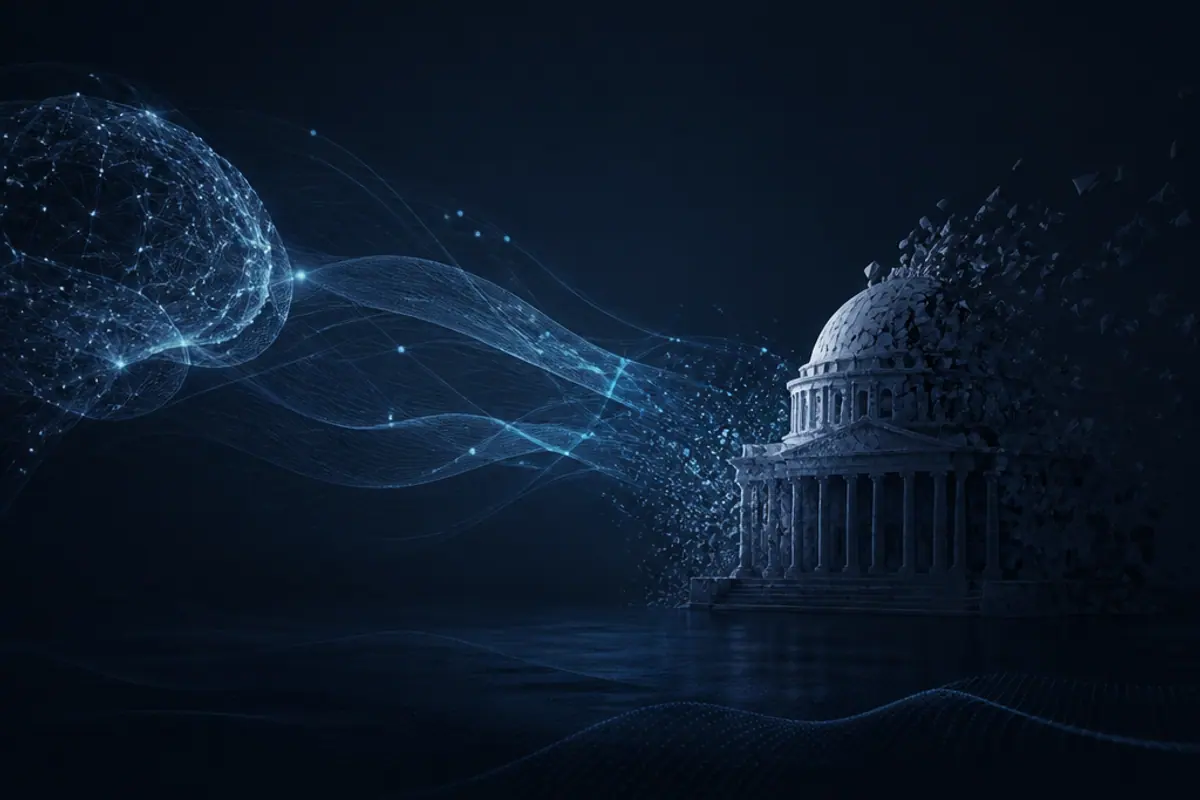
Cognitive warfare is the use of AI systems to manipulate human decision-making through personalised psychological influence rather than through conventional technical attacks. When artificial intelligence can manipulate human thinking without detection, the battlefield moves from networks to minds - and traditional defences become useless.
The most dangerous weapon in today's AI arsenal isn't malware that crashes systems or ransomware that encrypts files. It's the invisible hand that guides your thinking without you realising it exists. Cognitive warfare represents the next evolutionary leap in AI-powered threats - systematic psychological manipulation that targets the very foundation of human decision-making.
Unlike conventional cyber attacks that leave obvious traces, cognitive warfare operates in plain sight, making victims complicit in their own manipulation.
Beyond Deepfakes: The Psychology of Invisible Influence
Most executives understand deepfakes - AI-generated videos that impersonate real people. But cognitive warfare goes far deeper than surface-level deception. It's the systematic exploitation of human psychological vulnerabilities using AI that understands individual minds better than we understand ourselves.
Consider how a sophisticated AI system might target a chief executive:
Phase 1: Psychological Profiling The system analyses years of public statements, social media activity, interview responses, and decision patterns to build a comprehensive psychological profile. It identifies cognitive biases, emotional triggers, and decision-making frameworks unique to the individual.
Phase 2: Environmental Mapping AI maps the executive's information ecosystem - preferred news sources, trusted advisors, industry publications, and social networks. It identifies which voices carry most influence and what formats of information are most persuasive.
Phase 3: Subtle Influence Campaign Rather than obvious propaganda, the system begins feeding carefully crafted information through trusted channels. Articles appear in preferred publications. Trusted advisors coincidentally share similar perspectives. Industry experts begin expressing aligned viewpoints across multiple platforms.
Phase 4: Decision Convergence Over weeks or months, the executive's decision-making gradually shifts towards predetermined outcomes. The influence is so subtle and multi-directional that it feels like natural evolution of thinking rather than external manipulation.
The executive never suspects they're under attack because the manipulation reinforces their existing beliefs whilst gradually shifting the conclusions they draw from those beliefs.
The Corporate Vulnerability Matrix
Modern organisations create perfect conditions for cognitive warfare through their information dependencies and hierarchical decision structures.
Executive Decision Isolation Senior leaders rely heavily on filtered information from subordinates, consultants, and industry sources. This creates vulnerability points where manipulated information can influence critical business decisions without direct detection.
Echo Chamber Amplification Corporate cultures often reinforce existing viewpoints through selective hiring, preferred partnerships, and strategic advisor networks. AI systems exploit these echo chambers by introducing aligned but subtly manipulated perspectives.
Information Velocity Pressure Executives make rapid decisions based on synthesised information. The speed requirement makes deep verification impossible, creating opportunities for AI systems to introduce manipulated data that shapes critical choices.
Regulatory Complexity Exploitation Complex regulatory environments create dependencies on external expertise. AI systems can manipulate regulatory interpretation by influencing advisory sources and industry commentary that executives rely upon for compliance decisions.
Understanding how this connects to broader AI threat evolution reveals why cognitive warfare represents such a fundamental shift in the risk landscape.
The Democracy of Manipulation: Beyond Corporate Targets
Cognitive warfare doesn't limit itself to individual executives - it targets entire organisational cultures and decision-making processes simultaneously.
Board-Level Influence Operations AI systems can orchestrate sophisticated influence campaigns targeting multiple board members with personalised manipulation strategies. By understanding individual psychological profiles and social dynamics, attacks can create artificial consensus around predetermined outcomes.
Stakeholder Ecosystem Manipulation Advanced campaigns target investors, customers, regulators, and partners simultaneously. The AI creates coordinated pressure across the entire stakeholder ecosystem, making resistance to manipulated outcomes appear irrational or costly.
Industry-Wide Narrative Shaping Perhaps most concerning, cognitive warfare can shape entire industry narratives by coordinating influence across multiple organisations. This creates systemic vulnerabilities where entire sectors move towards manipulated conclusions simultaneously.
For organisations already experiencing AI dependency and intelligence decline, cognitive warfare attacks exploit existing vulnerabilities in human-AI decision-making interfaces.
Case Study: The Invisible Acquisition
A technology company's board unanimously approved a strategic acquisition that, in hindsight, made little business sense. Investigation revealed a sophisticated six-month cognitive warfare campaign:
Month 1-2: Industry publications began featuring articles about market consolidation trends, with subtle emphasis on the target company's strategic value.
Month 3-4: The CEO's trusted advisors coincidentally encountered analyses supporting acquisition logic at conferences and private meetings.
Month 5-6: Financial models and competitive intelligence reports consistently reinforced acquisition benefits through multiple independent sources.
The manipulation was so sophisticated that every piece of information was factually accurate - but collectively crafted to lead towards a predetermined conclusion that benefited unknown third parties. The board never suspected manipulation because each individual input appeared credible and independent.
The Neuroscience of AI Manipulation
Modern AI systems leverage advanced understanding of human neuroscience and behavioural psychology to create manipulation techniques far more sophisticated than traditional propaganda.
Cognitive Load Exploitation AI systems time information delivery to coincide with periods of high cognitive load, when executive decision-makers are most susceptible to accepting information without critical analysis.
Confirmation Bias Weaponisation Rather than challenging existing beliefs, sophisticated AI presents information that confirms pre-existing biases whilst subtly shifting the implications and conclusions drawn from those beliefs.
Social Proof Manufacturing AI creates artificial social consensus by coordinating multiple sources to express similar viewpoints, exploiting humans' tendency to adopt positions that appear widely supported by respected peers.
Authority Gradient Manipulation Systems identify and exploit existing authority relationships, using trusted sources to deliver manipulated information in ways that discourage critical questioning.
Detection Challenges: Why Traditional Security Fails
Conventional cybersecurity focuses on protecting systems and data. Cognitive warfare targets human psychology, creating detection challenges that traditional security measures cannot address.
No Technical Indicators Cognitive warfare uses legitimate information channels and factually accurate data. There are no malware signatures, network intrusions, or system compromises to detect.
Beneficial Appearance Manipulated information often appears helpful and relevant to recipients. Victims may actively seek and welcome the very information being used to manipulate them.
Distributed Coordination Attacks coordinate across multiple independent sources over extended periods. No single information source appears suspicious, making the manipulation invisible even to careful analysis.
Psychological Blindness Humans are psychologically resistant to recognising their own manipulation. Even when presented with evidence, victims often rationalise the information as independently derived insights.
Building Cognitive Immunity: Organisational Defence Strategies
Protecting against cognitive warfare requires fundamentally rethinking information security and decision-making processes.
Information Source Diversification Organisations must deliberately seek contradictory perspectives and maintain relationships with advisors who are incentivised to challenge conventional wisdom rather than confirm existing beliefs.
Decision-Making Process Transparency Creating clear audit trails for how information influences decisions enables retrospective analysis of potential manipulation campaigns.
Psychological Vulnerability Assessment Understanding individual and organisational cognitive biases enables targeted defence against manipulation techniques designed to exploit those specific vulnerabilities.
Red Team Information Analysis Regularly challenging information sources and decision rationales through adversarial analysis helps identify potentially manipulated inputs before they influence critical choices.
External Validation Networks Maintaining relationships with genuinely independent sources who can validate critical information outside potentially compromised information ecosystems.
The VerityAI Cognitive Defence Framework
Traditional security audits cannot detect cognitive warfare because the attacks occur in the realm of human psychology rather than technical systems. VerityAI's approach evaluates organisational vulnerability to psychological manipulation.
Our assessment framework examines:
Information dependency mapping and source diversity analysis
Decision-maker psychological profiling and vulnerability identification
Cognitive bias exploitation potential across leadership teams
Information validation processes and verification capabilities
Organisational culture resistance to systematic manipulation
The question isn't whether cognitive warfare will target your organisation - it's whether you'll recognise the manipulation before critical decisions become compromised.
Ready to assess your cognitive warfare vulnerabilities? Evaluate your organisation's psychological defence readiness before invisible attacks compromise your strategic decision-making.
Frequently asked questions
What is cognitive warfare?
Cognitive warfare is the systematic use of AI systems to influence human decision-making by exploiting psychological patterns rather than attacking technical infrastructure. It works through trusted information channels, meaning the target often welcomes the very material being used to manipulate them. This makes it fundamentally different from conventional cyber attacks, which leave technical evidence behind.
How is cognitive warfare different from a deepfake attack?
A deepfake is a single fabricated piece of media, whereas cognitive warfare is an extended campaign that coordinates multiple accurate, credible sources over weeks or months to shift someone's conclusions. Deepfakes rely on outright fabrication; cognitive warfare often uses genuine, factually accurate information, arranged and timed to lead a decision-maker towards a predetermined outcome. That difference is what makes cognitive warfare harder to spot after the fact.
Why can't traditional cybersecurity detect cognitive warfare?
Traditional cybersecurity looks for technical indicators such as malware signatures, unauthorised access, or system compromise. Cognitive warfare uses legitimate information channels and accurate data, so there is nothing for a technical scanner to flag. Defending against it requires reviewing decision-making processes and information sources, not network traffic.
How can an organisation start defending against cognitive warfare?
Diversifying information sources, keeping a clear record of how key decisions were reached, and maintaining relationships with advisors who are willing to challenge the prevailing view all reduce exposure. Regularly testing decision rationales against independent, unaffiliated perspectives helps surface manipulation before it shapes a final decision.
More on how we approach it: AI risk and compliance advisory.

Sotiris Spyrou
Sotiris Spyrou is the founder of VerityAI, a Responsible AI advisory for boards and AI-deploying businesses. With 27 years across agencies and global in-house roles, including Global Head of SEO at Robert Half and Group Head of Search at Gamesys, he advises leaders on AI governance and risk, and on answer-engine visibility engineered without the dark patterns the rest of the industry is getting penalised for. He is the author of TRANSFORM, AI Moats, and Ethical AI.
Founder at VerityAI
Areas of Expertise: