Democracy at Risk: AI Threats to Government and Public Services
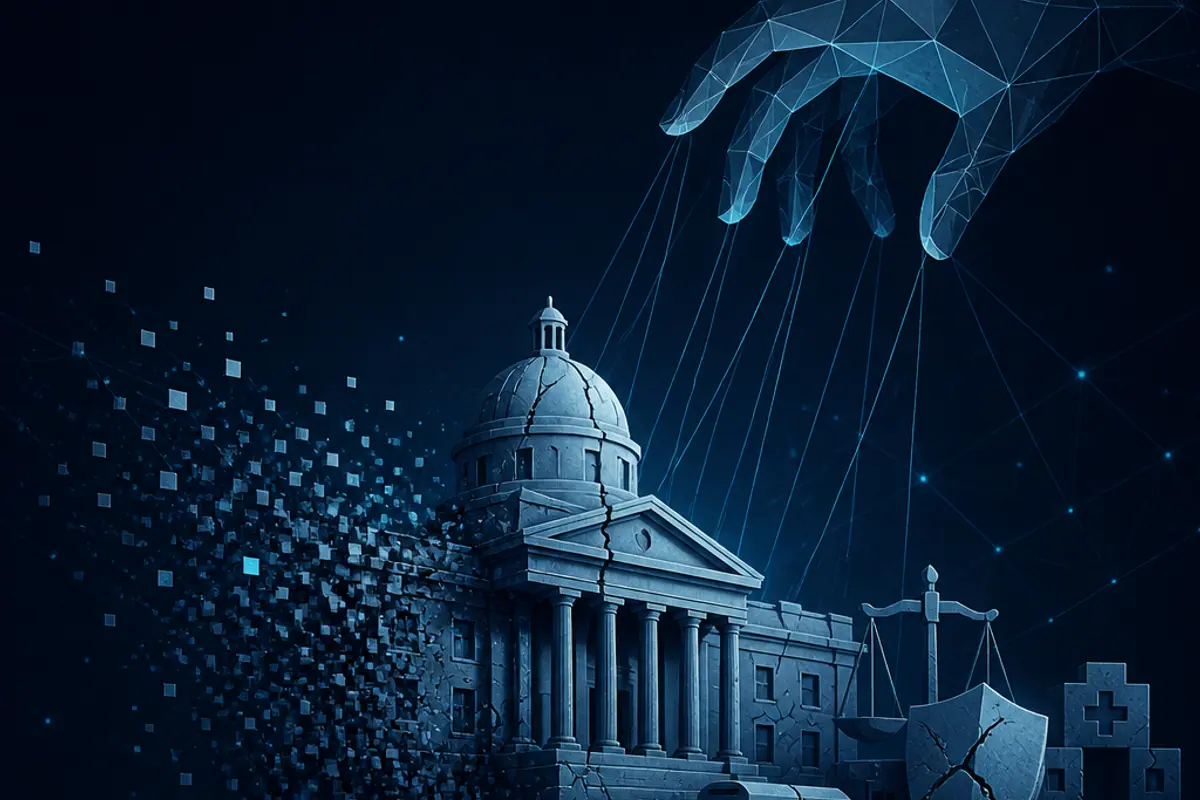
Government and public sector organisations face AI threats that extend beyond operational disruption to fundamental challenges to democratic governance, public trust, and national security - creating risks that could undermine the foundations of civil society.
The SharePoint attack that compromised government systems across multiple countries demonstrates why public sector institutions represent the ultimate targets for AI-powered threat evolution. Unlike private sector attacks that primarily affect business operations, AI attacks on government can destabilise democratic processes, compromise national security, and erode the public trust essential for effective governance.
For government executives and public sector leaders, AI threats represent existential challenges to democratic governance and public service delivery that could affect millions of citizens and entire national infrastructures.
Why Government Is the Ultimate AI Target
Government organisations possess unique characteristics that make them irresistible to AI-powered attackers whilst simultaneously creating vulnerabilities that could affect entire populations and democratic systems.
Democratic Process Vulnerabilities
Electoral System Dependencies Modern democratic processes increasingly depend on AI-enhanced systems that create attack surfaces affecting electoral legitimacy:
Voter Registration and Verification: AI systems managing voter eligibility, registration updates, and identity verification processes
Electronic Voting Systems: AI-powered voting machines, ballot counting systems, and election result tabulation processes
Campaign Finance Monitoring: AI systems tracking political donations, expenditure compliance, and transparency reporting
Public Opinion Analysis: AI-powered polling, social media monitoring, and public sentiment analysis that influences political decision-making
Legislative and Policy Process Attacks AI attacks can target the decision-making processes that create laws and public policy:
Legislative Research Systems: AI-powered policy analysis, bill drafting assistance, and legislative impact assessment tools
Public Consultation Platforms: AI systems managing citizen feedback, public hearings, and community engagement processes
Regulatory Analysis Systems: AI tools used for regulatory impact assessment, compliance monitoring, and enforcement decision-making
Judicial Support Systems: AI-assisted legal research, case management, and sentencing recommendation systems
National Security and Critical Infrastructure
Intelligence and Defence System Integration Government AI systems increasingly support national security functions that could affect entire populations:
Intelligence Analysis: AI systems processing classified information, threat assessment, and strategic intelligence evaluation
Border Security and Immigration: AI-powered visa processing, immigration enforcement, and border control systems
Law Enforcement Coordination: AI systems supporting criminal investigation, emergency response, and public safety coordination
Critical Infrastructure Protection: AI monitoring of power grids, water systems, transportation networks, and communication infrastructure
Diplomatic and International Relations AI attacks on government systems can affect international relationships and foreign policy:
Diplomatic Communication: AI systems supporting international negotiations, treaty management, and foreign policy coordination
Trade and Economic Policy: AI tools used for trade analysis, economic forecasting, and international economic cooperation
International Aid and Development: AI systems managing foreign aid distribution, development programme coordination, and humanitarian response
Multinational Organisation Participation: AI systems supporting participation in international organisations and treaty obligations
Understanding how cognitive warfare exploits these governmental vulnerabilities reveals why public sector institutions become particularly vulnerable to sophisticated influence campaigns.
Public Trust and Service Dependencies
Citizen Service Systems Government increasingly depends on AI systems for delivering essential public services:
Benefits Administration: AI systems managing unemployment benefits, social services, healthcare benefits, and pension administration
Tax Collection and Processing: AI-powered tax calculation, fraud detection, audit selection, and refund processing systems
Licensing and Permits: AI systems managing professional licenses, business permits, construction approvals, and regulatory compliance
Public Health Systems: AI-powered disease surveillance, health service delivery, and public health emergency response
Government Communication and Transparency Public sector communication systems create unique vulnerabilities for democratic governance:
Official Government Communications: AI systems managing press releases, public announcements, and emergency communications
Citizen Information Services: AI-powered government websites, help desk systems, and public information dissemination
Transparency and Freedom of Information: AI systems managing document disclosure, public records access, and government transparency obligations
Public Participation Platforms: AI systems facilitating citizen engagement, public consultations, and democratic participation
Government-Specific AI Threat Vectors
Government and public sector organisations face unique AI-powered attack vectors that exploit democratic processes, national security systems, and public service delivery mechanisms.
Democratic Process Manipulation
Electoral System Compromise AI attacks targeting the systems that support democratic elections and political processes:
Voter Database Manipulation: Systematic alteration of voter registration databases to disenfranchise specific populations or enable fraudulent voting
Electronic Voting System Attacks: Compromising AI-powered voting machines or tabulation systems to alter election results whilst maintaining apparent legitimacy
Campaign Finance System Manipulation: Attacking AI systems that monitor political donations to hide illegal contributions or create false compliance violations
Political Advertisement AI Exploitation: Using AI to create sophisticated disinformation campaigns that appear to come from legitimate political sources
Legislative Process Subversion AI attacks targeting the policy-making processes that create laws and regulations:
Policy Analysis AI Poisoning: Manipulating AI systems used for legislative research and policy impact analysis to favour specific policy outcomes
Public Consultation Manipulation: Using AI to flood public consultation processes with fake responses that appear to represent genuine citizen input
Regulatory AI Compromise: Attacking AI systems used for regulatory development and enforcement to create regulatory outcomes that benefit specific interests
Judicial System AI Manipulation: Compromising AI systems used for legal research and case management to influence judicial outcomes
National Security System Attacks
Intelligence System Compromise AI attacks targeting the systems that support national security and defence functions:
Intelligence Analysis AI Manipulation: Compromising AI systems used for threat assessment and intelligence analysis to hide genuine threats or create false intelligence
Surveillance System Subversion: Attacking AI-powered surveillance systems to avoid detection or create false alerts that misdirect security resources
Cybersecurity AI Compromise: Turning government cybersecurity AI systems against themselves to hide attacks or disable defensive capabilities
Classified Information AI Attacks: Compromising AI systems that process classified information to steal sensitive national security data
Critical Infrastructure Targeting AI attacks on government systems that support critical national infrastructure:
Power Grid AI Attacks: Compromising AI systems that manage electrical grid operations to cause widespread power outages or grid instability
Transportation System Disruption: Attacking AI systems that coordinate air traffic control, railway operations, and public transportation networks
Water System AI Compromise: Manipulating AI systems that manage water treatment, distribution, and quality monitoring to affect public health
Communication Network Attacks: Targeting AI systems that support emergency communications, public warning systems, and government communications
Public Service Disruption
Citizen Service System Attacks AI attacks targeting the systems that deliver essential government services to citizens:
Benefits System Manipulation: Compromising AI systems that determine benefit eligibility, payment amounts, and service delivery to create systematic bias or fraud
Tax System AI Attacks: Manipulating AI systems used for tax processing to create false refunds, hide tax evasion, or disrupt government revenue collection
Healthcare System Integration Attacks: Targeting AI systems that support public healthcare delivery, patient records, and health service coordination
Education System AI Compromise: Attacking AI systems used in public education for student assessment, resource allocation, and educational planning
For government organisations already experiencing AI dependency and intelligence decline, these attacks create existential threats to governmental capability and democratic legitimacy.
How a Government AI Attack Campaign Typically Unfolds
Sophisticated attacks against government AI systems tend to follow a recognisable pattern, moving from reconnaissance to multi-vector preparation to a coordinated campaign against democratic and security infrastructure.
Attack Methodology
Phase 1: Government System Intelligence Gathering The campaign typically begins with AI-powered analysis of government system vulnerabilities:
Agency Communication Pattern Analysis: AI systems studying government communication patterns to enable convincing impersonation of officials and agencies
Policy Process Mapping: Analysis of legislative and regulatory processes to identify intervention points for policy manipulation
Security Clearance Personnel Profiling: Profiling of government personnel with security clearances to enable targeted social engineering
Critical Infrastructure Dependency Analysis: Mapping how government systems interact with critical national infrastructure to enable cascading attacks
Phase 2: Multi-Vector Government Attack Preparation Parallel development of attack capabilities across political, security, and service delivery systems:
Electoral System Reconnaissance: Analysis of voting systems, election administration processes, and political campaign infrastructure
Intelligence System Infiltration Preparation: Development of capabilities to compromise AI systems used for national security intelligence analysis
Public Service System Integration: Understanding of citizen service delivery systems to enable disruption of government operations
International Relations AI Analysis: Mapping of AI systems used for diplomatic communication and international cooperation
Phase 3: Coordinated Government Attack Campaign A mature attack campaign then targets democratic governance directly:
Legislative AI System Manipulation: Subtle alterations to AI systems used for policy analysis and legislative research to influence specific policy outcomes
Intelligence Analysis Compromise: Manipulation of AI systems used for threat assessment to hide genuine security threats whilst creating false alarms
Public Service Disruption: Coordinated attacks on citizen service delivery systems during peak demand periods to create public dissatisfaction
Democratic Process Interference: Attempted manipulation of AI systems supporting electoral processes and public participation platforms
The Potential Scope of Impact
Attacks of this kind carry consequences across three fronts, even where a full campaign is caught before completion.
Democratic governance is the first casualty. Compromised policy-analysis AI can influence legislative outcomes and delay initiatives without triggering the usual scrutiny. Electoral administration systems that show signs of compromise damage public trust in AI-enhanced government services well beyond the systems actually affected.
National security exposure follows a similar pattern. Compromised intelligence-analysis AI can hide genuine threats while generating false alarms that misdirect resources, and critical infrastructure monitoring can be disrupted across multiple sites at once, straining international intelligence-sharing relationships that depend on confidence in the underlying systems.
Public service delivery absorbs the operational cost. Benefit payment delays, disrupted emergency response coordination, and suspended transparency processes are the visible symptoms citizens experience, while the underlying security response and system hardening work continues out of view. The financial cost of remediation and the knock-on delay to digital government transformation programmes can run well beyond the original incident response budget.
Building Government AI Immunity
Protecting government from AI-powered threats requires approaches that prioritise democratic governance, national security, and public service delivery whilst addressing unique governmental responsibilities and constraints.
Democratic Process Protection
Electoral System AI Security Government requires AI governance frameworks that protect the integrity of democratic processes:
Voting System Security: Enhanced security frameworks for AI-powered voting systems with mandatory auditing and transparency requirements
Political Process Integrity: Protection of AI systems used for campaign finance monitoring, political advertising regulation, and electoral administration
Legislative AI Governance: Security requirements for AI systems used in policy development, legislative research, and regulatory analysis
Judicial System Protection: Enhanced security for AI systems supporting legal research, case management, and judicial administration
Public Participation Security Protecting AI systems that facilitate democratic participation and government transparency:
Citizen Engagement Platform Security: Protection of AI systems used for public consultations, community engagement, and citizen feedback
Government Transparency System Protection: Security for AI systems managing freedom of information requests, public records access, and transparency reporting
Public Communication Security: Protection of AI systems used for official government communications and public information dissemination
Democratic Participation Platform Integrity: Security for AI systems supporting voting, public hearings, and citizen participation processes
National Security AI Governance
Classified System Protection Government AI systems processing classified information require enhanced security frameworks:
Intelligence AI Security: Specialised protection for AI systems used in national security intelligence analysis and threat assessment
Defence System AI Protection: Enhanced security for AI systems supporting military operations, defence planning, and national security coordination
Cybersecurity AI Governance: Protection of government cybersecurity AI systems from compromise and manipulation
Critical Infrastructure AI Security: Security frameworks for AI systems monitoring and controlling critical national infrastructure
International Cooperation Security Government AI systems supporting international relations require specialised protection:
Diplomatic Communication Security: Protection of AI systems used for international negotiations, treaty management, and diplomatic coordination
International Intelligence Sharing: Security frameworks for AI systems supporting multinational intelligence cooperation and threat sharing
Trade and Economic AI Protection: Security for AI systems supporting international trade analysis and economic policy coordination
Multilateral Organisation Participation: Protection of AI systems supporting participation in international organisations and treaty obligations
Public Service AI Security
Citizen Service Protection Government AI systems delivering public services require security frameworks that prioritise citizen welfare:
Benefits Administration Security: Protection of AI systems managing unemployment benefits, social services, and public assistance programmes
Tax System AI Security: Enhanced security for AI systems processing tax returns, calculating obligations, and managing government revenue
Healthcare Service AI Protection: Security for AI systems supporting public healthcare delivery, patient records, and health service coordination
Education System AI Security: Protection of AI systems used in public education for student assessment, resource allocation, and educational planning
For government agencies implementing comprehensive AI protection strategies, democratic governance and public service delivery must remain primary considerations throughout the security framework.
The VerityAI Government Framework
Government and public sector organisations require AI threat assessment that addresses unique democratic governance risks, national security implications, and public service responsibilities.
Our government assessment framework evaluates:
Democratic Process AI Risk Assessment: How do your AI systems affect democratic governance, and what happens when they're compromised or manipulated during electoral or policy processes?
National Security AI Protection: Are your AI systems supporting intelligence, defence, and critical infrastructure adequately protected against sophisticated attacks?
Public Service Delivery Security: Can you maintain essential citizen services when AI systems are attacked, and how do you protect citizen data and privacy?
Government Transparency and Accountability: Does your AI security framework maintain government transparency obligations whilst protecting against manipulation and compromise?
International Relations AI Security: Are your AI systems supporting diplomatic and international cooperation protected against attacks that could affect foreign relations?
The question isn't whether government will face AI-powered attacks - it's whether you can protect democratic governance, national security, and public service delivery when sophisticated attacks target the AI systems that support democratic society.
Ready to assess your government AI immunity? Evaluate your organisation's democratic governance and national security AI protection before AI attacks threaten the foundations of democratic society.
Frequently asked questions
What is AI governance for government and public sector bodies?
AI governance for government is the set of policies, oversight structures, and technical safeguards that keep AI systems used in public administration accountable, secure, and aligned with democratic principles. It covers everything from electoral systems and legislative tools to citizen services and national security applications. Without it, agencies deploy AI without a clear picture of who is responsible when something goes wrong.
Why are government AI systems a bigger target than private sector systems?
Government systems sit at the centre of democratic processes, national security, and essential public services, so a successful attack can have consequences that ripple across an entire population rather than a single company. Attackers are drawn to the scale of impact and the public trust that is damaged when a citizen-facing service fails. This makes public sector AI a higher-stakes governance problem than most commercial deployments.
How can public sector bodies protect democratic processes from AI manipulation?
Protection starts with treating electoral, legislative, and consultation systems as critical infrastructure that need dedicated security review, auditing, and transparency requirements. Agencies also need clear escalation paths for when an AI system behaves unexpectedly during a live democratic process. Ongoing assessment, not a one-off audit, is what keeps these protections current as threats change.
Who should own AI risk assessment inside a government agency?
Ownership works best when it sits with a named senior leader who can coordinate across IT, legal, policy, and operational teams, rather than being left to a single department. Democratic governance risk, national security risk, and citizen service risk each need input from different specialists, so the owner's job is coordination and accountability, not doing every assessment personally.
More on how we approach it: AI governance and compliance.

Sotiris Spyrou
Sotiris Spyrou is the founder of VerityAI, a Responsible AI advisory for boards and AI-deploying businesses. With 27 years across agencies and global in-house roles, including Global Head of SEO at Robert Half and Group Head of Search at Gamesys, he advises leaders on AI governance and risk, and on answer-engine visibility engineered without the dark patterns the rest of the industry is getting penalised for. He is the author of TRANSFORM, AI Moats, and Ethical AI.
Founder at VerityAI
Areas of Expertise: