Multi-Instance AI Development: Governance Challenges from Parallel Claude Code Operations
Disambiguation Update (22 July 2025):* This article has been corrected to clearly reflect Claude Code's actual capabilities. Claude Code enables running multiple instances in parallel but does not have built-in "sub-agent" orchestration as originally stated. The governance challenges remain relevant for organisations using multiple AI instances simultaneously.
Published**: ****1st July 2025 *
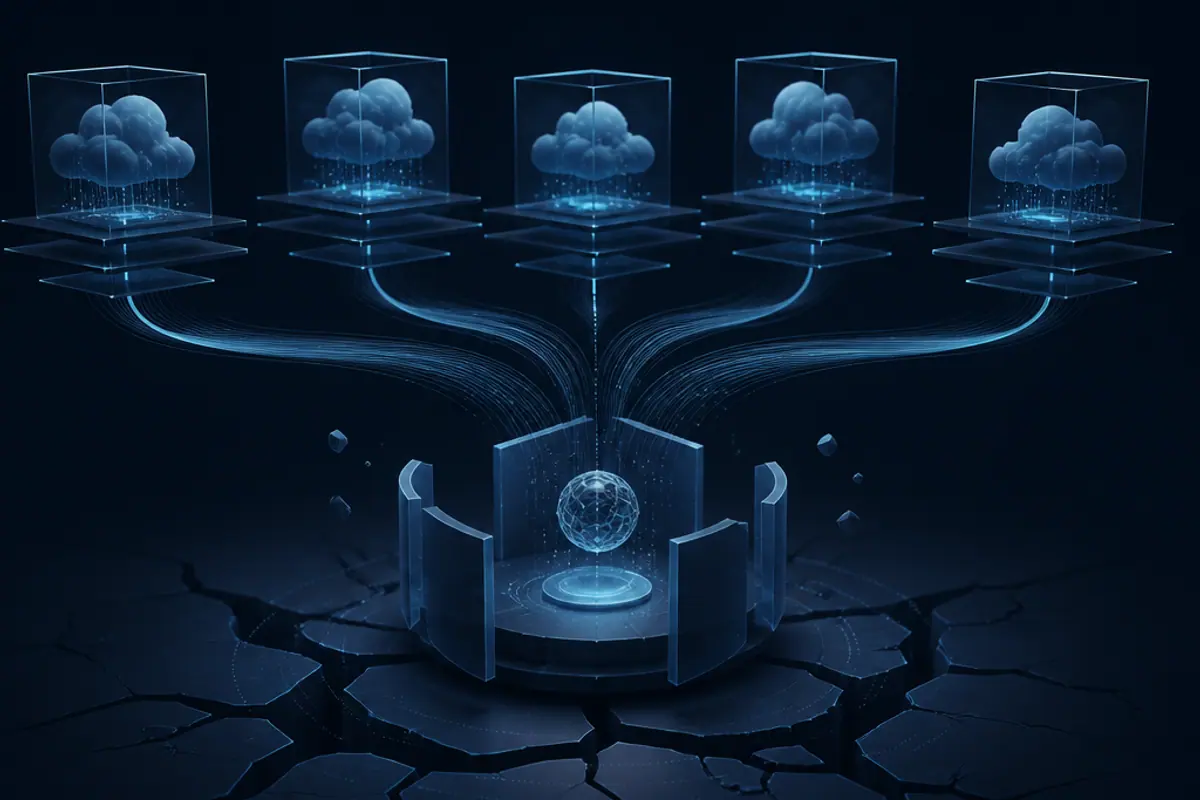
Multi-instance AI development means running several independent AI coding instances at once, each working on a separate part of a project, which speeds up delivery but spreads decision-making and accountability across processes no single person is watching in full. Claude Code's ability to run multiple instances in parallel enables developers to have different Claude processes working on separate aspects of development projects - each operating independently across different working directories or tasks. Whilst this dramatically accelerates complex development workflows, it creates governance challenges that traditional AI oversight frameworks haven't addressed.
Unlike single AI assistant deployments where human oversight can track individual decisions and maintain clear accountability, parallel multi-instance operations create distributed autonomous activities that can exceed human monitoring capacity. Multiple Claude instances working simultaneously on interconnected codebases create coordination complexity, resource management challenges, and accountability gaps that most organisations haven't considered.
Understanding multi-instance AI governance isn't just about managing parallel processes - it's about preparing for a future where AI development involves coordinating multiple autonomous instances whilst maintaining compliance, security, and accountability standards.
Understanding Multi-Instance AI Development
Claude Code enables developers to run multiple independent Claude instances that can operate in parallel across different working directories, git worktrees, or project contexts. Each instance functions as an autonomous development resource capable of independent decision-making, file manipulation, and system interaction.
Traditional Single-Instance Development:
Single AI assistant with human oversight for each decision
Linear task progression with clear accountability chains
Manageable cognitive load for human monitoring and control
Clear audit trails for individual decisions and modifications
Multi-Instance Development:
Multiple Claude instances operating simultaneously across different tasks
Parallel task execution with potential inter-instance coordination needs
Human oversight distributed across multiple autonomous operations
Complex audit trails requiring sophisticated tracking and correlation
The Coordination Complexity Challenge
Multi-instance deployments introduce coordination challenges that don't exist in single-instance environments, even though Claude Code doesn't provide built-in orchestration:
Inter-Instance Dependencies:
Instances may work on components that create dependencies between parallel tasks
Changes made by one instance can impact work being performed by others
Resource conflicts when multiple instances access shared codebases or systems
Version control complexities from simultaneous modifications across worktrees
Independent Decision Cascades:
Individual instance decisions can trigger cascading effects across related components
Error propagation across multiple parallel operations
Difficulty in isolating root causes when problems emerge across instances
Complex rollback requirements when coordination failures occur
Resource Management:
Multiple instances consuming computational resources and API tokens simultaneously
Potential for resource exhaustion or performance degradation
Difficulty in prioritising tasks across competing instances
Need for sophisticated resource allocation and monitoring
Enterprise Governance Challenges
Accountability and Attribution
Multi-instance operations fundamentally complicate accountability frameworks that assume clear attribution of decisions and actions.
Decision Attribution Complexity: When multiple instances contribute to development outcomes, determining responsibility for decisions becomes challenging:
Which instance made critical design decisions affecting compliance?
How do we attribute errors or security vulnerabilities to specific instances?
What happens when instance decisions conflict or create contradictory outcomes?
How do we maintain clear chains of responsibility for regulatory compliance?
Regulatory Compliance Attribution: Regulatory frameworks often require clear attribution of decisions and actions:
SOX Compliance: Financial institutions need clear accountability for system changes
HIPAA Requirements: Healthcare organisations must attribute access and modifications to specific entities
Government Oversight: Public sector organisations require clear responsibility chains for system modifications
Legal Liability Implications:
Professional liability when multiple instances contribute to system failures
Intellectual property questions when instances collaborate on creative solutions
Contract compliance when instances make decisions affecting legal obligations
Insurance coverage gaps for multi-instance autonomous operations
Resource Management and Performance Risks
System Resource Exhaustion: Multiple simultaneous instances can overwhelm system resources, creating:
Performance degradation affecting other organisational systems
Potential system failures from resource exhaustion
Difficulty in predicting and managing resource consumption
API rate limiting and cost escalation from parallel operations
Cost Management Challenges:
Unpredictable API token costs from parallel instance operations
Difficulty in budgeting for multi-instance development activities
Potential for cost escalation from unconstrained instance operations
Need for sophisticated cost monitoring and control mechanisms
Quality Control Complexity:
Ensuring consistent quality standards across multiple autonomous instances
Coordinating testing and validation across parallel development streams
Managing integration challenges when instances work on interdependent components
Maintaining architectural consistency across distributed autonomous development
Security and Access Control Risks
Distributed Access Control: Multiple instances operating simultaneously create complex access control challenges:
Each instance potentially requiring different system access levels
Difficulty in maintaining principle of least privilege across multiple autonomous operations
Complex audit trail requirements for distributed access patterns
Need for sophisticated access orchestration and monitoring
Data Exposure Multiplication:
Multiple instances potentially accessing sensitive data simultaneously
Increased attack surface from multiple autonomous operations
Complexity in enforcing data classification and handling requirements
Potential for data exposure through instance coordination failures
Security Incident Response:
Difficulty in detecting security incidents across multiple parallel operations
Complex investigation requirements when security breaches involve multiple instances
Challenges in isolating and containing security incidents across distributed operations
Need for sophisticated incident response procedures adapted for multi-instance environments
Sector-Specific Multi-Instance Governance Requirements
Financial Services: Model Risk and Operational Risk Management
Financial institutions face unique challenges when deploying multiple Claude instances for AI model development and financial system modifications.
Model Risk Management Complexity: Under Federal Reserve SR 11-7 guidance, financial institutions must:
Maintain clear accountability for model development decisions across multiple instances
Document decision-making processes when instances work on related model components
Ensure independent validation of models developed through multi-instance processes
Manage conflicts of interest when instances make decisions affecting model outcomes
Operational Risk Considerations:
System stability risks from multiple instances modifying financial systems simultaneously
Data integrity concerns when instances access customer financial data in parallel
Regulatory reporting accuracy when multiple instances contribute to compliance systems
Business continuity risks from complex multi-instance dependencies
Healthcare: Patient Safety and Data Protection
Healthcare organisations must ensure multi-instance operations don't compromise patient safety or violate HIPAA requirements.
Patient Safety Governance:
Clinical decision support integrity when multiple instances contribute to diagnostic systems
Medical device software validation for multi-instance developed healthcare AI
Patient data access controls across multiple simultaneous instance operations
Emergency response procedures when instance coordination failures affect patient care systems
HIPAA Compliance Complexity:
Minimum necessary principle enforcement across multiple autonomous instances
Access logging requirements for distributed instance operations accessing PHI
Data sharing controls when instances coordinate using patient information
Breach notification obligations when multi-instance operations create data exposure risks
Government and Public Sector: Democratic Accountability
Public sector organisations face unique accountability challenges when using multiple instances for government system development.
Democratic Accountability Requirements:
Public transparency obligations for multi-instance government AI development
Citizen oversight mechanisms when instances work on public-facing systems
Legislative compliance when instances contribute to policy implementation systems
Freedom of Information Act obligations for multi-instance decision documentation
Security Classification Management:
Classified information handling across multiple autonomous instances
Compartmentalisation requirements when instances work on different classification levels
Security clearance implications for systems developed through multi-instance processes
National security oversight of autonomous instance operations on critical systems
Building Multi-Instance Governance Frameworks
1. Instance Coordination Protocols
Instance Management Standards: Develop protocols for coordinating multiple instances whilst maintaining governance oversight:
Task Allocation Frameworks: Clear protocols for distributing work across instances based on risk levels and compliance requirements
Inter-Instance Communication Standards: Structured approaches for instance coordination through shared working directories and documentation
Conflict Resolution Mechanisms: Procedures for resolving conflicts when instances make contradictory decisions or recommendations
Resource Allocation Controls: Technical and procedural controls for managing computational and API resources across multiple instances
Quality Assurance Integration:
Cross-Instance Validation: Protocols for instances to validate each other's work whilst maintaining independence
Integration Testing Procedures: Comprehensive testing of multi-instance collaboration outcomes
Performance Monitoring: Real-time monitoring of multi-instance operations for quality and performance issues
Rollback and Recovery Procedures: Sophisticated rollback capabilities when multi-instance operations create problems
2. Enhanced Monitoring and Audit Systems
Distributed Activity Tracking:
Comprehensive Logging: Enhanced logging systems that track and correlate activities across multiple autonomous instances
Real-Time Monitoring: Sophisticated monitoring systems capable of tracking multiple parallel operations simultaneously
Alert and Notification Systems: Automated alerts for coordination failures, resource issues, or compliance violations
Correlation Analysis: Advanced analytics for understanding relationships and dependencies across instance activities
Audit Trail Enhancement:
Multi-Instance Attribution: Clear audit trails that attribute decisions and actions to specific instances within collaborative efforts
Timeline Reconstruction: Capabilities for reconstructing complex multi-instance decision sequences for audit and compliance purposes
Compliance Documentation: Automated generation of compliance documentation that accounts for multi-instance contributions
Regulatory Reporting Integration: Systems that translate multi-instance activities into required regulatory reporting formats
3. Risk Management and Control Systems
Cascade Failure Prevention:
Circuit Breaker Mechanisms: Automatic shutdown procedures when instance coordination creates systemic risks
Isolation Procedures: Capabilities for isolating problematic instances whilst maintaining other operations
Dependency Mapping: Clear understanding of inter-instance dependencies and cascade failure potential
Emergency Intervention Protocols: Rapid human intervention capabilities when multi-instance operations create critical risks
Resource and Performance Management:
Dynamic Resource Allocation: Intelligent allocation of computational resources across competing instance operations
Performance Optimization: Automatic optimization of multi-instance operations for efficiency and resource consumption
Cost Controls: Sophisticated cost monitoring and control systems for multi-instance development activities
Capacity Planning: Advanced planning systems for predicting and managing multi-instance resource requirements
4. Compliance Integration for Multi-Instance Operations
Regulatory Framework Adaptation:
Multi-Instance Compliance Mapping: Adaptation of existing compliance frameworks for multi-instance environments
Distributed Responsibility Models: Clear models for regulatory compliance across multiple autonomous instances
Cross-Instance Validation Requirements: Compliance procedures that account for instance collaboration and coordination
Regulatory Reporting Adaptation: Modified reporting procedures that accurately represent multi-instance development activities
Policy Enforcement:
Distributed Policy Implementation: Technical enforcement of organisational policies across multiple autonomous instances
Cross-Instance Policy Validation: Procedures for ensuring policy compliance across instance collaboration
Policy Conflict Resolution: Mechanisms for resolving policy conflicts that emerge from multi-instance operations
Dynamic Policy Adaptation: Capabilities for adapting policies based on multi-instance operation experiences and outcomes
Advanced Multi-Instance Governance Capabilities
Intelligent Instance Coordination
Process Orchestration: Use advanced monitoring to coordinate multi-instance operations whilst maintaining governance oversight:
Predictive Coordination: Systems that predict and prevent coordination failures before they occur
Dynamic Task Reallocation: Intelligent reallocation of tasks based on instance performance and coordination effectiveness
Automated Quality Assurance: Process-powered quality assurance that operates across multiple instance operations
Governance Optimization: Continuous optimization of governance processes based on multi-instance operation outcomes
Compliance Automation for Multi-Instance Systems
**Automated Compliance Checking:**Custom monitoring systems that automatically verify compliance across multiple instance operations, generating comprehensive compliance reports and identifying coordination-related compliance risks.
**Cross-Instance Audit Generation:**Automated generation of audit documentation that captures multi-instance collaboration processes and outcomes for regulatory compliance purposes.
**Coordination Risk Assessment:**Automated risk assessment specifically designed for multi-instance operations, identifying coordination risks and recommending mitigation strategies.
Integration with Enterprise Systems
Enterprise Risk Management Integration: Connect multi-instance governance with existing enterprise risk management systems to ensure comprehensive oversight of autonomous instance operations.
Incident Management System Integration: Integrate multi-instance monitoring with enterprise incident management systems to ensure rapid response to coordination failures or compliance violations.
Performance Management Integration: Connect multi-instance performance monitoring with enterprise performance management systems for comprehensive operational oversight.
Learn more about comprehensive AI development governance frameworks that address both single-instance and multi-instance governance challenges through VerityAI's AI governance platform.
Measuring Multi-Instance Governance Effectiveness
Coordination Quality Metrics
Instance Collaboration Effectiveness:
Success rate of multi-instance coordination and collaboration
Quality of integrated outcomes from collaborative instance operations
Efficiency gains from parallel instance operations versus coordination overhead
Reduction in coordination failures and integration problems over time
Resource Utilization Optimization:
Efficiency of resource allocation across multiple instance operations
Cost effectiveness of multi-instance development versus traditional approaches
Performance impact of multi-instance operations on enterprise systems
Optimization of instance coordination for maximum productivity with minimum resource consumption
Risk Management Metrics
Governance Compliance:
Compliance rate for multi-instance operations across regulatory frameworks
Effectiveness of distributed responsibility and accountability systems
Quality of audit trails and documentation for multi-instance activities
Success rate of regulatory reviews and assessments for multi-instance developed systems
Security and Risk Mitigation:
Number of security incidents attributed to multi-instance coordination failures
Effectiveness of access control and data protection across multiple instances
Success rate of incident response for multi-instance related issues
Improvement in risk detection and mitigation for autonomous instance operations
Strategic Business Impact
Development Velocity Enhancement:
Acceleration of development timelines through effective multi-instance coordination
Quality improvement from parallel instance operations and cross-validation
Reduction in development bottlenecks through intelligent task distribution
Enhancement in complex problem-solving capabilities through instance collaboration
Competitive Advantage Metrics:
Time-to-market improvement for complex AI solutions through multi-instance development
Innovation acceleration through collaborative instance problem-solving
Stakeholder confidence improvement through demonstrated multi-instance governance maturity
Market positioning enhancement through advanced AI development capabilities
Taking Action: Mastering Multi-Instance AI Governance
Multi-instance capabilities represent the future of AI development - multiple autonomous instances collaborating to solve complex problems faster than single AI-human teams can achieve individually. However, realising these benefits requires governance frameworks sophisticated enough to manage coordination complexity whilst maintaining accountability and compliance.
Start by understanding your current multi-instance usage patterns and implementing basic coordination protocols before scaling to complex multi-instance deployments. Develop comprehensive governance frameworks that address the unique challenges of distributed autonomous operations.
Don't let the productivity potential of multi-instance AI create governance blind spots that become operational or compliance liabilities. The organisations that master multi-instance governance will achieve sustainable competitive advantages through sophisticated AI collaboration capabilities.
Contact our multi-instance AI governance specialists to develop frameworks that enable safe, compliant, and effective deployment of autonomous instance collaboration systems.
The future of AI development is collaborative and autonomous - ensuring this collaboration serves organisational objectives whilst meeting governance requirements is the key to sustainable AI-powered competitive advantage.
Frequently asked questions
What is multi-instance AI development?
Multi-instance AI development is the practice of running several independent AI coding instances in parallel, each working on a different part of a project or codebase. It lets teams move faster on complex builds, but it means no single human reviewer sees every decision each instance makes.
Is multi-instance AI development the same as multi-agent orchestration?
Not quite. Multi-agent orchestration implies a built-in system that coordinates agents automatically. Running multiple Claude Code instances in parallel gives developers the speed benefit of parallel work, but the coordination and oversight have to be designed and managed separately, not assumed.
Who is accountable when multiple AI instances contribute to the same system?
Accountability has to be assigned deliberately rather than left to emerge from the process. Organisations need a named owner for each AI-assisted workstream and a documented review process, so responsibility for a decision can always be traced back to a person, not just an instance.
Does using multiple AI instances increase compliance risk?
It can, if oversight and audit trails aren't designed to scale with the number of instances in use. The risk comes from monitoring gaps rather than from parallel working itself, which is why governance frameworks need to be built before scaling up instance use.
Related Posts:
Claude Code Development Hooks: Automated Compliance Monitoring
Claude Code Custom AI Commands: Building Governance into Your Development Workflow
Sources:
https://www.anthropic.com/engineering/claude-code-best-practices
https://www.anthropic.com/engineering/built-multi-agent-research-system
For hands-on help, see VerityAI's responsible AI software development.

Sotiris Spyrou
Sotiris Spyrou is the founder of VerityAI, a Responsible AI advisory for boards and AI-deploying businesses. With 27 years across agencies and global in-house roles, including Global Head of SEO at Robert Half and Group Head of Search at Gamesys, he advises leaders on AI governance and risk, and on answer-engine visibility engineered without the dark patterns the rest of the industry is getting penalised for. He is the author of TRANSFORM, AI Moats, and Ethical AI.
Founder at VerityAI
Areas of Expertise: