Custom AI Commands: Building Governance into Your Development Workflow
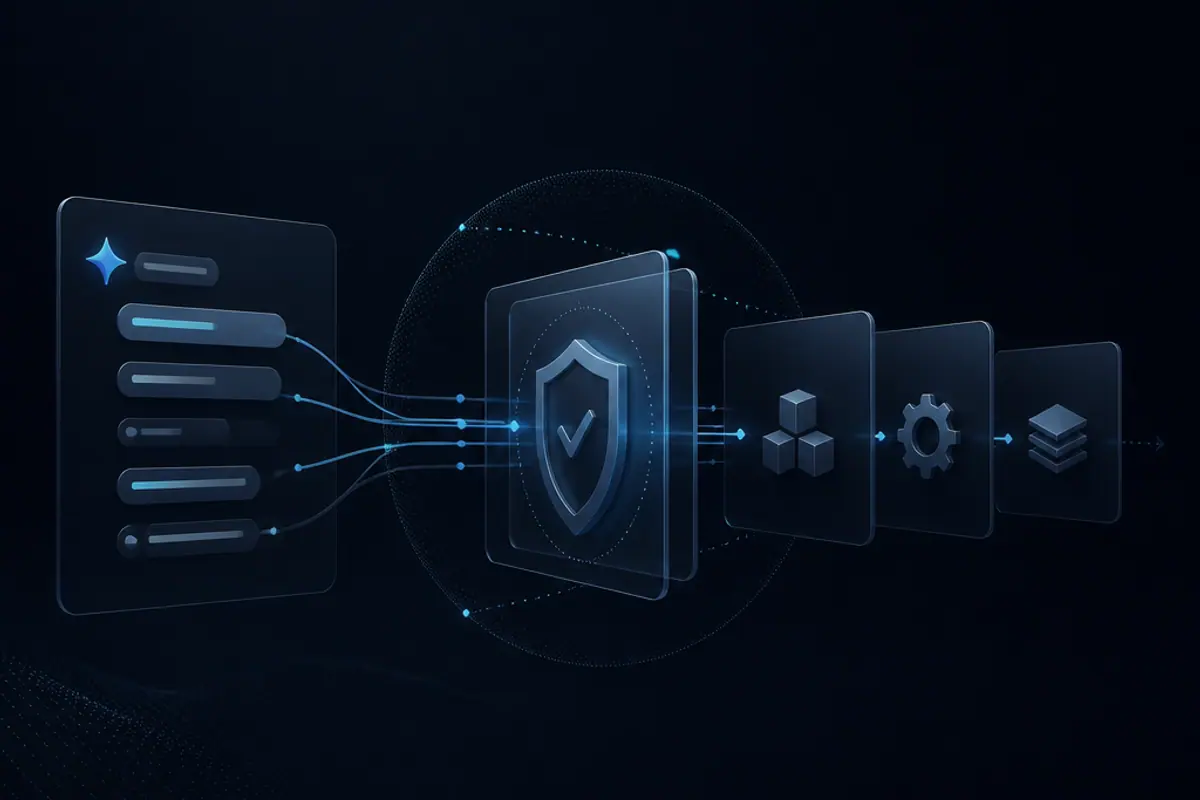
Custom commands are reusable slash commands in AI coding tools such as Claude Code that let teams embed governance, compliance, and risk checks directly into everyday development workflows. Custom commands in Claude Code represent an unprecedented opportunity to embed governance, compliance, and risk management directly into AI development workflows. Instead of treating compliance as an external burden that slows development, organisations can integrate regulatory requirements, security protocols, and quality standards seamlessly into the tools developers use daily.
Most organisations approach AI governance reactively - implementing oversight after development completes, discovering compliance gaps during audits, or scrambling to meet regulatory requirements when violations are detected. Custom commands enable a proactive approach where governance becomes an accelerator rather than an impediment to AI development velocity.
Understanding how to leverage custom commands for governance integration transforms AI development from a compliance challenge into a strategic advantage, enabling faster, safer, and more compliant AI solution delivery.
The Custom Command Governance Opportunity
Claude Code's custom command functionality allows organisations to create specialised slash commands that execute predefined governance, compliance, and quality assurance protocols. These commands operate within the natural development workflow, requiring no context switching or external tool usage whilst ensuring critical governance requirements are met.
Traditional Governance Approach:
External compliance reviews after development completion
Manual documentation and audit trail creation
Separate tools for governance, security, and quality assurance
Compliance bottlenecks that delay development deployment
Custom Command Integration:
Governance embedded directly in development tools
Automated compliance checking and documentation generation
Seamless integration of security protocols within development workflows
Compliance acceleration rather than impediment to development velocity
The Strategic Transformation
Custom commands transform governance from external oversight to embedded acceleration by:
Democratising Compliance Expertise: Custom commands encode compliance knowledge into reusable tools that any developer can execute, eliminating the need for specialised compliance expertise on every development team.
Automating Governance Documentation: Commands can automatically generate audit trails, compliance documentation, and risk assessments as byproducts of normal development activities rather than separate overhead tasks.
Standardising Best Practices: Organisational governance knowledge becomes embedded in development tools, ensuring consistent application of policies and procedures across all teams and projects.
Enabling Continuous Compliance: Rather than point-in-time compliance checks, custom commands enable ongoing governance monitoring and validation throughout the development lifecycle.
Strategic Custom Command Categories
1. Regulatory Compliance Commands
EU AI Act Compliance Validation:
/eu-ai-act-check
Automatically evaluates AI systems against EU AI Act requirements, generating compliance reports and identifying potential violations before deployment.
Implementation Example:
Analyses AI system functionality against EU AI Act risk categories
Generates required documentation for high-risk AI systems
Validates transparency and explainability requirements
Creates audit trails for regulatory compliance demonstration
GDPR Data Protection Assessment:
/gdpr-privacy-review
Evaluates AI development projects for GDPR compliance, identifying data protection risks and generating privacy impact assessments.
SOX Compliance Documentation:
/sox-audit-trail
Creates comprehensive audit documentation for AI development activities, ensuring Sarbanes-Oxley compliance for financial services organisations.
2. Security and Risk Management Commands
Security Vulnerability Assessment:
/security-scan
Performs automated security analysis of AI systems, identifying potential vulnerabilities and generating security compliance reports.
Risk Assessment Generation:
/risk-evaluate
Conducts comprehensive risk assessments for AI deployments, evaluating technical, operational, and compliance risks across multiple dimensions.
Data Classification and Handling:
/data-classify
Automatically classifies data usage within AI systems and ensures appropriate handling protocols are followed based on data sensitivity levels.
3. Quality Assurance and Testing Commands
Bias Detection and Mitigation:
/bias-check
Performs comprehensive bias analysis across protected characteristics, generating bias reports and recommending mitigation strategies.
Performance Validation:
/performance-validate
Executes standardised performance testing protocols, ensuring AI systems meet quality and reliability standards before deployment.
Explainability Assessment:
/explain-evaluate
Evaluates AI system explainability and transparency, generating reports suitable for regulatory compliance and stakeholder communication.
4. Documentation and Audit Commands
Comprehensive Documentation Generation:
/doc-generate
Creates complete documentation packages for AI systems, including technical specifications, compliance reports, and audit trails.
Stakeholder Communication:
/stakeholder-report
Generates executive-level reports summarising AI system development, compliance status, and risk assessments for board and management review.
Regulatory Submission Preparation:
/regulatory-package
Assembles complete regulatory submission packages with all required documentation, compliance evidence, and risk assessments.
Sector-Specific Custom Command Libraries
Financial Services: Regulatory Excellence
Financial institutions require sophisticated compliance integration across multiple regulatory frameworks.
Model Risk Management Commands:
/model-risk-assess
Implements Federal Reserve SR 11-7 model risk management guidance, automatically generating model development documentation and risk assessments.
Anti-Money Laundering Compliance:
/aml-compliance-check
Evaluates AI systems used in financial crime prevention for AML compliance, ensuring appropriate monitoring and reporting capabilities.
Fair Lending Analysis:
/fair-lending-review
Performs comprehensive fair lending analysis for AI-powered credit decisioning systems, identifying potential discriminatory impacts and generating compliance reports.
Stress Testing Preparation:
/stress-test-prep
Prepares AI models for regulatory stress testing requirements, generating necessary documentation and validation evidence.
Healthcare: Patient Safety and Privacy
Healthcare organisations need commands that prioritise patient safety whilst ensuring HIPAA compliance.
HIPAA Compliance Validation:
/hipaa-privacy-check
Comprehensive HIPAA compliance assessment for healthcare AI systems, identifying privacy risks and ensuring appropriate safeguards.
Clinical Safety Assessment:
/clinical-safety-review
Evaluates AI systems for patient safety risks, generating safety assessments suitable for FDA review and clinical governance committees.
Medical Device Compliance:
/medical-device-validate
Ensures AI systems intended as medical devices meet FDA software validation requirements and quality system regulations.
Patient Consent Management:
/patient-consent-verify
Validates appropriate patient consent processes for AI systems that process health information or influence care decisions.
Government and Public Sector: Accountability and Transparency
Public sector organisations require commands that ensure democratic accountability and transparency.
Public Accountability Assessment:
/public-accountability-check
Evaluates AI systems for public accountability requirements, ensuring appropriate transparency and citizen oversight mechanisms.
Security Classification Review:
/classification-validate
Ensures appropriate security classification handling for government AI systems, validating access controls and classification procedures.
Procurement Compliance:
/procurement-compliance-verify
Validates AI procurement activities against government acquisition regulations and vendor management requirements.
Citizen Impact Assessment:
/citizen-impact-evaluate
Assesses potential impacts of government AI systems on citizen rights and democratic processes, generating public impact reports.
Implementation Strategy for Custom Command Governance
1. Governance Framework Integration
Policy Encoding: Transform organisational policies and regulatory requirements into executable custom commands that developers can use naturally within their workflows.
Standard Operating Procedure Automation: Convert manual governance processes into automated commands that ensure consistent application while reducing administrative overhead.
Cross-Reference Integration: Ensure custom commands reference and comply with all applicable regulatory frameworks, organisational policies, and industry standards.
2. Technical Architecture
Command Development Framework: Establish standardised approaches for developing, testing, and deploying custom governance commands across development teams.
Integration with Existing Systems: Connect custom commands with existing governance, compliance, and audit systems to ensure comprehensive coverage and avoid duplication.
Version Control and Updates: Implement systematic approaches for updating custom commands as regulations evolve and organisational policies change.
Quality Assurance for Commands: Develop testing and validation processes for custom commands themselves to ensure they accurately implement governance requirements.
3. Organisational Change Management
Developer Training and Adoption: Provide comprehensive training on custom command usage, ensuring developers understand both technical implementation and governance implications.
Governance Team Integration: Train compliance, legal, and risk management teams on custom command capabilities to enable effective collaboration with development teams.
Performance Measurement: Establish metrics for measuring custom command effectiveness in improving compliance outcomes and development velocity.
Continuous Improvement: Implement feedback mechanisms for improving custom commands based on user experience and governance effectiveness.
Advanced Custom Command Capabilities
Multi-Stakeholder Workflow Integration
Custom commands can orchestrate complex workflows involving multiple stakeholders and approval processes.
Approval Workflow Commands:
/governance-approval-workflow
Automatically routes AI development outputs through appropriate approval chains based on risk levels and regulatory requirements.
Stakeholder Notification:
/stakeholder-notify
Sends appropriate notifications to governance, compliance, and risk management teams based on development activities and findings.
Cross-Functional Review:
/cross-functional-review
Coordinates review processes across legal, compliance, security, and business teams for comprehensive governance coverage.
Regulatory Intelligence Integration
Regulatory Update Monitoring:
/regulatory-monitor
Monitors regulatory changes and updates relevant to AI development projects, alerting teams to new compliance requirements.
Best Practice Integration:
/best-practice-update
Integrates evolving industry best practices and regulatory guidance into development workflows automatically.
Compliance Gap Analysis:
/compliance-gap-identify
Identifies gaps between current practices and evolving regulatory requirements, enabling proactive compliance adaptation.
External System Integration
Third-Party Compliance Tools: Custom commands can integrate with external compliance and governance platforms, enabling seamless data flow and comprehensive oversight.
Regulatory Reporting Systems: Direct integration with regulatory reporting platforms enables automatic submission of required compliance documentation.
Audit and Risk Management Systems: Integration with enterprise risk management platforms ensures governance activities are appropriately tracked and managed.
Learn more about enterprise AI development governance frameworks that support comprehensive custom command integration.
Measuring Custom Command Governance Effectiveness
Compliance Improvement Metrics
Audit Outcomes:
Reduction in compliance findings during internal and external audits
Improvement in regulatory assessment scores and outcomes
Decrease in time required for compliance documentation and review
Enhancement in audit trail completeness and accuracy
Risk Management Effectiveness:
Reduction in governance-related incidents and violations
Improvement in risk assessment accuracy and completeness
Enhancement in proactive risk identification and mitigation
Better alignment between development activities and risk tolerance
Development Velocity Impact
Productivity Metrics:
Reduction in compliance review cycle times
Improvement in development team satisfaction with governance processes
Enhancement in time-to-deployment for compliant AI systems
Increase in successful regulatory approvals and certifications
Quality Improvements:
Enhancement in AI system quality and reliability
Improvement in stakeholder confidence and acceptance
Reduction in post-deployment governance issues
Better alignment between technical implementation and business requirements
Strategic Business Value
Competitive Advantages:
Faster time-to-market for compliant AI solutions
Enhanced customer and stakeholder trust through demonstrated governance maturity
Improved regulatory relationships through proactive compliance
Better positioning for regulatory approval and certification processes
Cost Optimization:
Reduction in external compliance consulting and review costs
Decrease in regulatory penalty and enforcement exposure
Improvement in development resource allocation efficiency
Enhancement in governance process automation and standardisation
Building Your Custom Command Library
Getting Started
Assessment and Planning:
Identify most critical governance requirements and pain points
Evaluate current development workflows and integration opportunities
Prioritise high-impact custom commands for initial development
Plan phased implementation approach with measurable milestones
Initial Command Development:
Start with simple, high-value commands that address immediate governance needs
Focus on automating existing manual processes rather than creating new requirements
Ensure comprehensive testing and validation before deployment
Gather developer feedback and iterate based on usage patterns
Scaling and Maturation
Library Expansion:
Develop comprehensive command libraries addressing all major governance requirements
Create sector-specific commands addressing industry-specific regulatory needs
Build advanced workflow integration and multi-stakeholder coordination capabilities
Establish ongoing maintenance and update processes for evolving requirements
Organisational Integration:
Train all relevant stakeholders on custom command capabilities and usage
Integrate command usage into performance management and evaluation processes
Establish governance oversight for command effectiveness and compliance
Create communities of practice for sharing command development and usage expertise
Taking Action: Building Governance into Development DNA
Custom commands represent a paradigm shift from external governance oversight to embedded compliance acceleration. The organisations that master this integration will develop AI solutions faster whilst achieving superior compliance outcomes.
Start by identifying your highest-impact governance requirements and most painful compliance bottlenecks. Develop initial custom commands that address immediate needs whilst building capabilities for comprehensive governance integration.
Don't treat governance as something done to development - make it something that accelerates development through intelligent automation and embedded expertise.
Contact our AI governance integration specialists to design custom command libraries that transform your compliance challenges into competitive advantages.
The future belongs to organisations that make governance a development accelerator rather than a development impediment - custom commands are the key to achieving this transformation.
Frequently asked questions
What are custom commands in AI development tools?
Custom commands are reusable slash commands, built into tools such as Claude Code, that trigger a predefined set of actions such as a compliance check, a security scan, or a documentation task. They let developers run governance and quality checks from within their normal workflow rather than switching to a separate tool.
Do custom commands replace a compliance or legal review?
No. Custom commands automate the repeatable parts of a governance process, such as generating documentation or flagging obvious risk patterns. They support a compliance function rather than replace the judgement of legal, risk, and compliance specialists on genuinely novel or high-risk decisions.
Which teams should be involved in building custom governance commands?
Effective commands usually come from collaboration between developers, who understand the workflow, and compliance, security, or legal specialists, who understand the requirement being encoded. Building commands without that input risks automating a process that does not actually reflect the regulatory or policy requirement.
Can custom commands be adapted as regulations change?
Yes. Because commands are defined in code or configuration rather than hard-wired into a platform, they can be updated as regulatory requirements or internal policies evolve. Organisations still need a process for reviewing and updating commands on a regular basis so they do not fall out of date.
For hands-on help, see VerityAI's AI implementation done responsibly.

Sotiris Spyrou
Sotiris Spyrou is the founder of VerityAI, a Responsible AI advisory for boards and AI-deploying businesses. With 27 years across agencies and global in-house roles, including Global Head of SEO at Robert Half and Group Head of Search at Gamesys, he advises leaders on AI governance and risk, and on answer-engine visibility engineered without the dark patterns the rest of the industry is getting penalised for. He is the author of TRANSFORM, AI Moats, and Ethical AI.
Founder at VerityAI
Areas of Expertise: