AI Development Hooks: Automated Compliance Monitoring for Enterprise Teams
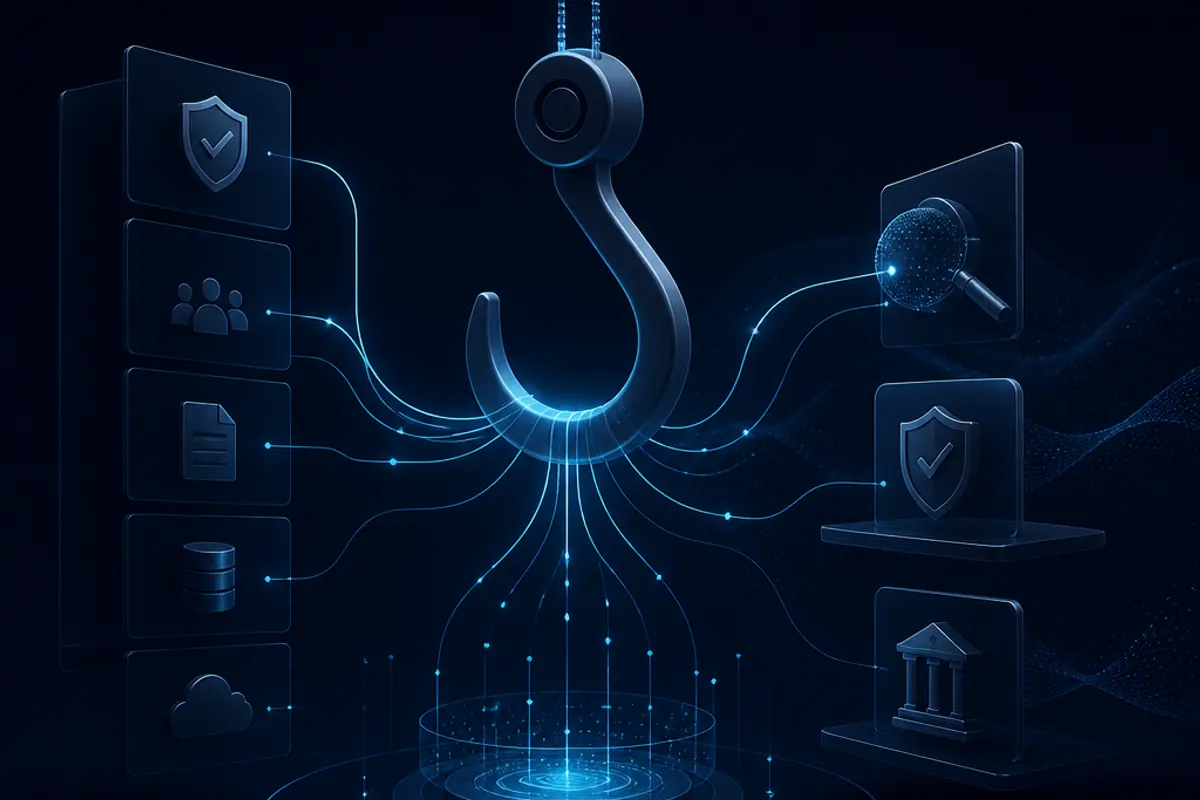
AI development hooks are automated checkpoints built into a development workflow that run compliance, security, or governance checks at defined points, without waiting for a separate manual review. Claude Code's hook system enables organisations to embed automated compliance monitoring, governance validation, and risk assessment directly into AI development workflows. Instead of compliance being an afterthought or external review process, hooks make governance an integral part of development operations that activates automatically at critical decision points.
Most organisations struggle with compliance monitoring that's either too late (post-development reviews) or too disruptive (constant manual checkpoints). Hooks solve this by creating intelligent automation that monitors development activities continuously whilst generating audit trails, compliance documentation, and risk assessments as natural byproducts of development work.
Understanding how to leverage hooks for compliance automation transforms AI development from a governance challenge into a competitive advantage where compliance acceleration becomes a development multiplier rather than overhead.
Understanding AI Development Hooks
Claude Code's hook system provides five critical intervention points where automated governance can integrate seamlessly into development workflows:
Pre-Tool Use Hooks: Execute before any Claude Code operation, enabling proactive compliance validation and risk assessment before potentially sensitive activities begin.
Post-Tool Use Hooks: Activate after Claude Code operations complete, providing automated review, documentation generation, and compliance verification of completed activities.
Notification Hooks: Trigger when Claude Code requires human attention or approval, enabling automated escalation, stakeholder notification, and governance workflow integration.
Stop Hooks: Execute when development tasks complete, providing comprehensive review, audit trail generation, and compliance documentation for finished work.
Sub-Agent Stop Hooks: Activate when individual sub-agents complete their work, enabling coordination monitoring and multi-agent governance across parallel operations.
The Compliance Automation Opportunity
Traditional compliance monitoring creates friction between development velocity and governance requirements. Hooks eliminate this friction by embedding governance directly into development tools, making compliance a development accelerator rather than impediment.
Traditional Compliance Monitoring:
Manual reviews after development completion
External tools requiring context switching
Reactive identification of compliance gaps
Compliance bottlenecks delaying deployment
Hook-Based Compliance Automation:
Automatic compliance checking at every development stage
Seamless integration without workflow disruption
Proactive identification and prevention of compliance issues
Compliance acceleration through automated documentation and validation
Strategic Hook Implementation for Enterprise Governance
1. Regulatory Compliance Automation
EU AI Act Compliance Hooks:
Pre-Tool Hook: EU AI Act Risk Assessment Post-Tool Hook: EU AI Act Documentation Generation Stop Hook: EU AI Act Compliance Report
Automatically evaluate AI development activities against EU AI Act requirements, generating necessary documentation and identifying compliance gaps before they become violations.
Implementation Example:
Pre-development: Automatic risk classification based on intended AI system use
During development: Continuous monitoring for high-risk AI characteristics
Post-development: Automated generation of EU AI Act compliance documentation
Deployment: Final compliance verification and regulatory submission preparation
SOX Compliance for Financial Services:
Pre-Tool Hook: SOX Change Management Validation Post-Tool Hook: SOX Audit Trail Generation Stop Hook: SOX Compliance Documentation
Ensure all AI development activities comply with Sarbanes-Oxley change management requirements, automatically generating audit trails and compliance documentation.
HIPAA Compliance for Healthcare:
Pre-Tool Hook: PHI Exposure Risk Assessment Post-Tool Hook: HIPAA Audit Trail Creation Stop Hook: Healthcare Compliance Report
Automatically monitor AI development for potential protected health information exposure, ensuring HIPAA compliance throughout development processes.
2. Security and Risk Management Automation
Security Vulnerability Assessment Hooks:
Pre-Tool Hook: Security Risk Pre-Assessment Post-Tool Hook: Vulnerability Scanning Stop Hook: Security Compliance Report
Automatically assess security implications of AI development activities, identifying potential vulnerabilities and ensuring security best practices.
Data Classification and Protection Hooks:
Pre-Tool Hook: Data Sensitivity Assessment Post-Tool Hook: Data Protection Validation Stop Hook: Data Governance Report
Automatically classify data usage in AI development and ensure appropriate protection measures are applied based on sensitivity levels.
Access Control and Privilege Management:
Pre-Tool Hook: Access Authorization Validation Post-Tool Hook: Privilege Usage Monitoring Stop Hook: Access Audit Report
Monitor and validate access patterns during AI development, ensuring principle of least privilege and appropriate authorization.
3. Quality Assurance and Testing Automation
Bias Detection and Mitigation Hooks:
Pre-Tool Hook: Bias Risk Assessment Post-Tool Hook: Automated Bias Testing Stop Hook: Fairness Compliance Report
Automatically assess AI systems for potential bias across protected characteristics, generating fairness reports and recommending mitigation strategies.
Performance and Reliability Monitoring:
Pre-Tool Hook: Performance Baseline Establishment Post-Tool Hook: Performance Validation Stop Hook: Quality Assurance Report
Continuously monitor AI system performance and reliability, ensuring quality standards are maintained throughout development.
Explainability and Transparency Validation:
Pre-Tool Hook: Explainability Requirements Assessment Post-Tool Hook: Transparency Validation Stop Hook: Explainability Compliance Report
Automatically evaluate AI system explainability and transparency, ensuring regulatory compliance and stakeholder communication requirements.
Sector-Specific Hook Implementation
Financial Services: Comprehensive Regulatory Coverage
Financial institutions require sophisticated hook systems that address multiple overlapping regulatory frameworks.
Model Risk Management Hooks (SR 11-7):
Pre-Tool Hook: Model Development Risk Assessment Post-Tool Hook: Model Validation Documentation Stop Hook: Model Risk Management Report Sub-Agent Stop Hook: Multi-Agent Model Coordination Review
Implement Federal Reserve model risk management guidance throughout AI model development, ensuring comprehensive oversight and documentation.
Fair Lending Compliance Hooks:
Pre-Tool Hook: Fair Lending Risk Screening Post-Tool Hook: Disparate Impact Analysis Stop Hook: Fair Lending Compliance Report
Automatically monitor AI development for fair lending compliance, identifying potential discriminatory impacts before deployment.
Anti-Money Laundering (AML) Compliance:
Pre-Tool Hook: AML System Risk Assessment Post-Tool Hook: AML Effectiveness Validation Stop Hook: AML Compliance Documentation
Ensure AI systems used for financial crime prevention meet AML requirements and regulatory effectiveness standards.
Stress Testing and Capital Planning:
Pre-Tool Hook: Stress Testing Model Validation Post-Tool Hook: Capital Impact Assessment Stop Hook: Regulatory Stress Testing Report
Validate AI models used in stress testing and capital planning against regulatory requirements and supervisory expectations.
Healthcare: Patient Safety and Privacy Priority
Healthcare organisations need hooks that prioritise patient safety whilst ensuring comprehensive privacy protection.
Clinical Safety Validation Hooks:
Pre-Tool Hook: Clinical Risk Assessment Post-Tool Hook: Patient Safety Validation Stop Hook: Clinical Governance Report
Automatically assess AI systems for patient safety risks, ensuring appropriate clinical oversight and validation.
Medical Device Compliance Hooks (FDA):
Pre-Tool Hook: Medical Device Classification Post-Tool Hook: FDA Validation Requirements Stop Hook: Medical Device Compliance Package
Ensure AI systems intended as medical devices meet FDA requirements for software validation and quality systems.
Clinical Decision Support Governance:
Pre-Tool Hook: Clinical Decision Risk Assessment Post-Tool Hook: Clinical Validation Testing Stop Hook: Clinical Decision Support Report
Validate AI systems used for clinical decision support against medical standards and professional liability requirements.
Research and Clinical Trial Compliance:
Pre-Tool Hook: Research Ethics Assessment Post-Tool Hook: Clinical Trial Protocol Validation Stop Hook: Research Compliance Documentation
Ensure AI systems used in medical research comply with research ethics and clinical trial regulations.
Government and Public Sector: Accountability and Transparency
Public sector organisations require hooks that ensure democratic accountability and appropriate transparency.
Public Accountability Hooks:
Pre-Tool Hook: Public Impact Assessment Post-Tool Hook: Transparency Validation Stop Hook: Public Accountability Report
Automatically assess AI systems for public impact and ensure appropriate transparency and accountability mechanisms.
Security Classification Management:
Pre-Tool Hook: Classification Level Validation Post-Tool Hook: Security Control Verification Stop Hook: Security Classification Report
Ensure appropriate security classification handling throughout AI development, maintaining proper access controls and security procedures.
Procurement and Ethics Compliance:
Pre-Tool Hook: Procurement Regulation Check Post-Tool Hook: Ethics Compliance Validation Stop Hook: Government Compliance Report
Validate AI development activities against government procurement regulations and ethics requirements.
Citizens' Rights Protection:
Pre-Tool Hook: Citizens' Rights Impact Assessment Post-Tool Hook: Rights Protection Validation Stop Hook: Citizens' Rights Compliance Report
Ensure AI systems protect citizens' rights and comply with constitutional and legal protections.
Advanced Hook Capabilities and Integration
Multi-Stakeholder Workflow Orchestration
Automated Approval Workflows: Hooks can trigger sophisticated approval workflows that route development outputs to appropriate stakeholders based on risk levels and regulatory requirements.
Notification Hook: Governance Escalation
- Risk-based routing to legal, compliance, and business teams
- Automated stakeholder notification and approval requests
- Integration with enterprise workflow management systems
- Comprehensive audit trails of approval processes
Cross-Functional Coordination:
Stop Hook: Cross-Functional Review Coordination
- Automated coordination of reviews across multiple departments
- Integration with project management and collaboration platforms
- Comprehensive stakeholder communication and documentation
- Quality assurance across all governance domains
External System Integration
Enterprise Risk Management Integration: Hooks can integrate with existing enterprise risk management platforms, ensuring AI development risks are appropriately tracked and managed within broader organisational risk frameworks.
Regulatory Reporting Automation: Direct integration with regulatory reporting systems enables automatic generation and submission of required compliance documentation.
Audit and Compliance Platform Integration: Seamless integration with enterprise audit and compliance platforms ensures comprehensive oversight and documentation.
Intelligent Hook Orchestration
Risk-Based Hook Activation: Advanced hook systems can intelligently determine which hooks to activate based on development context, risk levels, and regulatory requirements.
Adaptive Monitoring: Hooks can adapt their monitoring intensity and validation requirements based on development patterns, risk assessments, and historical compliance outcomes.
Predictive Compliance: Machine learning integration enables hooks to predict potential compliance issues and proactively implement preventive measures.
Learn more about comprehensive AI development governance frameworks that support advanced hook integration and automation.
Technical Implementation of Compliance Hooks
Hook Development Framework
Governance Logic Implementation:
Pre-Tool Hook: Compliance Risk Assessment
#!/bin/bash
Automated compliance risk assessment before development activities
compliance_check() { # Risk assessment logic # Data classification validation # Regulatory requirement verification # Stakeholder notification if high-risk }
Audit Trail Generation:
Post-Tool Hook: Comprehensive Audit Documentation
#!/bin/bash
Automated audit trail generation after development activities
audit_documentation() { # Activity logging and documentation # Compliance evidence generation # Risk assessment updates # Regulatory reporting preparation }
Quality Assurance Integration:
Stop Hook: Quality and Compliance Validation
#!/bin/bash
Comprehensive quality and compliance validation
compliance_validation() { # Quality assurance testing # Compliance verification # Documentation completeness check # Stakeholder notification and approval }
Enterprise Integration Architecture
API Integration: Hooks integrate with enterprise systems through APIs, enabling seamless data flow and comprehensive oversight:
Identity and Access Management: Integration with enterprise IAM systems for access validation
Risk Management Platforms: Connection with enterprise risk management for comprehensive risk tracking
Compliance Management Systems: Integration with compliance platforms for automated reporting and documentation
Quality Assurance Tools: Connection with enterprise QA systems for comprehensive testing and validation
Data Flow Architecture: Sophisticated data flow architecture ensures appropriate information sharing whilst maintaining security and privacy:
Secure Data Transmission: Encrypted communication between hooks and enterprise systems
Access Control Integration: Role-based access control for hook-generated information
Audit Trail Maintenance: Comprehensive audit trails for all hook activities and integrations
Privacy Protection: Data minimisation and protection throughout hook operations
Monitoring and Performance Optimization
Hook Performance Monitoring:
Execution Time Tracking: Monitoring hook execution times to ensure minimal development impact
Resource Usage Optimization: Optimizing hook resource consumption for enterprise system performance
Error Handling and Recovery: Robust error handling and recovery mechanisms for hook failures
Quality Assurance: Regular testing and validation of hook functionality and accuracy
Compliance Effectiveness Measurement:
Compliance Improvement Metrics: Measuring improvement in compliance outcomes from hook implementation
Risk Reduction Assessment: Evaluating risk reduction achieved through automated compliance monitoring
Audit Outcome Enhancement: Tracking improvement in audit outcomes and regulatory assessments
Stakeholder Satisfaction: Measuring stakeholder satisfaction with automated compliance processes
Measuring Hook-Based Compliance Effectiveness
Automation Impact Metrics
Process Efficiency:
Reduction in manual compliance review time and effort
Improvement in compliance documentation completeness and accuracy
Enhancement in audit trail generation and maintenance
Acceleration of compliance approval and review processes
Quality Improvement:
Reduction in compliance findings during internal and external audits
Improvement in regulatory assessment outcomes and scores
Enhancement in risk detection and prevention effectiveness
Better alignment between development activities and compliance requirements
Business Value Metrics
Development Velocity Impact:
Reduction in compliance-related development delays
Improvement in time-to-deployment for compliant AI systems
Enhancement in developer productivity through automated compliance
Better alignment between innovation speed and governance requirements
Risk Management Effectiveness:
Reduction in compliance violations and regulatory incidents
Improvement in proactive risk identification and mitigation
Enhancement in stakeholder confidence through demonstrated compliance maturity
Better preparation for regulatory reviews and assessments
Strategic Competitive Advantages
Market Positioning:
Enhanced customer confidence through demonstrated governance maturity
Improved regulatory relationships through proactive compliance
Competitive differentiation through responsible AI development practices
Better positioning for regulated industry opportunities
Operational Excellence:
Standardisation of compliance processes across development teams
Reduction in compliance-related operational overhead and costs
Improvement in organisational learning and compliance knowledge
Enhancement in scalable governance capabilities for growth
Building Your Hook-Based Compliance System
Implementation Strategy
Phase 1: Foundation Building
Assessment and Planning: Comprehensive assessment of current compliance processes and hook integration opportunities
Priority Identification: Identification of highest-impact hooks for initial implementation
Technical Architecture: Design of hook integration architecture with enterprise systems
Pilot Implementation: Limited pilot implementation with measurement and iteration
Phase 2: Core Capability Development
Regulatory Compliance Hooks: Implementation of core regulatory compliance automation
Security and Risk Management: Integration of security and risk management automation
Quality Assurance Integration: Implementation of automated quality assurance and testing
Stakeholder Training: Comprehensive training for all stakeholders on hook capabilities
Phase 3: Advanced Integration and Optimization
Multi-Stakeholder Workflows: Implementation of sophisticated approval and coordination workflows
External System Integration: Integration with enterprise risk, compliance, and audit systems
Intelligent Orchestration: Implementation of AI-powered hook orchestration and optimization
Continuous Improvement: Establishment of ongoing improvement and optimization processes
Success Factors
Technical Excellence:
Robust and reliable hook implementation with comprehensive error handling
Seamless integration with existing enterprise systems and workflows
Minimal performance impact on development productivity and system performance
Comprehensive security and privacy protection throughout hook operations
Organisational Adoption:
Clear communication of hook benefits and capabilities to all stakeholders
Comprehensive training and support for developers and governance teams
Appropriate incentives and recognition for hook usage and compliance
Regular feedback and improvement based on user experience and outcomes
Governance Integration:
Alignment of hooks with existing governance frameworks and processes
Clear accountability and responsibility for hook effectiveness and maintenance
Regular review and updating of hook logic based on regulatory changes
Integration with broader organizational risk and compliance management
Taking Action: Building Automated Compliance into Development DNA
Hook-based compliance automation represents the future of AI development governance - embedding compliance so seamlessly into development workflows that governance becomes a competitive accelerator rather than overhead.
Start by identifying your most critical compliance requirements and painful manual processes. Develop initial hooks that address immediate needs whilst building capabilities for comprehensive compliance automation.
Don't treat compliance as something that happens to development - make it something that accelerates development through intelligent automation and embedded expertise.
Contact our AI development compliance automation specialists to design hook systems that transform your compliance challenges into competitive advantages through intelligent automation.
The future belongs to organisations that make compliance an invisible accelerator of innovation - hooks are the technology that makes this vision reality.
Frequently asked questions
What are AI development hooks?
AI development hooks are automated intervention points in a development workflow, such as before or after a tool runs, that trigger compliance checks, risk assessments, or documentation generation without needing a manual review step. They turn governance activities into a built-in part of the development process rather than a separate gate.
Do hooks replace the need for human compliance review?
No. Hooks handle the repetitive, well-defined checks and documentation that would otherwise consume manual review time, but human judgement is still needed for escalations, ambiguous cases, and final sign-off on high-risk decisions. Notification hooks are specifically designed to route those cases to the right person rather than skip human involvement.
Which compliance areas can hooks realistically cover?
Hooks are well suited to structured, repeatable checks, such as flagging potential personal data exposure, generating audit trail documentation, or running a bias test against a defined benchmark. They're less suited to judgement calls that require weighing context a rule can't fully capture, which is why they work best alongside, not instead of, a wider governance framework.
How does an organisation start implementing compliance hooks?
A sensible starting point is identifying the most time-consuming manual compliance processes and the highest-risk development activities, then building a small number of hooks around those before expanding further. VerityAI's AI implementation advisory helps organisations design this kind of phased rollout so governance keeps pace with development speed.
References
For hands-on help, see VerityAI's AI implementation done responsibly.

Sotiris Spyrou
Sotiris Spyrou is the founder of VerityAI, a Responsible AI advisory for boards and AI-deploying businesses. With 27 years across agencies and global in-house roles, including Global Head of SEO at Robert Half and Group Head of Search at Gamesys, he advises leaders on AI governance and risk, and on answer-engine visibility engineered without the dark patterns the rest of the industry is getting penalised for. He is the author of TRANSFORM, AI Moats, and Ethical AI.
Founder at VerityAI
Areas of Expertise: