U.S. Senate Rejects Federal AI Regulation Moratorium: What This Means for Business Compliance
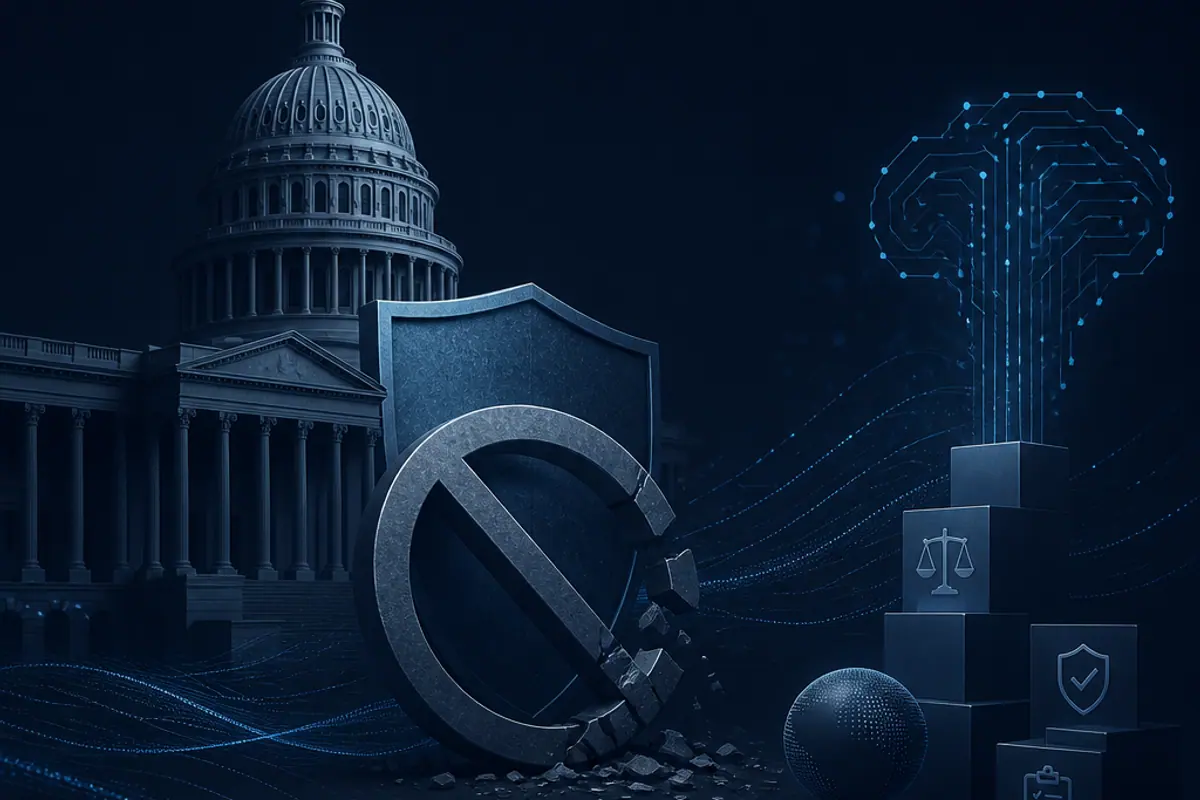
The US Senate has rejected a proposed federal moratorium on state and local AI regulations, meaning individual states keep the authority to regulate AI within their own borders instead of that power moving to Washington alone. In a decisive vote that stunned Big Tech lobbyists, the U.S. Senate has rejected a proposed 10-year federal moratorium on state and local AI regulations, fundamentally altering the American AI compliance landscape. This landmark decision ensures that state-level AI governance will continue evolving independently, creating a complex regulatory environment that enterprises must navigate with unprecedented sophistication.
The Senate's overwhelming rejection of the moratorium - which had been heavily promoted by major technology companies including Google, Meta, Amazon, and Microsoft - represents a rare defeat for coordinated Big Tech lobbying efforts and signals a decisive shift toward decentralised AI governance in the United States.
The Regulatory Landscape Transformation
What the Senate Decision Means
The removal of the proposed federal moratorium preserves state authority to regulate artificial intelligence systems across multiple dimensions:
Content Moderation Requirements: States retain power to mandate specific AI content filtering and moderation standards
Privacy Protection Standards: State-level data protection requirements for AI systems remain enforceable
Algorithmic Bias Prevention: Anti-discrimination requirements for AI decision-making systems continue under state jurisdiction
Child Protection Measures: State regulations protecting minors from AI-generated content and targeting remain valid
Election Integrity Safeguards: State laws preventing AI manipulation of electoral processes maintain full force
The Big Tech Lobbying Failure
The scale of technology industry lobbying defeat cannot be understated. Major tech corporations invested significant resources attempting to secure federal preemption of state AI regulations, arguing that a patchwork of state laws would stifle innovation and create compliance burdens.
However, the Senate's near-unanimous rejection demonstrates growing bipartisan concern about concentrating AI governance authority at the federal level, particularly when technology companies would benefit from reduced regulatory oversight.
This lobbying failure signals a fundamental shift in how lawmakers view technology industry policy preferences, suggesting future federal AI legislation will face greater scrutiny regarding corporate influence.
State-Level AI Regulation Implications
California as the National Standard
With federal preemption rejected, California's comprehensive AI regulatory framework effectively becomes the de facto national standard for companies operating across multiple states. California's existing AI regulations cover:
Biometric Content Protection: Requirements for consent and disclosure when AI systems process biometric data
Election Deepfake Prevention: Strict prohibitions on AI-generated content designed to influence electoral outcomes
Algorithmic Bias Mitigation: Systematic requirements for fairness testing and bias prevention in AI decision-making
Transparency Mandates: Disclosure requirements for AI system capabilities and limitations
Enterprises operating nationally must treat California's standards as their baseline compliance requirement, as these represent the most comprehensive state-level AI governance framework currently in effect.
Emerging State Regulatory Diversity
Beyond California, multiple states are developing AI-specific legislation that will create varied compliance requirements:
Texas: Focusing on AI in government services and public sector applications
New York: Emphasising AI employment and hiring decision regulations
Illinois: Concentrating on biometric privacy and AI surveillance limitations
Florida: Developing AI transparency requirements for public sector deployment
This regulatory diversity means that enterprises must develop flexible compliance frameworks capable of adapting to multiple, potentially conflicting state requirements.
Business Compliance Implications
The End of One-Size-Fits-All Governance
The Senate's decision eliminates any possibility of simple, uniform AI compliance approaches. Enterprises must now prepare for:
Multi-Jurisdictional Compliance: Systematic tracking and implementation of varying state requirements across operational locations
Dynamic Regulatory Adaptation: Ongoing monitoring and adjustment as new state laws emerge and existing regulations evolve
Baseline Standard Setting: Identifying the highest common denominator of state requirements as the minimum compliance standard
Documentation Complexity: Maintaining comprehensive records demonstrating compliance across multiple regulatory frameworks
Integration with Federal Requirements
While state regulations proceed independently, federal AI requirements continue evolving through agency-specific rules and executive orders. This creates a multi-layered compliance environment where enterprises must simultaneously address:
Federal Framework Alignment: Ensuring compliance with NIST AI Risk Management Framework requirements and federal agency guidance
International Coordination: Maintaining alignment with global frameworks like the EU AI Act for companies operating internationally
State-Specific Implementation: Adapting federal best practices to meet varying state regulatory requirements
Registry Preparation: Building documentation systems that support both state reporting requirements and federal oversight as AI registry systems continue developing
Strategic Implementation Framework
Modular Compliance Architecture
Successful navigation of fragmented AI regulation requires modular compliance systems that can adapt to varying requirements:
Core Compliance Engine: Fundamental AI governance capabilities that meet the highest standards across all jurisdictions
State-Specific Modules: Adaptable components that address unique requirements in specific states
Federal Integration: Coordination mechanisms ensuring state compliance supports rather than conflicts with federal requirements
International Alignment: Integration points that enable global compliance coordination
Real-Time Regulatory Monitoring
The dynamic nature of state AI regulation demands sophisticated monitoring capabilities:
Legislative Tracking: Systematic monitoring of AI-related bills and regulations across all relevant state legislatures
Implementation Guidance: Analysis of how state agencies interpret and enforce AI regulations in practice
Enforcement Patterns: Understanding how different states prioritise and pursue AI compliance violations
Cross-State Coordination: Identifying opportunities for multi-state compliance efficiencies
Industry-Specific Considerations
Financial Services
Financial institutions face particularly complex state AI regulation challenges:
Multi-State Licensing: Banks operating across state lines must comply with varying AI requirements for credit decisions, fraud detection, and customer service
Regulatory Coordination: Financial regulators at state and federal levels may have conflicting AI oversight expectations
Consumer Protection: State consumer protection laws may impose additional AI transparency requirements beyond federal banking regulations
Fair Lending Compliance: State anti-discrimination laws may require more comprehensive bias testing and fairness validation than federal requirements
Healthcare Systems
Healthcare organisations must navigate state AI regulations alongside federal medical device and privacy requirements:
Telemedicine Compliance: State medical practice laws may impose different AI disclosure requirements for telehealth services
Patient Privacy Protection: State privacy laws may exceed federal HIPAA requirements for AI processing of health information
Clinical Decision Support: State medical practice regulations may require different validation standards for AI diagnostic tools
Insurance Coverage: State insurance regulations may affect AI-driven healthcare coverage decisions
Technology Companies
Technology companies face the most direct impact from continued state AI regulation:
Platform Liability: Different states may impose varying content moderation requirements for AI-generated content
Data Processing Standards: State privacy laws create patchwork requirements for AI training data and model development
Algorithmic Transparency: Some states may require more extensive disclosure of AI system capabilities than others
Child Protection: State laws protecting minors may impose different age verification and content filtering requirements
Building Regulatory Resilience
Documentation and Evidence Systems
Fragmented regulation requires comprehensive documentation capabilities:
Multi-Framework Mapping: Clear documentation showing how AI systems comply with requirements across multiple jurisdictions
State-Specific Evidence: Detailed records demonstrating compliance with each state's unique requirements
Federal Integration Records: Documentation showing coordination between state compliance and federal requirements
Audit Trail Maintenance: Comprehensive records supporting regulatory examination across multiple jurisdictions
Stakeholder Engagement
Successful multi-state compliance requires sophisticated stakeholder management:
State Regulator Relations: Building relationships with AI oversight officials across multiple states
Industry Coordination: Participating in industry efforts to understand and influence state AI regulation development
Legal Expertise: Engaging legal counsel with specific expertise in state AI regulation interpretation
Federal Coordination: Maintaining dialogue with federal agencies developing AI oversight capabilities
Preparing for Continued Evolution
Anticipating Regulatory Development
State AI regulation will continue evolving rapidly, requiring proactive preparation:
Emerging Legislation: Multiple states are developing comprehensive AI governance frameworks that will create new compliance requirements
Enforcement Precedents: Early state enforcement actions will establish compliance expectations and penalty frameworks
Interstate Coordination: States may develop coordination mechanisms that create de facto national standards
Federal Response: Federal agencies may develop guidance specifically addressing state AI regulation coordination
Technology Integration
Effective multi-state compliance requires sophisticated technology platforms:
Automated Compliance Monitoring: Systems that track compliance status across multiple state requirements simultaneously
Dynamic Documentation: Platforms that generate state-specific compliance reports from common data sources
Risk Assessment Integration: Tools that identify compliance gaps and conflicts across different regulatory frameworks
Incident Response Coordination: Systems that manage compliance incidents affecting multiple jurisdictions
Professional Implementation Support
Given the complexity of navigating fragmented state AI regulation alongside federal and international requirements, most enterprises require specialised expertise to develop comprehensive multi-jurisdictional compliance frameworks. Professional services should provide:
Regulatory Landscape Analysis: Comprehensive assessment of AI compliance requirements across all relevant state and federal jurisdictions
Modular Framework Design: Development of compliance architectures that adapt efficiently to varying state requirements
Implementation Planning: Systematic approaches for deploying multi-state compliance capabilities within existing business processes
Ongoing Monitoring Services: Continuous tracking of regulatory developments and compliance requirement changes across multiple jurisdictions
Documentation Support: Creation of comprehensive audit trails demonstrating compliance across complex regulatory environments
The complexity of simultaneous state, federal, and international AI compliance makes professional expertise essential for effective governance. Enterprises need partners who combine deep regulatory knowledge with practical implementation experience across multiple jurisdictions.
Strategic Business Implications
Competitive Advantages Through Compliance Excellence
Sophisticated multi-state AI compliance capabilities create multiple business advantages:
Market Access: Superior compliance capabilities enable confident expansion into new state markets
Customer Trust: Demonstrated compliance excellence builds stakeholder confidence in AI governance
Regulatory Relationships: Proactive compliance approaches build positive relationships with state regulators
Innovation Enablement: Robust compliance frameworks enable confident deployment of advanced AI capabilities
Risk Mitigation Priorities
Multi-state regulatory compliance reduces multiple business risks:
Enforcement Exposure: Systematic compliance reduces vulnerability to state regulatory penalties
Operational Disruption: Proactive compliance prevents regulatory actions that could disrupt business operations
Reputational Protection: Comprehensive compliance demonstrates commitment to responsible AI deployment
Legal Liability: Systematic compliance reduces exposure to state-level legal challenges
Conclusion
The U.S. Senate's decisive rejection of federal AI regulation moratorium fundamentally alters the American AI compliance landscape, ensuring that enterprises must navigate a complex, multi-layered regulatory environment for the foreseeable future.
This development creates both challenges and opportunities for forward-thinking organisations. Companies that invest in sophisticated, modular compliance capabilities will gain significant competitive advantages whilst those that fail to adapt to regulatory fragmentation will face increasing enforcement exposure and operational constraints.
Success requires systematic approaches that integrate state-specific requirements with federal oversight and international coordination, creating comprehensive governance frameworks that enable innovation whilst ensuring regulatory compliance across all operational jurisdictions.
The regulatory landscape will continue evolving as states develop their AI governance capabilities and federal agencies adapt to the multi-jurisdictional environment. Organisations that embrace this complexity and build adaptive compliance capabilities will be positioned to lead in the regulated AI economy of the future.
Frequently asked questions
What was the US Senate AI moratorium?
The AI moratorium was a proposed measure that would have blocked states from enforcing their own AI regulations for a set period, centralising AI oversight at the federal level instead. Its rejection means states retain the power to regulate AI on issues like bias, privacy, and content moderation within their own jurisdictions.
Why does the moratorium's rejection matter for businesses?
It means there's no single national AI compliance standard to build toward. Businesses operating across multiple US states now have to track and satisfy each state's individual AI rules, rather than one federal baseline, which raises the bar for compliance planning.
Does this affect companies outside the United States?
Yes, indirectly. Any company serving US customers or operating US subsidiaries needs to account for state-level AI rules alongside frameworks such as the EU AI Act, since the two regimes don't automatically align.
What should a business do first in response to this fragmented regulatory picture?
The practical starting point is mapping which states' AI rules actually apply to the business, then identifying the strictest common requirements to use as an internal baseline. That approach avoids building fifty separate compliance programmes from scratch.
If you want support with this, VerityAI offers AI compliance and risk review.

Sotiris Spyrou
Sotiris Spyrou is the founder of VerityAI, a Responsible AI advisory for boards and AI-deploying businesses. With 27 years across agencies and global in-house roles, including Global Head of SEO at Robert Half and Group Head of Search at Gamesys, he advises leaders on AI governance and risk, and on answer-engine visibility engineered without the dark patterns the rest of the industry is getting penalised for. He is the author of TRANSFORM, AI Moats, and Ethical AI.
Founder at VerityAI
Areas of Expertise: