Policy Silos and AI Security: Breaking Down Organisational Barriers
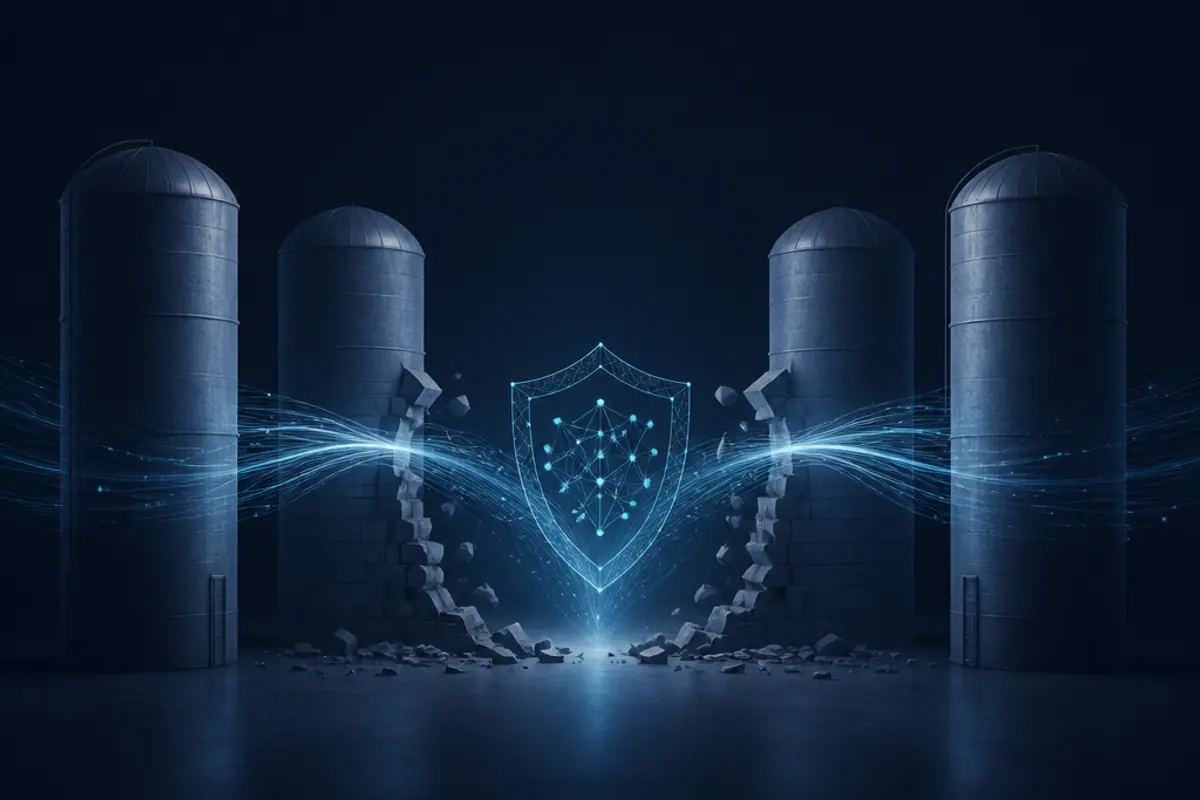
The Invisible Enemy: Organisational Fragmentation
Policy silos in AI security are the departmental, cultural, and process gaps between IT, compliance, risk, and business teams that let AI vulnerabilities slip through unnoticed. The most dangerous threats to AI security often don't come from sophisticated hackers or advanced malware. They come from within organisations themselves, through the invisible barriers created by departmental silos, competing priorities, and fragmented policies. These organisational vulnerabilities can be more devastating than any external attack because they systematically undermine every other security measure.
Recent intelligence from a Bank of England cybersecurity expert highlighted this critical challenge: *"Team working in silos" *and "In groups and out groups and factions when it comes to policy" were identified as significant obstacles to effective AI security. This observation reveals a fundamental truth - AI security cannot be achieved through technology alone; it requires organisational transformation that breaks down traditional barriers.
The financial services sector, with its complex regulatory environment and traditional hierarchical structures, provides a particularly stark example of how organisational silos can create fatal security gaps. But this challenge extends across all industries deploying AI systems at scale.
Understanding Policy Silos in AI Context
Policy silos in AI security manifest in several interconnected ways that create compound vulnerabilities:
Departmental Isolation
Traditional organisational structures create natural barriers:
IT Security vs AI Development: Security teams focused on traditional threats while AI teams prioritise functionality and performance.
Compliance vs Innovation: Compliance teams enforcing existing regulations while innovation teams push boundaries of what's possible.
Risk Management vs Business Units: Risk teams identifying potential problems while business units focus on competitive advantages.
Legal vs Technical Teams: Legal teams interpreting regulations while technical teams implement solutions.
Competing Priorities
Different departments often have conflicting objectives:
Security vs Performance: Security measures that slow AI system performance create tension.
Compliance vs Speed: Regulatory compliance requirements that delay AI deployment.
Cost vs Risk: Budget constraints that limit security investments.
Innovation vs Stability: Pressure to innovate conflicting with operational stability requirements.
Information Asymmetries
Silos create dangerous information gaps:
Technical Knowledge: Business leaders lacking understanding of AI technical risks.
Business Context: Technical teams lacking understanding of business implications.
Regulatory Intelligence: Fragmented understanding of regulatory requirements across teams.
Threat Intelligence: Security intelligence not reaching relevant decision-makers.
The Anatomy of Silo-Driven Security Failures
Understanding how policy silos create security failures helps organisations identify and address vulnerabilities:
Communication Breakdowns
Poor communication between silos creates critical gaps:
Language Barriers: Different departments using different terminology for the same concepts.
Information Hoarding: Departments protecting information to maintain relevance and power.
Reporting Hierarchies: Information flowing up hierarchies but not across departments.
Meeting Structures: Separate meetings for different topics preventing holistic discussion.
Decision-Making Fragmentation
Fragmented decision-making creates inconsistencies:
Authority Conflicts: Unclear authority for AI security decisions across departments.
Parallel Processes: Multiple departments making related decisions without coordination.
Inconsistent Standards: Different departments applying different standards to AI systems.
Resource Competition: Departments competing for limited resources rather than collaborating.
Policy Inconsistencies
Inconsistent policies create exploitable gaps:
Contradictory Requirements: Different departments imposing contradictory requirements on AI systems.
Governance Gaps: Areas where no department has clear responsibility for AI security.
Enforcement Variations: Inconsistent enforcement of policies across different areas.
Update Misalignment: Policies updated independently without consideration of dependencies.
Industry-Specific Silo Challenges
Different industries face unique silo-related challenges in AI security:
Financial Services
The Bank of England's TRUSTED AI framework addresses several silo-related challenges:
Regulatory Complexity: Multiple regulators with overlapping but distinct requirements.
Business Line Isolation: Different business lines (trading, retail banking, investment) with separate AI initiatives.
Regional Variations: Global financial institutions facing different requirements across jurisdictions.
Legacy Integration: Traditional systems and processes conflicting with AI innovation requirements.
Healthcare
Healthcare organisations face specific silo challenges:
Clinical vs Administrative: Clinical AI systems governed differently from administrative systems.
Privacy vs Research: Patient privacy requirements conflicting with research and development needs.
Medical vs IT: Medical professionals and IT teams having different priorities and languages.
Regulatory Oversight: Multiple regulatory bodies with different requirements and timelines.
Manufacturing
Manufacturing organisations experience unique silo issues:
Operational vs Corporate: Plant-level AI systems versus corporate AI initiatives.
Safety vs Efficiency: Safety teams and efficiency teams having different priorities.
Engineering vs Business: Engineering teams focused on technical excellence versus business teams focused on ROI.
Supply Chain Coordination: Coordination challenges across complex supply chain relationships.
The Hidden Costs of Silos
Policy silos create both direct and indirect costs that organisations often don't fully recognise:
Security Vulnerabilities
Gap Exploitation: Attackers exploiting gaps between departmental responsibilities.
Delayed Response: Slow incident response due to communication and coordination failures.
Inconsistent Protection: Inconsistent security measures across different AI systems.
Knowledge Gaps: Critical security knowledge not reaching relevant decision-makers.
Compliance Failures
Regulatory Violations: Violations due to inconsistent interpretation of requirements.
Audit Failures: Audit failures due to poor coordination and documentation.
Penalty Exposure: Financial penalties due to compliance gaps.
Reputational Damage: Reputational damage from compliance failures.
Operational Inefficiencies
Duplicated Efforts: Multiple departments working on similar problems independently.
Resource Waste: Inefficient allocation of resources due to poor coordination.
Delayed Projects: Project delays due to poor coordination and communication.
Suboptimal Solutions: Suboptimal solutions due to limited perspective and input.
Innovation Limitations
Constrained Creativity: Innovation constrained by departmental boundaries.
Missed Opportunities: Opportunities missed due to poor information sharing.
Slow Adaptation: Slow adaptation to new threats and opportunities.
Competitive Disadvantage: Competitive disadvantage due to organisational inefficiencies.
Breaking Down Silos: Strategic Approaches
Organisations must take systematic approaches to breaking down policy silos:
Governance Innovation
Cross-Functional Teams: Creating cross-functional teams with clear authority for AI security decisions.
Matrix Structures: Implementing matrix organisational structures that promote collaboration.
Shared Objectives: Establishing shared objectives and success metrics across departments.
Executive Sponsorship: Ensuring senior executive sponsorship for cross-departmental initiatives.
Communication Enhancement
Common Language: Developing common terminology and language for AI security discussions.
Regular Forums: Establishing regular forums for cross-departmental communication.
Information Sharing: Creating systems and processes for effective information sharing.
Feedback Mechanisms: Implementing feedback mechanisms to improve communication over time.
Process Integration
Integrated Workflows: Creating integrated workflows that span multiple departments.
Joint Planning: Implementing joint planning processes for AI security initiatives.
Coordinated Reviews: Coordinating reviews and approvals across relevant departments.
Unified Reporting: Creating unified reporting structures for AI security metrics.
Technology Solutions
Collaboration Platforms: Implementing technology platforms that support collaboration.
Shared Dashboards: Creating shared dashboards for AI security monitoring.
Integrated Systems: Integrating systems to support cross-departmental workflows.
Knowledge Management: Implementing knowledge management systems for shared learning.
Organisational Design for AI Security
Effective AI security requires intentional organisational design:
Structural Solutions
Centers of Excellence: Creating AI security centers of excellence with cross-functional representation.
Advisory Committees: Establishing advisory committees with representatives from all relevant departments.
Liaison Roles: Creating liaison roles to facilitate communication between departments.
Reporting Relationships: Designing reporting relationships that promote collaboration.
Cultural Solutions
Shared Values: Promoting shared values that prioritise collaboration and security.
Recognition Systems: Implementing recognition systems that reward collaborative behaviour.
Training Programs: Providing training programs that promote cross-functional understanding.
Leadership Modeling: Ensuring leaders model collaborative behaviour.
Process Solutions
Integrated Planning: Implementing integrated planning processes that consider multiple perspectives.
Joint Decision-Making: Creating joint decision-making processes for critical AI security decisions.
Coordinated Implementation: Coordinating implementation across multiple departments.
Continuous Improvement: Implementing continuous improvement processes that span departments.
The Role of Technology in Breaking Down Silos
Technology can both create and solve silo problems:
Enabling Technologies
Collaboration Platforms: Platforms that enable real-time collaboration across departments.
Workflow Integration: Technologies that integrate workflows across departmental boundaries.
Data Sharing: Secure data sharing technologies that enable cross-departmental insight.
Communication Tools: Advanced communication tools that facilitate cross-functional discussion.
AI-Powered Solutions
Automated Coordination: AI systems that automatically coordinate activities across departments.
Intelligent Routing: Systems that intelligently route information to relevant stakeholders.
Predictive Analytics: Analytics that predict and prevent coordination failures.
Natural Language Processing: NLP systems that translate between departmental languages.
Integration Architectures
API Integration: API architectures that enable system integration across departments.
Data Integration: Data integration platforms that provide unified views across departments.
Process Integration: Process integration platforms that coordinate cross-departmental workflows.
Security Integration: Security platforms that provide unified protection across systems.
Measuring Silo Effectiveness
Organisations must measure their success in breaking down silos:
Collaboration Metrics
Cross-Functional Projects: Number and success rate of cross-functional projects.
Communication Frequency: Frequency and quality of cross-departmental communication.
Information Sharing: Metrics on information sharing across departments.
Joint Decision-Making: Percentage of decisions made through joint processes.
Security Metrics
Gap Identification: Speed and accuracy of security gap identification.
Incident Response: Coordination effectiveness during security incidents.
Compliance Achievement: Achievement of compliance objectives across departments.
Threat Intelligence: Effectiveness of threat intelligence sharing.
Business Metrics
Project Speed: Speed of AI project delivery with cross-functional coordination.
Innovation Rate: Rate of innovation enabled by cross-functional collaboration.
Cost Efficiency: Cost efficiency gains from eliminating duplicated efforts.
Customer Satisfaction: Customer satisfaction with coordinated AI services.
Cultural Metrics
Employee Engagement: Employee engagement in cross-functional activities.
Knowledge Sharing: Willingness to share knowledge across departments.
Collaborative Behaviour: Observable collaborative behaviour in meetings and projects.
Leadership Support: Visible leadership support for cross-functional initiatives.
Regulatory and Compliance Considerations
Breaking down silos must consider regulatory and compliance requirements:
Regulatory Alignment
Multiple Regulators: Coordinating responses to multiple regulatory requirements.
Interpretation Consistency: Ensuring consistent interpretation of regulations across departments.
Reporting Coordination: Coordinating regulatory reporting across departments.
Audit Preparation: Preparing for audits that span multiple departments.
Compliance Integration
Policy Consistency: Ensuring policy consistency across departments while meeting specific requirements.
Risk Management: Integrating risk management across different types of risks and departments.
Documentation: Maintaining documentation that supports cross-departmental compliance.
Training Coordination: Coordinating compliance training across departments.
International Considerations
Global Consistency: Maintaining consistency across global operations while respecting local requirements.
Cross-Border Coordination: Coordinating across international boundaries and regulatory jurisdictions.
Cultural Sensitivity: Respecting cultural differences while promoting collaboration.
Legal Harmonisation: Harmonising legal interpretation across different jurisdictions.
Success Stories and Lessons Learned
Learning from successful silo-breaking initiatives provides valuable insights:
Financial Services Success
A major international bank successfully broke down silos through:
Executive Mandate: Clear executive mandate for cross-functional AI security collaboration.
Shared Metrics: Shared success metrics across IT, risk, and business units.
Regular Reviews: Regular cross-functional reviews of AI security posture.
Training Investment: Significant investment in cross-functional training and development.
Healthcare Innovation
A large healthcare system achieved silo integration through:
Patient Focus: Focusing on patient outcomes as shared objective across departments.
Clinical Leadership: Clinical leadership of AI security initiatives with IT support.
Regulatory Coordination: Coordinated approach to multiple healthcare regulators.
Pilot Programs: Successful pilot programs that demonstrated collaboration benefits.
Manufacturing Excellence
A global manufacturer broke down silos through:
Safety Integration: Integrating AI security with traditional safety programs.
Plant Autonomy: Giving plant-level teams autonomy while maintaining coordination.
Supply Chain Collaboration: Extending collaboration to supply chain partners.
Continuous Improvement: Continuous improvement culture that spans departments.
The Future of Organisational AI Security
The future will require even greater organisational integration:
Emerging Trends
Ecosystem Thinking: Moving from departmental to ecosystem thinking about AI security.
Dynamic Structures: More dynamic organisational structures that adapt to changing needs.
AI-Powered Coordination: Using AI systems to improve organisational coordination.
Stakeholder Integration: Integrating external stakeholders into AI security governance.
Technology Evolution
Automated Governance: Automated governance systems that coordinate across departments.
Intelligent Workflows: Workflows that intelligently adapt to organisational needs.
Predictive Coordination: Systems that predict and prevent coordination failures.
Virtual Collaboration: Virtual collaboration technologies that eliminate geographical barriers.
Regulatory Evolution
Integrated Regulation: Regulations that require integrated organisational approaches.
Cross-Industry Standards: Standards that span multiple industries and departments.
International Coordination: International coordination requirements for global organisations.
Dynamic Compliance: Compliance requirements that adapt to changing organisational structures.
Strategic Recommendations
Organisations should take systematic approaches to breaking down AI security silos:
Immediate Actions
Silo Assessment: Comprehensive assessment of current organisational silos and their security implications.
Quick Wins: Identification and implementation of quick wins in cross-departmental collaboration.
Communication Improvement: Immediate improvements in cross-departmental communication.
Leadership Alignment: Ensuring leadership alignment on the importance of silo elimination.
Medium-Term Strategy
Organisational Redesign: Systematic redesign of organisational structures to promote collaboration.
Process Integration: Integration of processes across departmental boundaries.
Technology Investment: Investment in technologies that support cross-functional collaboration.
Culture Change: Systematic culture change initiatives to promote collaboration.
Long-Term Vision
Ecosystem Integration: Integration with external ecosystem partners in AI security governance.
Continuous Evolution: Continuous evolution of organisational structures to meet changing needs.
Industry Leadership: Leadership in organisational approaches to AI security.
Innovation Culture: Culture of innovation that spans organisational boundaries.
The VerityAI Advantage
The complexity of organisational silo challenges highlights the value of independent perspective and expertise. VerityAI's approach addresses organisational factors in AI security:
Organisational Assessment: Assessment of organisational factors affecting AI security.
Cross-Functional Facilitation: Facilitation of cross-functional collaboration in AI security.
Best Practice Guidance: Guidance on organisational best practices for AI security.
Independent Perspective: Independent perspective on organisational challenges and solutions.
For organisations struggling with policy silos in AI security, VerityAI provides the external perspective and expertise needed to identify and address organisational barriers to effective AI security.
The Organisational Imperative
Breaking down policy silos isn't just about improving organisational efficiency - it's about survival in an AI-driven world where security threats are becoming more sophisticated and coordinated. Organisations that fail to break down silos will find themselves vulnerable to attacks that exploit the gaps between departments, regulations, and processes.
The two-year timeline for AI security maturity makes organisational transformation even more critical. Organisations must establish effective cross-functional collaboration now, before the threat landscape makes poor coordination catastrophically expensive.
The question for organisational leaders is not whether to address policy silos, but how quickly and effectively to do so. The organisations that successfully break down silos will define the future of AI security.
Ready to break down organisational barriers to effective AI security? Contact VerityAI for comprehensive organisational assessment and strategic guidance that transforms departmental silos into integrated security advantages.
This is the kind of work our AI governance advisory handles.
Frequently asked questions
What are policy silos in AI security?
Policy silos are the gaps that form when departments such as IT security, compliance, risk, and the business units running AI systems work to different priorities without a shared view of AI risk. Each team may follow its own rules and reporting lines, so nobody holds a complete picture of how secure the organisation's AI actually is.
Why do policy silos matter more for AI than for traditional IT?
AI systems cut across departments in ways traditional software often doesn't: a single model can touch data governance, customer-facing decisions, and regulatory reporting at once. When the teams responsible for each of those areas don't talk to each other, gaps between their policies become the easiest point for a security or compliance failure to occur.
Who is responsible for closing policy silos in an organisation?
Responsibility sits with senior leadership rather than any single department, because breaking down silos requires authority that spans IT, risk, compliance, and business units. Effective governance usually involves a cross-functional structure, such as a steering group or centre of excellence, with an executive sponsor who can resolve disputes between teams.
How can an organisation tell if it has a policy silo problem?
Common signs include inconsistent AI policies across departments, security or compliance issues that surface only after deployment, and teams discovering they've each been solving the same problem separately. An independent review of governance structures and decision rights is usually the fastest way to confirm where the gaps sit.

Sotiris Spyrou
Sotiris Spyrou is the founder of VerityAI, a Responsible AI advisory for boards and AI-deploying businesses. With 27 years across agencies and global in-house roles, including Global Head of SEO at Robert Half and Group Head of Search at Gamesys, he advises leaders on AI governance and risk, and on answer-engine visibility engineered without the dark patterns the rest of the industry is getting penalised for. He is the author of TRANSFORM, AI Moats, and Ethical AI.
Founder at VerityAI
Areas of Expertise: