MCP Is Becoming The AI Integration Standard - But Nobody's Governing It
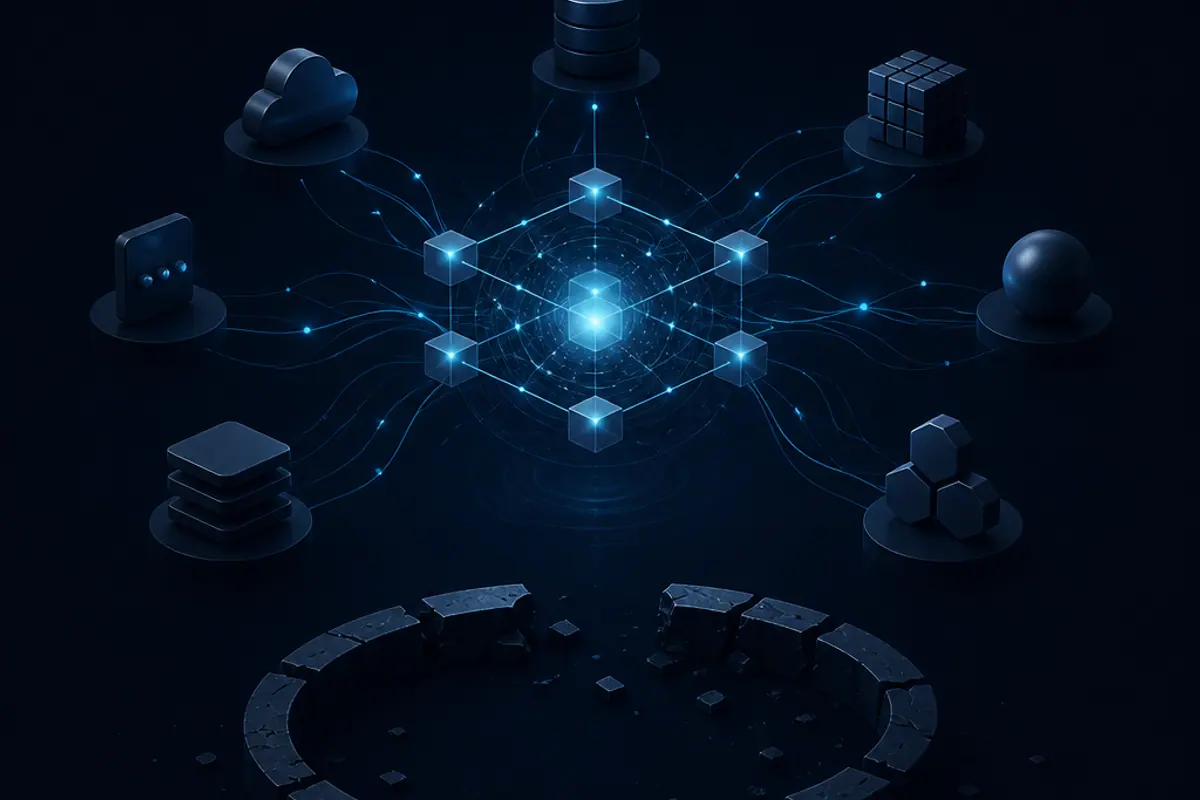
Model Context Protocol is rapidly becoming the "USB-C for AI" - a universal standard that enables any AI agent to connect to any business service through standardised communication protocols. This standardisation promises new AI capabilities, allowing agents to directly access databases, interact with design tools, coordinate business applications, and execute complex workflows.
Model Context Protocol (MCP) is a standard that lets AI agents connect directly to business systems, and most organisations adopting it have no governance framework in place to control what those connections can do.
But there's a critical problem: whilst MCP adoption accelerates across organisations, virtually no governance frameworks exist to ensure these connections are secure, compliant, or properly controlled. The same standardisation that makes MCP powerful also creates systematic blind spots that most organisations haven't even identified, let alone addressed.
The implications are staggering. AI agents can now directly query production databases, access design systems, and coordinate business processes through connections that bypass traditional security controls and compliance checkpoints. Yet most implementations are being deployed as "easy setup" solutions that prioritise convenience over governance.
The Universal Translator Revolution
MCP fundamentally transforms how AI systems interact with business infrastructure. Instead of users interfacing through browsers and applications to access services, AI agents can now connect directly to services through standardised middleware. This creates a paradigm shift that eliminates traditional human oversight points whilst dramatically expanding AI capabilities.
The three-component architecture - Host (AI application), Client (communication handler), and Server (service connector) - enables AI agents to interact with virtually any external service that implements MCP support. From databases and version control systems to design tools and business applications, the entire digital ecosystem becomes directly accessible to AI agents.
This universal connectivity offers remarkable capabilities. AI agents can query databases in natural language, understand system architectures, generate code from design specifications, and coordinate complex business processes across multiple applications. The productivity benefits are extraordinary - but the governance implications are catastrophic.
The Easy Setup Trap
The simplicity of MCP implementation creates dangerous assumptions about security and compliance. Setup tutorials demonstrate how to deploy MCP servers using simple commands that pull configurations from cloud repositories to local machines. The entire process can be completed in minutes, enabling AI agents to access critical business systems without comprehensive security review.
Resource hubs like discovery platforms make it easy to find popular MCP servers ranked by downloads or GitHub stars, but these metrics don't indicate security quality or compliance suitability. Organisations are implementing MCP servers based on popularity rather than governance standards, creating systematic vulnerabilities across their AI infrastructure.
The local execution model compounds these risks. MCP servers run with file system access and can interact directly with applications, creating potential attack vectors that traditional security frameworks don't address. When AI agents can execute database queries, access file systems, and coordinate application interactions through locally hosted middleware, the attack surface expands exponentially.
Database Access: The Compliance Nightmare
Perhaps nowhere are the governance gaps more concerning than in database integration. Popular MCP implementations enable AI agents to directly query production databases, understand schema structures, and respond to natural language questions about sensitive data. This capability transforms AI agents from external tools into internal system operators with broad data access.
Consider the compliance implications: an AI agent with database access through MCP can potentially:
Query customer personal data without explicit consent verification
Access financial records across multiple jurisdictions with varying regulations
Combine data from different systems in ways that violate purpose limitation requirements
Generate reports that inadvertently expose sensitive information
Create audit trails that don't integrate with existing governance systems
Traditional database access controls assume human operators who understand compliance requirements and make conscious decisions about data usage. AI agents accessing databases through MCP may not recognise regulatory boundaries or compliance limitations, creating systematic risks that accumulate with each query.
The Development Workflow Blindspot
The integration of MCP with development tools like Cursor AI creates particularly concerning governance gaps. AI agents can now access design systems, generate code from visual specifications, and coordinate development workflows across multiple tools and repositories.
The Figma-to-code workflow exemplifies these risks. AI agents can copy design elements directly from design systems and automatically generate corresponding component code. This capability is remarkable for productivity but creates several compliance challenges:
Intellectual Property Risks: AI agents may generate code that inadvertently infringes on design patents or copyrighted elements without human oversight.
Security Vulnerabilities: Automated code generation may create security flaws that aren't caught by traditional review processes designed for human-generated code.
Compliance Violations: Generated code may not follow organisational coding standards, security requirements, or regulatory compliance guidelines.
Audit Trail Gaps: The automatic translation from design to code may not create adequate documentation for compliance audits or security reviews.
These challenges mirror the issues we're seeing with sophisticated AI coding tools, but MCP standardisation makes them systematic across entire development ecosystems rather than isolated to specific tools.
The Business Opportunity Risk
The recognition that MCP creates significant business opportunities - similar to how websites became essential in the early internet era - is driving rapid development of new MCP servers and integration solutions. This entrepreneurial energy is accelerating MCP adoption but also creating a compliance race-to-the-bottom as new solutions prioritise functionality over governance.
Early-stage companies are building MCP servers for existing business applications without necessarily understanding the compliance requirements of those applications. A startup creating an MCP server for financial data may not understand financial services regulations. A team building healthcare integrations may not grasp HIPAA implications. A developer creating HR system connections may not consider employment law requirements.
This distributed development model means that compliance expertise is often separated from implementation expertise, creating systematic gaps in governance understanding across the MCP ecosystem.
The Security Evaluation Challenge
The emphasis on easy evaluation and implementation creates false security assumptions. Resource discovery platforms that rank MCP servers by popularity metrics don't provide security assessments or compliance evaluations. Organisations are selecting MCP implementations based on community adoption rather than security quality or regulatory suitability.
The local server model compounds these challenges. When organisations host their own MCP servers, they assume responsibility for security, maintenance, and compliance that they may not be equipped to handle. Unlike managed services with clear security standards and compliance certifications, self-hosted MCP servers create governance responsibilities that many organisations aren't prepared for.
Security considerations that most organisations don't adequately address include:
File System Access Controls: MCP servers often require broad file system access that may exceed the principle of least privilege
Network Security: Local servers create new network endpoints that may not be adequately protected
Update Management: Community-developed servers may not receive timely security updates
Vulnerability Assessment: Self-hosted servers may not undergo regular security testing
Incident Response: Security incidents in MCP infrastructure may not trigger existing response procedures
The Configuration Management Gap
The configuration requirements for MCP implementation - modifying configuration files, restarting applications, enabling developer modes - bypass traditional IT governance processes. Developers can implement MCP connections without going through standard security reviews, change management procedures, or compliance assessments.
This creates a shadow IT problem specific to AI infrastructure. Whilst organisations may have robust governance for traditional IT deployments, MCP implementations often happen at the developer level without organisational oversight. The ease of configuration encourages experimentation that may not include adequate security or compliance consideration.
The developer-friendly setup process is designed to reduce friction, but friction often serves important governance purposes. The administrative approval processes, security reviews, and compliance assessments that traditional IT deployments require exist to prevent exactly the kinds of systematic risks that unconstrained MCP deployment creates.
The Future Integration Explosion
As major technology platforms implement native MCP support, the governance challenges will multiply exponentially. When MCP becomes a standard feature across development tools, business applications, and AI platforms, the current ad-hoc approach to security and compliance will become completely inadequate.
The network effect of standardisation means that MCP adoption is likely to accelerate rapidly once critical mass is achieved. Organisations that haven't established governance frameworks for MCP will find themselves overwhelmed by the pace of integration and the complexity of managing compliance across rapidly expanding AI-service connections.
This acceleration mirrors the challenges we've seen with other rapidly advancing AI capabilities, where regulatory frameworks struggle to keep pace with technological development. But MCP standardisation makes the challenge more complex because it affects the entire ecosystem of AI-business integration rather than individual AI capabilities.
Building MCP Governance Frameworks
The standardisation that makes MCP powerful also makes systematic governance possible. Rather than attempting to control every possible AI-service integration individually, organisations can develop governance frameworks that address MCP connections systematically.
Effective MCP governance requires several critical components:
Connection Authorization: Policies that define which AI agents can access which services through MCP, based on both AI capabilities and service sensitivity.
Security Standards: Requirements for MCP server security, including access controls, encryption, monitoring, and incident response capabilities.
Compliance Validation: Processes that ensure MCP-enabled AI interactions comply with relevant regulations, including data protection, financial services, and industry-specific requirements.
Audit Capabilities: Logging and monitoring systems that create adequate audit trails for AI actions taken through MCP connections.
Risk Assessment: Frameworks that evaluate the compliance and security implications of new MCP integrations before deployment.
The Early Adopter Advantage
Despite the governance challenges, organisations that establish robust MCP frameworks early will capture significant competitive advantages. The standardisation enables AI capabilities that aren't possible with proprietary integration approaches, whilst systematic governance ensures these capabilities can be deployed safely at scale.
Early movers can influence the development of MCP governance standards across their industries, establish best practices that become competitive advantages, and build AI capabilities that competitors struggle to match without similar governance sophistication.
But these advantages require solving the governance challenge proactively rather than reactively. Organisations that deploy MCP connections without adequate frameworks will find themselves choosing between competitive disadvantage and unacceptable risk - a choice that may determine long-term viability in AI-driven markets.
The Standardisation Imperative
MCP represents the inevitable standardisation of AI-business integration. This standardisation will happen regardless of whether individual organisations are prepared for the governance implications. The question isn't whether to adopt MCP - it's whether to adopt it with adequate governance frameworks.
Organisations that recognise the governance challenges and address them proactively will thrive in the standardised AI ecosystem. Those that focus only on the technical capabilities without addressing the compliance implications will find themselves exposed to systematic risks that compound as MCP adoption accelerates.
The window for establishing robust MCP governance is narrowing as standardisation accelerates. Early action determines whether AI integration becomes a competitive advantage backed by sound governance or a compliance nightmare that constrains organisational capability.
Don't let standardisation create compliance blind spots in your AI infrastructure
This is the kind of work our AI adoption and transformation handles.
Frequently asked questions
What is Model Context Protocol (MCP)?
Model Context Protocol is a standardised way for AI agents to connect to external services, databases, and tools through one common interface, instead of a bespoke integration for each one. It's designed to let an AI agent discover what a connected service can do and use it directly, without a developer building a custom connection first.
Why is MCP adoption a governance concern?
MCP is being adopted quickly because it's easy to set up, but ease of setup means AI agents can gain access to databases, file systems, and business applications without going through the security review or change management process that a traditional integration would trigger. Governance frameworks built for slower, human-approved integrations don't automatically cover MCP's faster, self-service model.
Does adopting MCP mean giving up control over what AI agents can access?
No, but it does mean control has to be designed in deliberately rather than assumed. Organisations need explicit policies on which services an AI agent can connect to, what data those connections can touch, and how those connections are logged and reviewed.
How is MCP different from a traditional API integration?
A traditional API integration is typically set up once, by a developer, with explicit authentication and configuration. MCP lets an AI agent discover and connect to new services dynamically, at runtime, which removes the manual setup step but also removes the natural checkpoint where a human would normally review the connection.

Sotiris Spyrou
Sotiris Spyrou is the founder of VerityAI, a Responsible AI advisory for boards and AI-deploying businesses. With 27 years across agencies and global in-house roles, including Global Head of SEO at Robert Half and Group Head of Search at Gamesys, he advises leaders on AI governance and risk, and on answer-engine visibility engineered without the dark patterns the rest of the industry is getting penalised for. He is the author of TRANSFORM, AI Moats, and Ethical AI.
Founder at VerityAI
Areas of Expertise: