88% of Employers Admit: Our AI Rejects Qualified Candidates (Harvard Study)
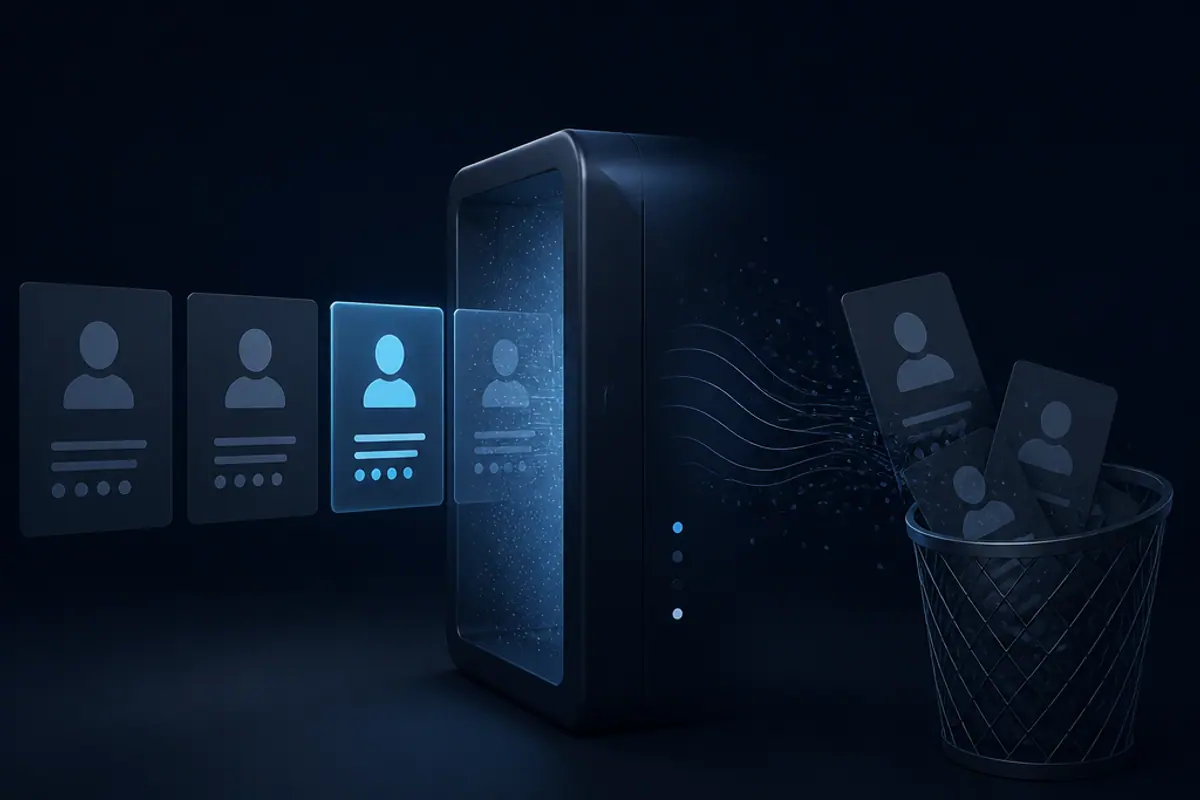
Harvard Business School's "Hidden Workers" research has documented how automated hiring systems overlook qualified candidates with non-traditional profiles. This matters for any employer relying on AI to screen applicants, and for what you should do instead.
Introduction
Harvard Business School's "Hidden Workers: How Jobseekers with 'Non-Traditional' Profiles Are Overlooked by Automated Talent Sourcing" is one of the clearest published accounts of a problem many HR leaders already suspect: automated hiring systems can screen out qualified candidates because their CVs don't match the pattern the algorithm expects.
Many organisations that rely on AI screening carry on using it even after spotting problems, because it's faster than manual review, while still complaining about "skills shortages" and "talent scarcity."
Relying on a screening system while suspecting it filters out good candidates is a hard position to defend once you look at the evidence.
What the research points to
The "Hidden Workers" research and related studies on automated hiring point to a consistent pattern: AI recruitment tools systematically exclude a meaningful share of qualified candidates, particularly those with non-linear career paths or profiles that don't map neatly onto historical hiring data.
What HR leaders report
In our advisory conversations with HR and talent leaders, a few themes come up repeatedly. Teams know their AI screening tools reject some good candidates but keep using them because manual review doesn't scale. Keyword and phrasing mismatches (a candidate who says "managed" rather than "led," for example) can trigger a rejection despite equivalent experience. And most HR leaders who query their own rejection data are surprised by how many strong candidates were filtered out early, because the assumption going in is usually that the system is more accurate than it turns out to be.
Why organisations keep using systems they know are flawed
If employers suspect their AI rejects qualified candidates, why do they persist? A few reasons come up consistently.
1. The volume problem
High-volume roles can draw thousands of applications, and manual review at that scale isn't realistic for most teams. Better AI configuration can maintain that efficiency while reducing false negatives, but few organisations invest the time to retune the system once it's live.
2. Sunk cost
Enterprise AI hiring systems represent a substantial upfront investment. Many organisations feel locked into that spend even once the system's shortcomings become clear.
3. The wrong success metric
Many organisations measure hiring-system success by speed and cost reduction rather than by the quality of who gets accepted versus rejected. Optimising for how fast the system says no isn't the same as optimising for whether it says no to the right people.
4. Assuming there's no alternative
Many organisations treat the choice as "flawed AI" versus "no automation at all," without realising that properly audited and calibrated systems can meaningfully reduce rejection errors.
5. Underestimating the scale of the problem
Organisations that haven't audited their AI screening tend to underestimate how many qualified candidates are being filtered out. The gap between what leaders assume and what an audit finds is often substantial.
The "Hidden Workers" Phenomenon
Harvard's research revealed that certain types of qualified candidates are virtually invisible to AI systems:
Career Changers
Example: A military officer transitioning to corporate security. Despite extensive relevant experience, military terminology doesn't match corporate algorithms.
Result: Automatic rejection despite being ideally qualified.
Skills-Rich Non-Degree Holders
Example: A self-taught programmer with 10 years of experience and a portfolio of successful projects, but no computer science degree.
Result: Filtered out by degree requirements that don't predict job performance.
Non-Linear Career Paths
Example: An entrepreneur who built and sold two companies, now seeking corporate employment.
Result: AI systems don't recognize entrepreneurial experience as relevant to corporate roles.
Industry Switchers
Example: A retail operations manager moving to logistics. Same skills, different terminology.
Result: Keyword mismatches cause automatic rejection.
The technical anatomy of AI rejection
Our advisory work with AI hiring audits keeps surfacing the same handful of failure modes.
Keyword dependency
AI systems rely heavily on exact keyword matches rather than semantic understanding. A "project manager" and "project lead" perform identical functions but may be treated as completely different by simplistic algorithms.
Resume parsing errors
Creative formatting, non-standard section headers, or certain PDF types cause parsing failures. The system literally cannot read the qualifications properly.
Training data bias
AI systems trained on historical hiring data replicate past biases and preferences, rejecting qualified candidates who don't match historical patterns.
Over-rigid filtering
Many systems apply knockout criteria too strictly. Requirements like "5+ years experience" automatically reject someone with 4 years and 11 months, regardless of other qualifications.
How rejection error shows up differently by sector
The pattern varies by industry, based on the audits we've seen.
Technology
Bias against non-traditional backgrounds tends to run highest here. Qualified bootcamp graduates and self-taught professionals are often systematically excluded by degree-based filters.
Finance
Degree bias and preference for specific educational institutions is common. Candidates from less prestigious schools with equal qualifications are disproportionately screened out.
Healthcare
Complex credential requirements create many false negatives, especially for specialised roles with multiple valid qualification pathways.
Manufacturing
Systems here tend to be somewhat better at recognising hands-on experience, but still struggle with industry switchers and non-linear careers.
Why fixing this matters commercially, not just ethically
Organisations that get AI screening right tend to see it show up in hiring performance: faster time-to-fill, better candidate experience, stronger quality-of-hire, and less recruiter burnout from constantly overriding a system they don't trust. Those gains typically flow through to better retention and productivity too. The commercial case for fixing AI hiring bias stands on its own, independent of the fairness argument.
The quality cascade effect
A pattern worth naming: AI rejection errors tend to compound.
Best candidates get rejected early in the process
Lower-quality candidates advance to human review
Hiring managers see diminished candidate pool and blame the market
Standards get lowered to fill positions
Long-term quality of hire decreases
Companies trapped in this cycle often don't realise the problem originated with their AI screening, not market conditions.
What "computer says no" actually costs
The cost of AI rejection errors falls into a few buckets.
Direct costs per missed hire
Extended search costs scale with seniority. Senior and leadership roles carry the highest direct cost when a search has to restart because the wrong candidates were filtered through, or the right ones filtered out.
Indirect costs
Project delays from unfilled positions
Competitive disadvantage as rivals hire your rejected candidates
Team morale issues from constant understaffing
Opportunity costs of work left undone
Reputational Costs
Employer brand damage from candidate experience
Word-of-mouth negative feedback in talent networks
Reduced application rates from qualified candidates
Long-term difficulty attracting top talent
What the best-performing organisations do differently
The organisations with the lowest AI rejection error rates tend to share several characteristics:
Independent auditing of AI systems at least annually
Continuous monitoring of rejection rates by demographic
Skills-based assessment rather than keyword matching
Regular retraining of AI models with bias-corrected data
Human override protocols for borderline cases
These organisations show that AI hiring can work, when implemented properly.
Warning signs your AI hiring system is rejecting too many good candidates
Quantitative Signals
Increasing time-to-fill despite market conditions
Declining application-to-interview conversion rates
Growing gap between applications received and suitable candidates
Frequent AI system overrides by recruiters
Qualitative Indicators
Hiring managers consistently complaining about candidate quality
Recruiters expressing frustration with AI recommendations
Multiple failed searches for the same role
Candidates reporting poor application experiences
A practical path to fixing it
Immediate actions (week 1-2)
Audit current AI rejection rates
Manually review sample of rejected candidates
Identify most common rejection reasons
Calculate true cost of missed hires
Short-term fixes (month 1-3)
Adjust over-rigid filtering criteria
Improve keyword flexibility
Fix common parsing errors
Implement human review of borderline cases
Long-term solutions (month 3-12)
Invest in bias-aware AI systems
Implement continuous monitoring
Regular retraining with corrected data
Shift to skills-based assessment
Conclusion: don't let the algorithm decide unchecked
The uncomfortable truth in the "Hidden Workers" research is that many organisations suspect their AI hiring systems are flawed but continue using them anyway. The costs, financial, competitive, and reputational, keep mounting while qualified candidates slip away to competitors with better screening.
The fix isn't complicated. Independent auditing, skills-based assessment, and human review for borderline cases go a long way. The question is whether you act on it before it costs you the hire.
For hands-on help, see VerityAI's AI governance.
Frequently asked questions
What is AI hiring bias?
AI hiring bias is when a recruitment algorithm systematically screens out qualified candidates because of patterns in its training data or overly rigid filtering rules, not because those candidates lack the right skills. It shows up as keyword mismatches, degree requirements that don't predict performance, and penalties for non-linear career paths. Because the system runs the same way on every application, the bias repeats at scale rather than varying case by case.
Why does AI hiring software reject qualified candidates?
Most rejection comes down to keyword dependency, resume parsing errors, and filtering criteria applied too strictly. A candidate who describes their experience in different words than the algorithm expects, or whose CV format confuses the parser, can be screened out despite being a strong fit. Training data drawn from historical hiring decisions can also bake in old patterns and preferences.
How can a company audit its AI recruitment system for bias?
An audit typically starts with pulling data on who the system rejects and comparing outcomes across different candidate profiles and demographic groups. It also involves manually reviewing a sample of rejected applications to see whether qualified people were screened out, and testing the system with varied inputs to find where filtering breaks down. Independent, external review tends to catch issues that internal teams miss, since internal teams are close to the system and its assumptions.
What should a business do if it suspects its AI hiring tool has a bias problem?
The sensible first step is an independent audit rather than an internal self-check, since internal reviews often confirm what the business hopes to find rather than what's actually happening. From there, common fixes include loosening overly rigid filters, improving how the system handles varied language and formatting, and adding human review for borderline cases. Ongoing monitoring then keeps the fix in place as the candidate pool and job requirements change.

Sotiris Spyrou
Sotiris Spyrou is the founder of VerityAI, a Responsible AI advisory for boards and AI-deploying businesses. With 27 years across agencies and global in-house roles, including Global Head of SEO at Robert Half and Group Head of Search at Gamesys, he advises leaders on AI governance and risk, and on answer-engine visibility engineered without the dark patterns the rest of the industry is getting penalised for. He is the author of TRANSFORM, AI Moats, and Ethical AI.
Founder at VerityAI
Areas of Expertise: