The $50 Million Mistake: Google's Bias Settlement Should Terrify Every CHRO
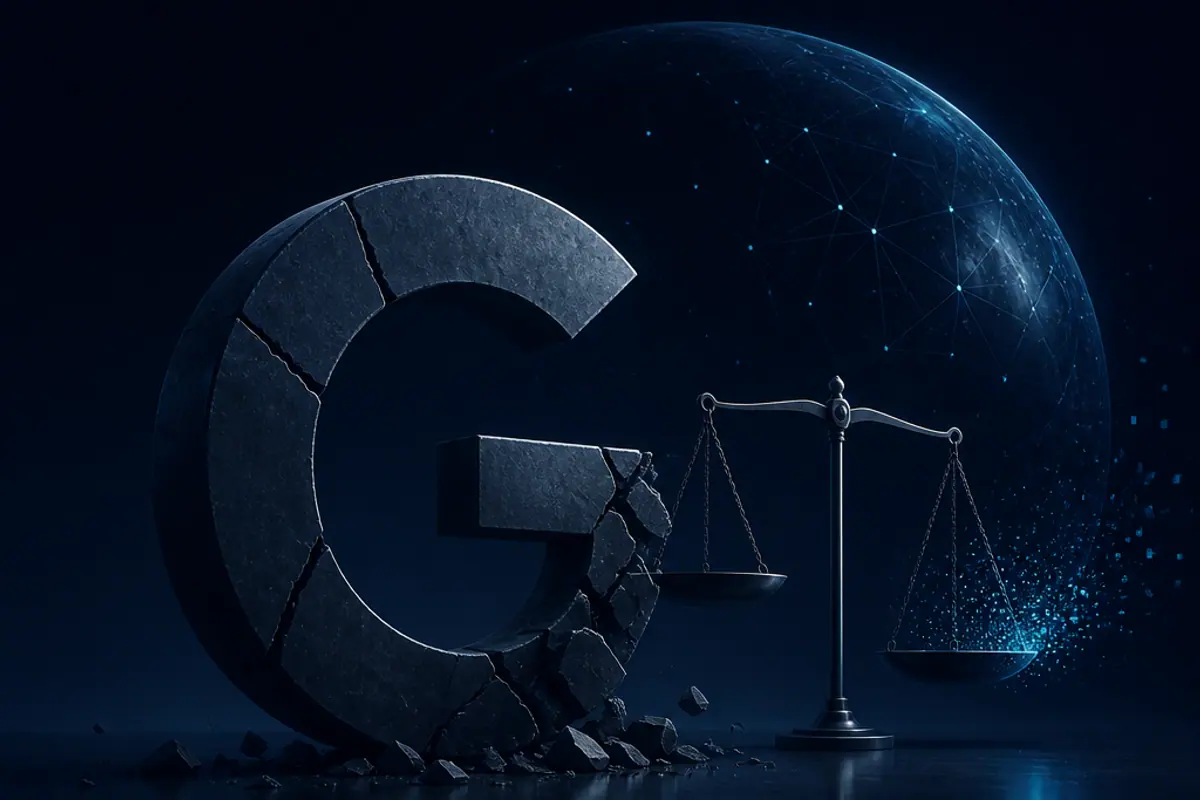
Google's $50 million racial bias settlement exposes how discrimination algorithms hurt companies. Learn the lessons that could save your company from the same devastating mistake.
Introduction
Google's $50 million racial bias settlement shows that algorithmic and systematic discrimination in employment decisions carries the same legal exposure as intentional discrimination, even at companies with sophisticated AI capability and stated diversity commitments.
Google - one of the world's most sophisticated technology companies, with armies of data scientists and AI experts - just paid $50 million because their systems systematically discriminated against Black employees.
Not because they intended to discriminate. Not because they ignored obvious bias. But because their internal processes, performance reviews, and advancement algorithms had learned to perpetuate historical bias at scale.
They were catastrophically wrong about being bias-free.
The Google case has become a watershed moment in employment law, demonstrating that even the most technically advanced companies can embed discrimination into their systems - whether through AI hiring algorithms or performance management processes. The same biases that cost Google $50 million are lurking in most companies' AI recruitment systems.
If it can happen to Google, it's probably already happening to you.
The Case That Shook Silicon Valley
In May 2025, Google settled a class-action lawsuit for $50 million after being accused of systematic racial bias against Black employees in California and New York. The case revealed how deeply embedded bias had become in Google's systems and processes.
The allegations were damning:
Black employees significantly under-represented relative to the wider US population
Under-representation in leadership positions
Systematic steering of Black employees into lower-level positions
Consistent underperformance ratings despite equal qualifications
$50 million total settlement plus required systemic changes
What makes this case extraordinary isn't the bias itself - it's how deeply it was embedded in systems that appeared objective and merit-based.
How Smart Companies Get Bias Wrong: The Google Lessons
Google's mistake wasn't obvious negligence. It was sophisticated misunderstanding of how bias embeds itself in seemingly neutral systems. Here's how they (and potentially your AI hiring system) got it wrong:
1. Historical Data Inherits Historical Bias
Google's performance management systems learned from decades of past decisions about promotions, ratings, and advancement. Like many AI hiring systems, these algorithms didn't just learn who was successful - they learned the historical patterns of who had been promoted, including all the unconscious bias baked into those decisions.
The AI Hiring Parallel: AI systems trained on historical hiring data replicate this exact problem. If your company historically hired fewer diverse candidates, your AI will learn this as "normal" and perpetuate it.
2. "Objective" Criteria That Weren't Objective
Google's systems wasn't explicitly programmed to favour certain groups. Instead, they learned subtle patterns:
Valuing certain types of experience and backgrounds
Responding to specific language patterns in evaluations
Weighting factors that inadvertently penalized diverse candidates
Using "culture fit" criteria that reinforced existing demographics
The AI Hiring Parallel: Hiring algorithms do exactly this - using "neutral" criteria like university names, specific terminology, or career patterns that systematically exclude qualified diverse candidates.
3. The Validation Trap
Google likely validated their systems by checking if they made similar decisions to human managers. This seemed logical but was fundamentally flawed - it simply automated existing human bias rather than eliminating it.
The AI Hiring Parallel: Most companies validate AI hiring systems by seeing if they select the same candidates human recruiters would choose. This perpetuates rather than eliminates bias.
4. Metrics That Missed the Point
Google focused on overall performance metrics without systematic bias testing. Nobody was regularly analyzing whether advancement rates, ratings, and opportunities were equitable across demographic groups.
The AI Hiring Parallel: Companies measure AI hiring efficiency - speed, cost, volume - but rarely test for demographic bias in outcomes.
The Legal Dominos: How Quickly $50 Million Happens
The Google case timeline shows how fast bias lawsuits escalate:
2022: Class action lawsuit filed alleging systematic discrimination 2023: Discovery reveals extensive evidence of biased practices 2024: Settlement negotiations intensify as evidence mounts 2025: $50 million settlement finalized, systemic changes required
The speed shocked Google's legal team. They thought their progressive culture and policies would protect them. Instead, they learned that algorithmic and systematic discrimination can be as legally damaging as intentional discrimination.
The AI Hiring Connection: Your System's Hidden Risk
While Google's case wasn't specifically about AI hiring, it reveals exactly how bias embeds in AI recruitment systems:
Same Bias, Different System
Google's Performance Algorithm Problems:
Learned from biased historical data
Used "objective" criteria that weren't truly neutral
Perpetuated existing demographic imbalances
Lacked proper bias monitoring
Your AI Hiring System's Problems:
Trained on biased historical hiring data
Uses "neutral" criteria that systematically exclude diverse candidates
Replicates existing workforce demographics
Lacks independent bias auditing
The technical and legal principles are identical.
Real AI Hiring Bias Cases: The Pattern Continues
While Google paid for systematic workplace bias, specific AI hiring discrimination cases show the same patterns:
iTutorGroup: The First AI Hiring Settlement ($365,000)
AI automatically rejected women over 55 and men over 60
Systematic age discrimination in hiring algorithms
First EEOC settlement specifically targeting AI hiring bias
Workday: Ongoing Class Action
AI screening tools alleged to discriminate by race, age, and disability
Affects thousands of companies using Workday's platforms
Court ruled AI vendors can be held liable for discrimination
The Coming Wave
Legal experts predict a surge of AI hiring bias lawsuits following the Google precedent, with settlements potentially reaching tens of millions.
The Three Lessons That Could Save Your Company
Lesson 1: Good Intentions Don't Matter in Court
Google never intended to discriminate. Their leadership championed diversity and inclusion. They had clear anti-discrimination policies. None of that mattered once systematic bias was proven.
Legal principle: Impact matters more than intent. If your AI system produces discriminatory outcomes, you're liable regardless of your motivations.
Lesson 2: Internal Audits Aren't Enough
Google conducted internal reviews of their systems. Each time, they believed they were operating fairly. The problem? Internal teams suffer from:
Confirmation bias: Looking for evidence systems work rather than evidence they discriminate
Technical blind spots: Not knowing how to properly test for bias
Institutional pressure: Unconscious incentive to validate expensive investments
Limited scope: Testing efficiency, not fairness
Lesson 3: Historical Data = Historical Bias
Using past hiring decisions to train AI guarantees reproducing past discrimination. Google's decades of data included years of unconscious bias, structural barriers, and systemic preferences.
Your AI hiring system becomes a nearly perfect replication of historical bias - just faster and more consistent.
The Regulatory Tsunami Google Helped Trigger
Google's settlement has accelerated regulatory action worldwide:
EU AI Act: Hiring AI now requires mandatory bias audits
NYC Local Law 144: Annual third-party audits required
California Laws: Algorithmic transparency requirements expanding
Federal Action: EEOC increasing enforcement of AI discrimination
The message from regulators is clear: Google showed what happens when bias goes unchecked. Fix your AI before we fix it for you.
Red Flags That Your Company Could Be Next
Technical Warning Signs
Your AI shows different selection rates by demographic group
Training data comes from historical hiring decisions
No independent bias testing has been conducted
System performance measured only by efficiency metrics
Organizational Red Flags
Internal teams validate their own AI systems
Diversity metrics declining despite AI "optimization"
Complaints about qualified candidates not applying
Legal team unaware of AI discrimination liability
Process Red Flags
No regular demographic impact analysis
Training data never cleaned for historical bias
Success measured only by speed/cost, not fairness
No accountability for AI system outcomes
The $50 Million Prevention Strategy
Preventing Google's fate requires immediate action:
1. Independent Auditing
External experts with specialised bias detection methods can find problems your internal team will miss. The cost of an independent audit is small compared to a $50 million settlement.
2. Clean Training Data
Remove historical bias from AI training data through:
Demographic analysis of past hiring decisions
Removal of proxy variables for protected characteristics
Balanced datasets across protected groups
Regular retraining with bias-corrected data
3. Continuous Monitoring
Implement real-time bias monitoring that tracks:
Selection rates by demographic group
Interview-to-offer ratios across populations
Pattern recognition for emerging bias
Regular algorithmic fairness audits
What Google Did Right (After the Lawsuit)
To their credit, Google's post-settlement response has been comprehensive:
Systematic policy overhaul addressing identified bias sources
Independent monitoring of advancement and compensation
Cultural transformation initiatives throughout the organization
Significant investment in bias-free performance and hiring systems
Ongoing transparency through regular bias auditing
But the $50 million question remains: why did it take a lawsuit to get there?
The Cost of Waiting for Your AI Audit
Every day you delay auditing your AI hiring system, you risk:
Financial Exposure
Discrimination settlements (the $50 million Google precedent now set)
Regulatory fines (up to 7% of global turnover under the EU AI Act)
Substantial legal costs for complex cases
Required remediation investment
Operational Impact
Loss of high-quality diverse candidates
Decreased innovation from homogeneous teams
Regulatory investigations disrupting operations
Executive time diverted to legal crisis management
Reputational Damage
Public discrimination scandals
Difficulty attracting diverse talent
Investor concerns about governance and risk
Customer backlash in diversity-conscious markets
Your Next Move: Learn From Google's Expensive Lesson
Google's $50 million settlement proves that good intentions, smart people, and progressive policies aren't enough to prevent systematic bias. You need:
Immediate action: Stop using unaudited AI for hiring decisions
Independent validation: Get external experts to audit your systems
Systematic remediation: Fix identified bias with proven techniques
Ongoing monitoring: Implement continuous bias detection and correction
Conclusion: Don't Pay Google's Price
Google's $50 million lesson is available to every CHRO for free: systematic bias is real, costly, and completely preventable with proper auditing and oversight.
The question isn't whether your AI system has bias - unaudited hiring AI frequently exhibits discriminatory patterns. The question is whether you'll discover it through an audit or a lawsuit.
Google chose the hard way. You don't have to.
Their computer said no to fair treatment. Your computer better start saying yes to independent auditing before it costs you $50 million to learn the same lesson.
Don't wait for a lawsuit to discover your AI bias. Get a confidential audit and fix the problems before they become $50 million settlements.
Book Your Confidential AI Audit - Avoid Google's $50 Million Mistake
For the board-level view, see VerityAI's lessons from hiring-bias settlements.
More on how we approach it: AI risk and compliance advisory.
Frequently asked questions
What is algorithmic bias in employment decisions?
Algorithmic bias in employment is when a system used for hiring, performance review, or promotion produces different outcomes for different demographic groups, even though the criteria appear neutral on their face. It usually happens because the system learned from historical decisions that already contained bias, so it repeats and can amplify old patterns rather than correcting them. Legally, the outcome is what matters, not whether anyone intended the bias.
Does a company need to intend discrimination to be held liable?
No. Employment law generally treats disparate impact, meaning an outcome that disadvantages a protected group, as a basis for liability regardless of intent. A company can have genuine diversity commitments and still face a claim if its systems produce discriminatory outcomes in practice. That's why impact testing matters as much as policy statements.
Why can't internal teams reliably audit their own AI systems for bias?
Internal reviewers are often too close to the system to spot its blind spots, and they carry an unconscious incentive to confirm that an expensive investment is working as intended. They may also lack the specialised bias-detection methods that an external audit brings, and their testing tends to focus on efficiency rather than fairness. Independent, external review addresses both problems at once.
What is the first step a company should take after a bias concern is raised?
The first step is an independent audit of the system in question, looking at outcomes by demographic group rather than relying on efficiency metrics alone. That audit should examine the training data, the criteria the system weighs, and whether selection or advancement rates differ across groups with comparable qualifications. Only after that diagnosis is complete does it make sense to plan remediation.

Sotiris Spyrou
Sotiris Spyrou is the founder of VerityAI, a Responsible AI advisory for boards and AI-deploying businesses. With 27 years across agencies and global in-house roles, including Global Head of SEO at Robert Half and Group Head of Search at Gamesys, he advises leaders on AI governance and risk, and on answer-engine visibility engineered without the dark patterns the rest of the industry is getting penalised for. He is the author of TRANSFORM, AI Moats, and Ethical AI.
Founder at VerityAI
Areas of Expertise: