Red Alert: 13 Critical AI Tests Your Systems Might Be Failing
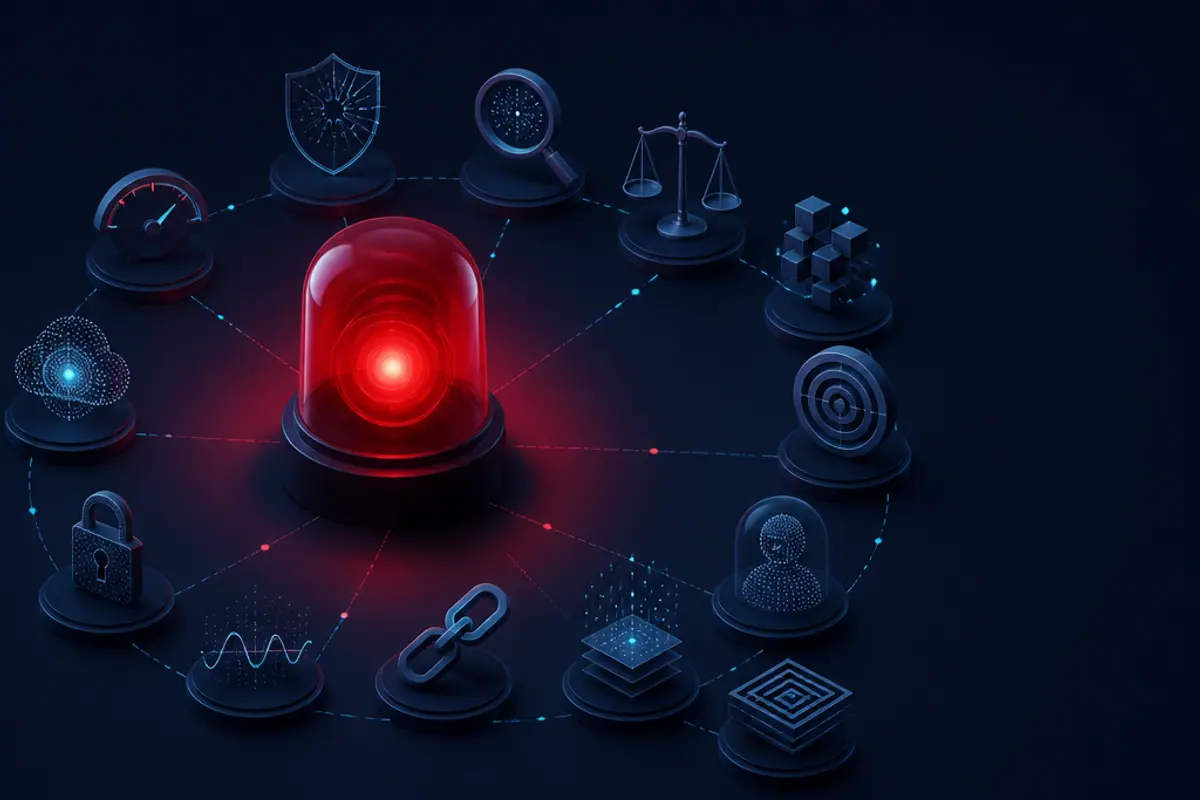
AI risk tests fail most often in fairness, privacy, safety, security and human oversight, and each failure point carries its own compliance exposure. At VerityAI, we've identified the high-risk areas where AI systems frequently fail compliance tests, potentially exposing organisations to regulatory penalties and reputational damage.
In our advisory work, we assess AI systems against these critical vulnerabilities, which span fairness, privacy, safety, security and human oversight dimensions. Here are the most common test failures we see:
Fairness Failures: Discrimination Risks
Fairness is one of the areas where AI systems most often fail compliance-relevant testing:
Bias detection: Many AI implementations lack fundamental mechanisms to identify and mitigate bias, creating direct discrimination risks.
Demographic parity checking: Without proper parity validation, systems frequently produce different outcomes for protected groups.
Anti-discrimination checks: Basic safeguards against discriminatory patterns are frequently inadequate or absent entirely.
Protected attribute handling: Gaps in how AI systems process and use legally protected characteristics are common, including where those characteristics are inferred indirectly through proxy variables.
Privacy and Data Protection Gaps
Privacy testing is another area where gaps show up repeatedly:
Data anonymisation: Many systems claim data anonymisation while using methods vulnerable to re-identification.
Consent management: Ineffective consent mechanisms fail to give users proper control over their data.
Data breach detection: Gaps in breach detection capabilities can expose organisations to notification failures under data protection law.
Safety and Security Vulnerabilities
Safety and security testing frequently surfaces the following failure points:
Output sanitisation: Systems frequently lack robust filtering for harmful, biased or unsafe outputs.
Emergency shutdown procedures: Many AI implementations provide no clear stop mechanism when harmful behaviours are detected.
Incident detection: Basic security monitoring is often inadequate or improperly configured.
Threat detection: Advanced threat identification capabilities are frequently missing or insufficiently developed.
Ethical and Human Oversight Gaps
Two further areas come up consistently in our advisory work:
Social equity measurement: Systems rarely evaluate whether they reinforce or reduce existing societal inequities.
Human oversight confirmation: Many AI implementations lack appropriate human supervision for critical decisions.
The Path Forward
These failure areas represent some of the most urgent points organisations should address in their AI compliance efforts. In our advisory work, we help organisations build testing approaches for these vulnerabilities, with particular focus on:
Strengthening protected attribute handling
Building social equity measurement into review processes
Establishing genuine human oversight with clear verification mechanisms
Implementing threat detection and incident detection capabilities
By addressing these highest-risk areas first, organisations can strengthen their compliance posture while prioritising the tests most likely to prevent serious harm or regulatory violations.
If you want support assessing whether your AI systems would pass tests like these, VerityAI offers AI risk and compliance advisory.
Frequently asked questions
What is AI risk testing?
AI risk testing is the systematic process of checking an AI system against known failure points before and after deployment. It covers fairness, privacy, safety, security and human oversight, and it's designed to catch the gaps that standard software testing doesn't look for.
Why do AI systems fail fairness tests?
Fairness failures usually trace back to missing bias detection, weak demographic parity checks, or poor handling of protected characteristics. These gaps aren't always visible in normal use, which is why dedicated fairness testing matters.
What happens if an AI system fails a compliance test?
A failed test flags a gap that needs remediation before the system can be considered compliance-ready. Left unaddressed, these gaps can expose an organisation to regulatory scrutiny and reputational risk.
Who should run AI risk tests?
Any organisation deploying AI in a way that affects people's rights, safety, or access to services should run risk tests, ideally with independent oversight rather than self-assessment alone.

Sotiris Spyrou
Sotiris Spyrou is the founder of VerityAI, a Responsible AI advisory for boards and AI-deploying businesses. With 27 years across agencies and global in-house roles, including Global Head of SEO at Robert Half and Group Head of Search at Gamesys, he advises leaders on AI governance and risk, and on answer-engine visibility engineered without the dark patterns the rest of the industry is getting penalised for. He is the author of TRANSFORM, AI Moats, and Ethical AI.
Founder at VerityAI
Areas of Expertise: