China's AI-Powered Global Influence Operations: A Strategic Analysis
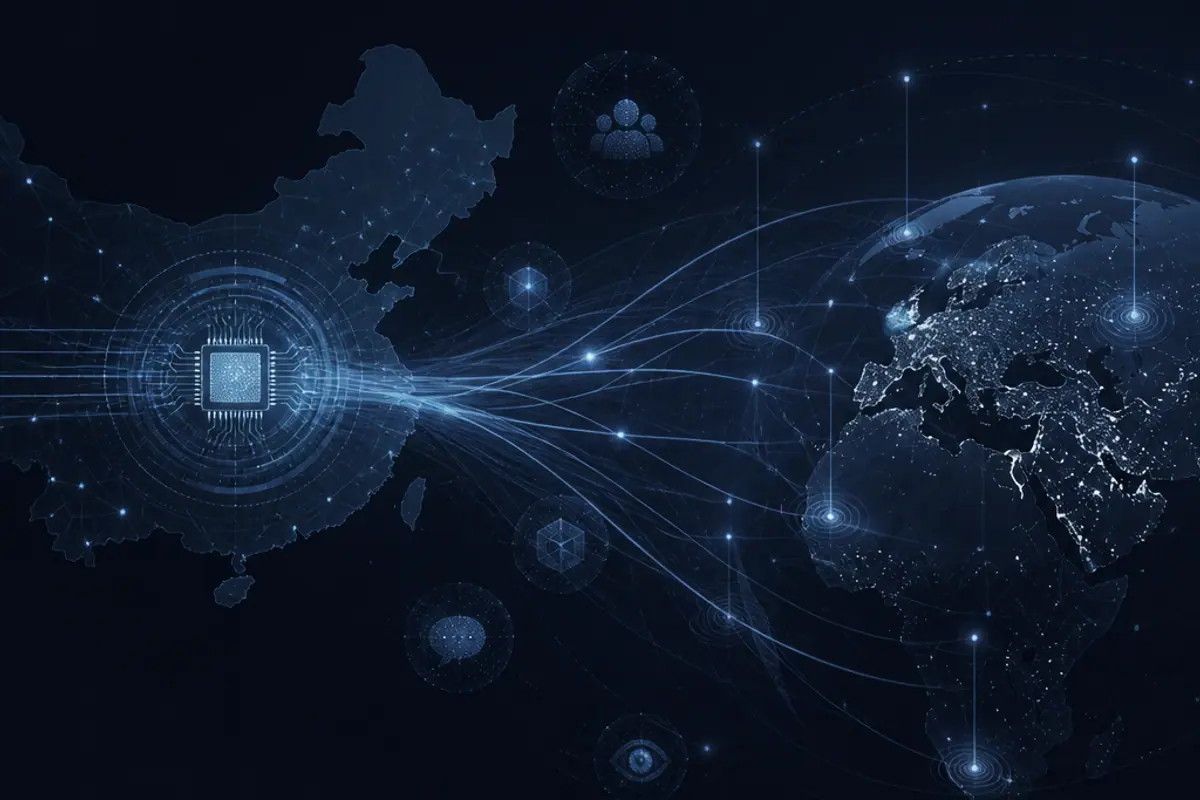
China's AI-powered influence operations combine state-directed messaging, algorithmic amplification, and synthetic content to shape opinion abroad while presenting as organic commercial or diplomatic activity. China's approach to artificial intelligence extends far beyond technological development into sophisticated global influence operations that challenge traditional understanding of international competition. Through systematic deployment of AI-powered systems, China has developed capabilities that blur the boundaries between commercial technology, information warfare, and strategic competition.
Understanding China's Strategic AI Framework
China's AI strategy operates on fundamentally different principles than Western approaches. Where democratic nations often separate commercial AI development from state applications, China's model integrates civilian and military AI capabilities through comprehensive national coordination.
This integrated approach, known as "Military-Civil Fusion," means that seemingly commercial AI applications may serve dual purposes, supporting both economic development and strategic influence operations. For organisations operating in global markets, this reality creates complex compliance challenges that require sophisticated detection and governance frameworks.
The Wolf Warrior Digital Strategy
China's "Wolf Warrior" diplomatic approach has evolved beyond traditional diplomacy into sophisticated digital influence operations. Chinese diplomatic missions worldwide now employ AI-powered social media strategies that combine aggressive messaging with sophisticated audience targeting.
Algorithmic Amplification: Chinese diplomatic accounts leverage platform algorithms to amplify messages across diverse geographic and demographic segments. These operations don't just broadcast Chinese positions - they systematically undermine confidence in democratic institutions while promoting authoritarian alternatives.
Narrative Coordination: Multiple Chinese diplomatic and media accounts coordinate messaging campaigns that appear organic but follow centralised strategic objectives. AI systems help synchronise these campaigns across time zones and languages, creating the appearance of grassroots support for Chinese positions.
AI-Enabled Information Warfare Tactics
China's information warfare capabilities demonstrate sophisticated understanding of how AI systems can manipulate information environments. These operations target not just what people think, but how they think about complex international issues.
Third-Party Validation: Rather than directly promoting Chinese narratives, AI systems identify and amplify Western voices that align with Chinese positions. This creates the impression of independent validation while advancing strategic objectives. The technique proves particularly effective because audiences naturally trust familiar sources over foreign ones.
Emotional Trigger Identification: AI analysis of social media engagement patterns enables Chinese operations to identify emotional triggers that resonate with specific audiences. Content is then crafted to exploit these triggers, creating emotional responses that bypass rational analysis.
Temporal Manipulation: AI systems enable rapid response to breaking news events, allowing Chinese operations to inject alternative narratives into information streams before official responses emerge. This "first impression advantage" can shape subsequent discourse around critical events.
Technical Infrastructure for Influence
China's influence operations rely on sophisticated technical infrastructure that integrates AI capabilities with global communication platforms. Understanding this infrastructure is crucial for organisations seeking to protect themselves from manipulation.
Platform Exploitation: Chinese operations demonstrate deep understanding of Western social media algorithms, exploiting engagement mechanics to achieve maximum reach and impact. AI systems test thousands of message variants to identify optimal content for each platform's specific algorithm.
Cross-Platform Coordination: Operations coordinate across multiple platforms simultaneously, using AI to adapt messaging for each platform's unique characteristics while maintaining strategic coherence. This multi-platform approach makes detection and countermeasures significantly more challenging.
Synthetic Content Generation: Advanced AI capabilities enable generation of synthetic content including text, images, and increasingly sophisticated video content. This synthetic media appears authentic while serving strategic messaging objectives.
Global Scope and Regional Adaptation
China's AI-powered influence operations operate globally but adapt to regional contexts with remarkable sophistication. Each region receives tailored messaging that accounts for local political dynamics, cultural sensitivities, and information environments.
African Operations: In Africa, Chinese AI systems promote development narratives while systematically undermining confidence in Western partnerships. Content emphasises Chinese infrastructure investments while highlighting perceived Western exploitation or neglect.
European Targeting: European operations focus on exploiting political divisions, particularly around immigration, economic inequality, and EU integration. AI systems identify and amplify existing fault lines while promoting Chinese approaches as alternatives to democratic governance.
Southeast Asian Influence: In Southeast Asia, operations combine economic messaging with security narratives, positioning China as both a development partner and regional security provider while undermining confidence in US alliances.
Commercial-Political Integration
The integration of commercial and political objectives in Chinese AI operations creates particular challenges for international businesses. Companies may unknowingly become participants in influence operations through seemingly routine commercial relationships.
Technology Transfer Risks: Joint ventures and technology partnerships may involve transfer of AI capabilities that enable influence operations. Organisations need robust due diligence processes to assess whether AI technologies could be repurposed for manipulation.
Data Collection Concerns: Chinese AI companies often collect vast amounts of international data that could support influence operations. This includes not just user data from consumer applications, but also business intelligence that could inform strategic messaging campaigns.
Platform Dependencies: Organisations using Chinese AI platforms or services may inadvertently provide data or capabilities that support influence operations. Comprehensive AI compliance frameworks can help identify these risks before they materialise.
Detection and Countermeasures
Detecting Chinese AI-powered influence operations requires sophisticated analytical capabilities that go beyond traditional disinformation detection. The sophistication of these operations demands equally sophisticated countermeasures.
Behavioural Analysis: Rather than focusing solely on content, detection systems must analyse behavioural patterns that indicate coordinated artificial amplification. This includes timing analysis, network structure examination, and engagement pattern recognition.
Cross-Platform Correlation: Effective detection requires analysis across multiple platforms simultaneously, identifying coordination that spans different communication channels and geographic regions.
Technical Attribution: Advanced technical analysis can sometimes identify the infrastructure and methodologies used in influence operations, providing insights into operational scope and capabilities.
Organisational Protection Strategies
Organisations operating in global markets must develop comprehensive strategies to protect against sophisticated influence operations. This requires both technical solutions and organisational resilience measures.
Supply Chain Security: AI supply chains must be evaluated for potential influence operation risks. This includes not just direct technology providers, but also cloud services, data analytics platforms, and communication tools that could provide access or capabilities to malicious actors.
Information Environment Monitoring: Organisations need capabilities to monitor information environments for signs of manipulation targeting their operations, partnerships, or stakeholder relationships. AI-powered monitoring systems can help identify emerging threats before they cause reputational or operational damage.
Stakeholder Education: Employees, partners, and stakeholders need education about sophisticated influence operations and how to recognise manipulation attempts. This education must account for the psychological sophistication of modern AI-powered operations.
Regulatory and Policy Implications
China's AI-powered influence operations have significant implications for regulatory frameworks and policy responses in democratic nations. Understanding these implications is crucial for organisations navigating evolving compliance requirements.
Enhanced Due Diligence: Regulatory frameworks increasingly require enhanced due diligence for AI systems and partnerships that could enable influence operations. This includes not just direct military applications, but any AI capabilities that could support information manipulation.
Cross-Border Data Governance: The global nature of influence operations requires sophisticated approaches to cross-border data governance, ensuring that data flows don't inadvertently support manipulation campaigns.
Platform Accountability: Governments are increasingly holding platforms accountable for preventing manipulation, creating compliance obligations that extend throughout the AI ecosystem.
The Intelligence Warfare Evolution
China's development of "Intelligence Warfare" concepts represents the next evolution in AI-powered influence operations. This approach integrates cognitive manipulation with traditional intelligence gathering, creating hybrid operations that are difficult to detect and counter.
Cognitive Collection: AI systems can collect intelligence about target populations' psychological vulnerabilities, political preferences, and decision-making processes through analysis of public data and platform interactions.
Adaptive Targeting: Intelligence gathered through AI analysis enables adaptive targeting that evolves in real-time based on psychological feedback, making operations more effective and harder to counter.
Predictive Manipulation: Advanced AI capabilities may enable predictive manipulation - identifying and exploiting vulnerabilities before target populations are aware they exist.
Future Threat Evolution
China's AI influence capabilities continue evolving rapidly, requiring organisations to prepare for emerging threats rather than just responding to current ones.
Deepfake Integration: Improving deepfake capabilities will enable more sophisticated synthetic media campaigns that are increasingly difficult to detect and debunk.
Real-time Adaptation: AI systems will develop enhanced capabilities for real-time adaptation to countermeasures, creating arms race dynamics in influence operations and detection capabilities.
Cross-Platform Sophistication: Operations will become more sophisticated in exploiting multiple platforms simultaneously, requiring detection systems that can analyse complex cross-platform coordination patterns.
International Cooperation Requirements
The global nature of Chinese AI influence operations requires coordinated international responses that go beyond individual organisational measures.
Intelligence Sharing: Democratic allies must share intelligence about influence operation tactics and techniques, enabling faster identification and response to emerging threats.
Technical Standards: International cooperation on technical standards for AI systems can help establish minimum security requirements that make influence operations more difficult to execute.
Regulatory Coordination: Coordinated regulatory responses can help close gaps that influence operations exploit, particularly around cross-border data flows and platform responsibilities.
Building Organisational Resilience
Long-term protection against sophisticated influence operations requires building organisational resilience that goes beyond technical countermeasures.
Cultural Adaptation: Organisations must adapt their cultures to account for information environment threats, developing institutional skepticism about information sources while maintaining openness to legitimate discourse.
Decision-Making Processes: Decision-making processes must account for potential information manipulation, incorporating verification steps and alternative perspective seeking that can identify influence operation impacts.
Stakeholder Relationship Management: Relationships with stakeholders must be managed with awareness of potential manipulation targeting, including proactive communication strategies that build resilience against disinformation campaigns.
Conclusion: Strategic Awareness and Technical Solutions
China's AI-powered influence operations represent a sophisticated and evolving challenge that requires equally sophisticated responses. Organisations cannot afford to treat these operations as distant geopolitical concerns - they represent immediate threats to business operations, stakeholder relationships, and decision-making processes.
The solution lies in combining strategic awareness with technical capabilities. Understanding how influence operations work enables organisations to develop appropriate countermeasures, while technical solutions provide the tools necessary to detect and respond to actual threats.
How AI-powered cognitive warfare threatens democratic institutions provides the broader context for these challenges, while specific technical solutions require comprehensive AI governance frameworks that account for the full spectrum of influence operation risks.
The challenge is significant, but not insurmountable. Through appropriate preparation, technical solutions, and international cooperation, organisations can maintain their integrity while operating in information environments shaped by sophisticated influence operations.
Concerned about AI-powered influence operations targeting your organisation? Discover how VerityAI's comprehensive compliance framework can help you detect and counter sophisticated manipulation campaigns while maintaining operational effectiveness.
Frequently asked questions
What are AI-powered influence operations?
AI-powered influence operations are coordinated campaigns that use AI systems, such as algorithmic amplification and synthetic content generation, to shape public opinion or undermine trust in institutions while appearing organic. They differ from traditional propaganda in the speed, scale, and targeting precision AI makes possible.
How can a business tell if it has been drawn into an influence operation?
Warning signs include unexplained coordination patterns across social accounts referencing a partner or platform, unusual data requests from a technology vendor, or contractual relationships that require sharing more data than the stated purpose needs. Due diligence on AI technology partnerships is the main safeguard.
Is this only a concern for government and media organisations?
No. Any organisation with global operations, cross-border data flows, or AI technology partnerships can be exposed, whether directly targeted or drawn in through a vendor relationship. Commercial and political objectives can overlap in ways that create risk for ordinary businesses.
What is the first practical step an organisation should take?
Start with a review of AI supply chain relationships and data flows to identify where sensitive data or capabilities could be exposed to misuse. From there, structured monitoring and staff education build on that baseline.
Resources
Source Links:
Stanford Internet Observatory - China's Digital Influence Operations
Australian Strategic Policy Institute - Chinese AI and Influence
Cognitive Warfare: The Forgotten War - Tanguy Struye de Swielande
For hands-on help, see VerityAI's AI governance and compliance.

Sotiris Spyrou
Sotiris Spyrou is the founder of VerityAI, a Responsible AI advisory for boards and AI-deploying businesses. With 27 years across agencies and global in-house roles, including Global Head of SEO at Robert Half and Group Head of Search at Gamesys, he advises leaders on AI governance and risk, and on answer-engine visibility engineered without the dark patterns the rest of the industry is getting penalised for. He is the author of TRANSFORM, AI Moats, and Ethical AI.
Founder at VerityAI
Areas of Expertise: