Computer Says No: How AI Recruitment Rejects 38% of Perfect Candidates
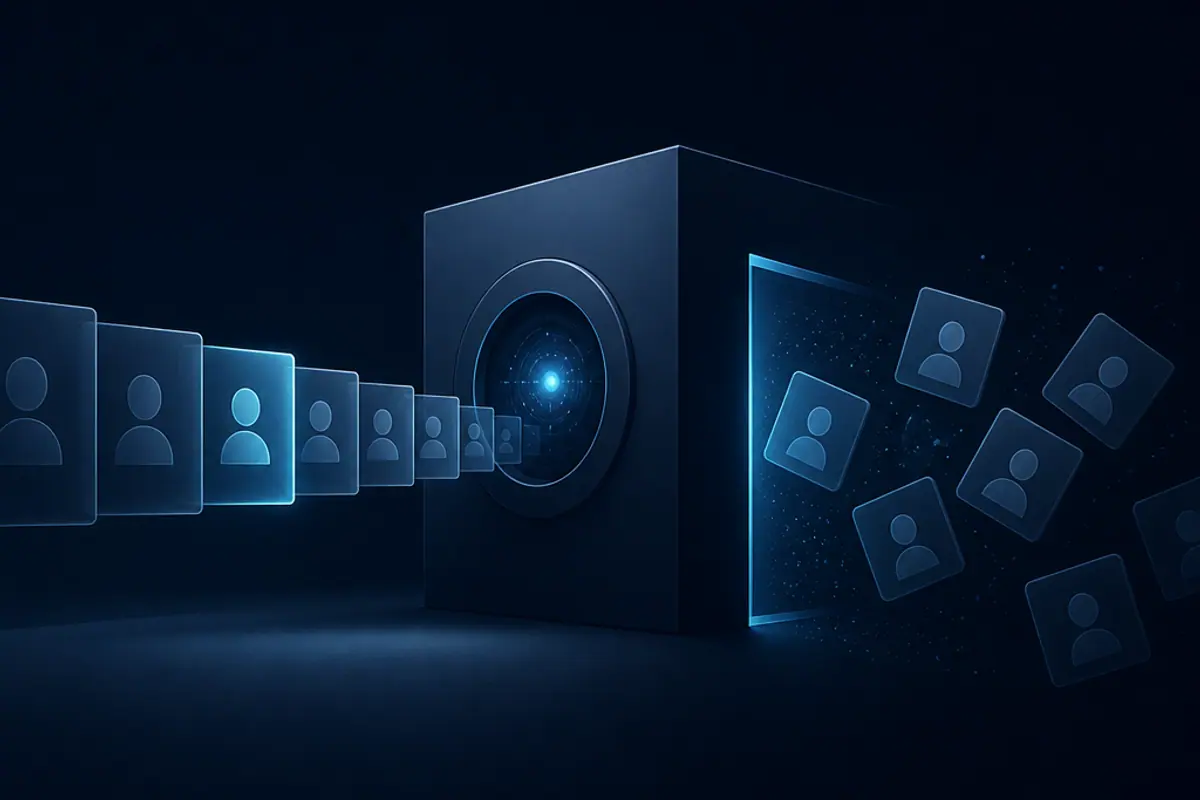
AI hiring systems can reject qualified candidates through hidden bias and technical failures. Here's why your next great hire might be getting automatically screened out, and what you can do about it.
Introduction
AI recruitment tools reject qualified candidates when they rely on rigid keyword matching, flawed resume parsing, and training data drawn from historical hiring decisions that already contained bias.
"Computer says no."
Three words that became a cultural meme thanks to David Walliams' character in Little Britain. They also describe a real problem happening quietly inside hiring departments: AI screening tools rejecting people who are genuinely qualified for the role.
Independent studies and technical audits have repeatedly found meaningful false-negative rates in AI hiring tools, meaning qualified candidates get filtered out before a human ever reviews their CV.
While you're wondering why "talent is so hard to find," your screening system may be saying no to the exact people you need most.
When Perfect Isn't Perfect Enough
Technical audits of AI screening tools have documented false negative rates well above what most hiring teams would consider acceptable. In practice, this means a meaningful share of genuinely qualified candidates never make it past the algorithmic gatekeeper.
Rejections like this tend to follow a pattern: a candidate with strong, relevant experience gets filtered out because they described a skill in different words than the system expected. A candidate who called their background "team coordination" instead of "leadership experience" can be screened out by a keyword-matching system, even with years of directly relevant experience.
The human cost is real, and the business impact compounds it. Organisations relying on rigid AI screening commonly report slower time-to-fill for senior roles, a drop in the quality of candidates who bother applying once word gets around about a poor application experience, and the ongoing cost of good candidates being hired by competitors instead.
Inside the Black Box: How AI Says No
AI recruitment systems fail in predictable ways that create systematic bias against qualified candidates:
1. Keyword Dependency Hell
Most AI systems operate like sophisticated word-matching games. They scan for specific keywords, phrases, and formatting patterns rather than understanding actual competence. A software engineer who describes their "full-stack development" as "end-to-end programming" gets filtered out, despite having identical skills.
2. Resume Parsing Errors
Technical analysis has repeatedly found that a meaningful share of resumes suffer parsing errors during the AI review process. Creative formats, non-standard section headers, or even certain PDF types can cause qualified candidates to be automatically rejected. The algorithm literally can't read their qualifications properly.
3. Bias by Proxy
AI systems learn from historical hiring data, inheriting decades of unconscious bias. They develop preferences for:
Specific university names (even for roles where education doesn't matter)
Particular career trajectories (penalizing career changers or gap-takers)
Certain demographic markers hidden in language patterns
Traditional male-coded terminology in job descriptions
4. The Experience Paradox
Perhaps most perversely, these systems often penalize the exact diversity of experience that makes candidates valuable. Non-linear career paths, industry transitions, or entrepreneurial backgrounds - all markers of adaptability and initiative - become red flags for algorithmic screeners.
Real-World Patterns Behind the Rejections
Several rejection patterns show up again and again in AI hiring audits. Senior candidates get filtered out as "overqualified" based purely on years of experience, with no consideration of the role's strategic nature or the candidate's own reasoning for the move. Specialists with evolved or hybrid skill sets, such as diversity and inclusion experience layered on an HR generalist background, get rejected because the system is matching against a narrower job title than the one that actually reflects the role. Career changers, including military veterans moving into corporate security roles, get filtered out because their experience is described in terminology the system was never trained to recognise, even when the underlying skills match closely.
The Hidden Cost of Getting It Wrong
When AI says no to the wrong candidates, the financial impact ripples through your entire organisation. Replacing a senior executive who was lost to a competitor after an unnecessary AI rejection carries a substantial cost, as does the ongoing recruitment spend on specialist roles and the operational cost of extended hiring timelines.
Indirect Costs
Lost productivity: Empty seats mean delayed projects and missed opportunities
Team morale: Overworked teams covering for unfilled positions
Competitive disadvantage: While you struggle to hire, competitors snap up the talent your AI rejected
Reputational Damage
Employer brand: Word spreads when good candidates have terrible application experiences
Discrimination lawsuits: Biased algorithmic hiring has already produced high-profile discrimination claims and settlements against major employers
Regulatory attention: EU AI Act and similar regulations now target biased hiring systems
Why Employers Know But Don't Act
Research into "hidden workers" and algorithmic hiring has found that a large share of employers acknowledge, when asked directly, that their AI systems likely reject qualified candidates. Yet most continue using these flawed systems.
Why? The reasons are depressingly predictable:
Sunk Cost Fallacy: "We've invested too much to change now"
False Efficiency: "At least it's faster, even if imperfect"
Ignorance of Scale: Not realizing just how much talent they're losing
Vendor Lock-in: Expensive contracts and integration challenges
Cultural Inertia: "This is how we've always done recruiting"
The Technical Truth: AI Doesn't Have to Say No
Here's what most CHROs don't realize: AI bias isn't inevitable. It's the result of poor implementation, inadequate validation, and lack of ongoing monitoring.
Well-audited and properly calibrated AI systems can actually reduce bias compared to human-only hiring while maintaining efficiency. The key is understanding what's happening inside the black box and fixing it systematically.
Organisations that have invested in independent AI auditing typically see fewer qualified candidates lost to false rejections, better diversity outcomes, and faster time-to-hire, alongside a reduced risk of discrimination claims tied to algorithmic bias.
Warning Signs Your AI Says No Too Often
How do you know if your system has a problem? Look for these red flags:
Data Signals
Declining application-to-interview ratios
Increasing time-to-fill despite market conditions
Demographic shifts in your hiring funnel
Complaints about "qualified candidates not applying"
Qualitative Indicators
Recruiters manually overriding AI recommendations frequently
Hiring managers expressing frustration with candidate quality
HR team working around the system rather than with it
Exit interview feedback mentioning poor application experience
What You Can Do Right Now
Audit Your Rejection Rates: Pull data on candidates rejected at the AI screening stage
Manual Review Sample: Have humans review a random sample of AI rejections
Track Overrides: Monitor how often recruiters override AI recommendations
Competitor Analysis: Research where your rejected candidates end up
Get Independent Validation: Have external experts audit your AI for bias and technical performance
The Path Forward: From Computer Says No to Computer Says Yes
The solution isn't to abandon AI hiring - it's to fix it. Independent auditing can identify exactly where your system goes wrong and provide specific remediation strategies.
Companies that have undergone comprehensive AI hiring audits typically discover a handful of major bias points causing most false negatives, technical failures in resume parsing and keyword recognition, configuration errors that can be fixed quickly, and training data issues requiring more fundamental changes.
Conclusion: Your Next Great Hire is Waiting
Somewhere in your ATS rejection folder is your next game-changing hire. They're the experienced professional whose CV used different terminology than your algorithm expected. The diverse candidate whose non-traditional background actually makes them perfect for your needs. The overqualified expert who genuinely wants to work for your company.
Your AI said no. But it doesn't have to.
The question isn't whether you can afford to fix your AI hiring system. With documented false negative rates, discrimination claims against major employers, and EU AI Act penalties reaching EUR 35 million or 7% of global turnover for the most serious violations, the question is whether you can afford not to.
Ready to stop losing strong candidates? Talk to us about an independent AI bias assessment for your hiring pipeline.
Book an AI Hiring Audit - Understand What Your System Is Really Rejecting
Part of VerityAI's why recruitment AI rejects good candidates.
If you want support with this, VerityAI offers AI governance advisory.
Frequently asked questions
What is AI recruitment bias?
AI recruitment bias is when a hiring algorithm consistently screens out candidates who are actually qualified, because of how it processes language, formatting, or historical patterns rather than because of the candidate's ability to do the job. It's a systemic issue rather than a one-off error, since the same rules apply to every application the system processes. That consistency is exactly what makes the problem scale.
How common is bias in AI hiring tools?
Independent studies and technical audits have repeatedly found that AI screening tools produce meaningful rates of false rejection, where qualified candidates are filtered out before a human ever reviews their application. The exact rate varies by system and industry, but the pattern shows up across sectors and company sizes. Most organisations that check find the problem is larger than they assumed before auditing.
Can AI hiring bias be fixed without abandoning automation altogether?
Yes. The issue is usually poor implementation and a lack of ongoing validation, not automation itself. Loosening overly rigid filters, improving how the system handles varied terminology and formatting, and adding human review for borderline cases all reduce false rejections while keeping the efficiency benefits of automated screening. Independent auditing is what identifies which of these fixes a given system actually needs.
How can a company tell if its AI hiring system is rejecting good candidates?
Warning signs include rising time-to-fill despite a healthy applicant pool, recruiters frequently overriding the system's recommendations, and hiring managers complaining about candidate quality even when application volume is strong. A manual review of a sample of rejected applications is the most direct way to confirm whether the pattern is real. From there, an independent audit can pinpoint exactly where the system is going wrong.

Sotiris Spyrou
Sotiris Spyrou is the founder of VerityAI, a Responsible AI advisory for boards and AI-deploying businesses. With 27 years across agencies and global in-house roles, including Global Head of SEO at Robert Half and Group Head of Search at Gamesys, he advises leaders on AI governance and risk, and on answer-engine visibility engineered without the dark patterns the rest of the industry is getting penalised for. He is the author of TRANSFORM, AI Moats, and Ethical AI.
Founder at VerityAI
Areas of Expertise: