AI Marketing Automation Solutions: Scaling Human-Centric Marketing with Intelligent Workflows
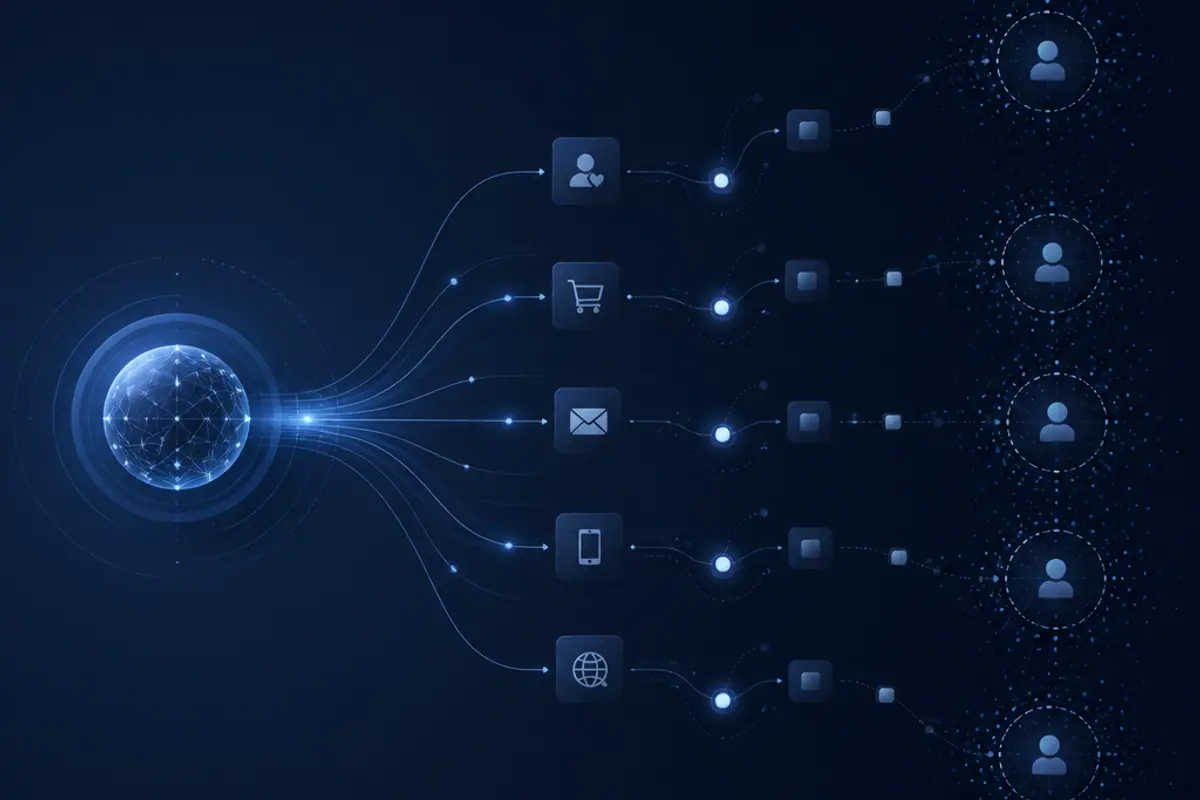
AI-powered marketing automation is a system of intelligent workflows that manages customer relationships across multiple touchpoints, adapting to behaviour and context rather than following fixed rules. Marketing automation has evolved from simple email sequences into sophisticated AI-powered workflows that manage complex customer relationships across multiple touchpoints. Yet many marketing teams that adopt automation tools still fall short of the efficiency gains and personalisation depth they expected. The gap lies in understanding that effective automation isn't about replacing human relationships - it's about scaling human insight through intelligent systems.
Modern marketing automation requires sophisticated AI that understands context, adapts to customer behaviour, and maintains compliance with evolving regulations. Organisations that master human-centric automation achieve efficiency gains whilst building stronger customer relationships than manual approaches could deliver.
Beyond Basic Automation: Intelligent Workflow Orchestration
Traditional marketing automation follows rigid rules and sequences. AI-powered marketing automation adapts dynamically to customer behaviour, market conditions, and business objectives whilst maintaining human oversight and ethical standards.
Adaptive Campaign Management
Well-designed AI approaches continuously optimise marketing campaigns based on real-time performance data and customer engagement patterns:
Dynamic Content Personalisation: Real-time adaptation of messaging, offers, and content based on individual customer behaviour
Optimal Timing Intelligence: AI-powered determination of the best engagement times for each customer across all channels
Channel Orchestration: Intelligent coordination of customer touchpoints across email, social media, web, and offline channels
Intelligent Lead Nurturing
Automated lead nurturing that feels personal and relevant to each prospect:
Behavioural Trigger Systems: Advanced workflows responding to subtle customer behaviour signals
Progressive Profiling: Gradual information collection that builds comprehensive customer understanding without survey fatigue
Intent Signal Detection: AI identification of purchase intent signals across digital touchpoints
Compliance-First Automation
Every automated workflow includes built-in compliance verification and audit capabilities:
Consent Management Integration: Automated respect for customer communication preferences and consent status
Regulatory Compliance Checking: Real-time verification of automated communications against industry regulations
Transparency Logging: Complete audit trails for all automated customer interactions
Our Approach to Marketing Automation Advisory
Our advisory approach combines guidance on automation efficiency with human-centric relationship building:
Transparent Automation Design
We advise that every automated interaction should include clear human oversight and decision transparency, so customers understand when they're interacting with automated systems whilst still feeling valued and understood.
Core Principles We Advise On:
Human-AI Collaboration Interface: Integration between automated systems and human relationship management
Customer Journey Orchestration: Coordination of all customer touchpoints across the complete lifecycle
Personalisation at Scale: Automated personalisation that maintains authentic relationship building
Performance Optimisation: Continuous improvement of automation effectiveness
Advanced Workflow Intelligence
Sophisticated workflows can adapt to changing conditions when designed well:
Multi-Objective Optimisation: Balancing efficiency, personalisation, and compliance across all automated processes
Context-Aware Decision Making: Automation that considers broader business context when making customer interaction decisions
Predictive Workflow Adjustment: Proactive adaptation of workflows based on predicted customer needs and market changes
Relationship Preservation Practice
Automation that strengthens rather than weakens customer relationships:
Empathy Engine: AI systems trained to recognise and respond appropriately to customer emotional states
Relationship Continuity: Seamless handoffs between automated and human interactions
Trust Building Automation: Workflows designed to build customer confidence and loyalty over time
Industry-Specific Automation Applications
Financial Services Automation
Financial services marketing automation must balance efficiency with trust-building and regulatory compliance:
Strategic Applications:
Compliance-First Lead Nurturing: Automated sequences ensuring all communications meet FCA requirements
Risk-Based Customer Journeys: Workflows adapted to different customer risk profiles and regulatory obligations
Automated Suitability Assessment: AI-powered preliminary suitability checking integrated into marketing workflows
Relationship Manager Integration: Seamless coordination between automated systems and human relationship managers
Regulatory Benefits:
Automated compliance checking for all customer communications
Complete audit trails for regulatory review
Risk assessment integration throughout customer journeys
Transparent AI decision-making for compliance validation
Healthcare Marketing Automation
Healthcare automation requires exceptional sensitivity to patient privacy and medical marketing regulations:
Key Capabilities:
HIPAA-Compliant Patient Journeys: Automated workflows respecting medical privacy requirements
Medical Claim Verification: Automated checking of marketing claims against medical evidence standards
Provider Engagement Automation: Sophisticated workflows for healthcare professional relationship management
Patient Education Sequences: Automated delivery of medical information meeting NHS guidelines
Education Technology Automation
EdTech automation must respect student privacy whilst optimising learning outcomes:
Automation Applications:
Parent Engagement Workflows: Automated sequences building parent confidence whilst protecting student privacy
Institution Sales Automation: Sophisticated B2B workflows for educational institution relationship management
Student Success Automation: Ethical workflows supporting student retention and academic achievement
Compliance Monitoring: Automated tracking of all student data interactions against COPPA and FERPA requirements
What Automation Success Looks Like
Well-implemented AI automation tends to deliver measurable improvements across efficiency and relationship metrics:
Efficiency Gains: meaningfully improved marketing team productivity through intelligent automation
Relationship Quality: stronger customer satisfaction scores despite increased automation, when human oversight is built in
Conversion Performance: improved lead-to-customer conversion rates through optimised nurturing
Compliance Confidence: stronger audit readiness through complete automation transparency
The Technology Behind Intelligent Automation
Adaptive Learning Systems
Automation approaches that continuously improve through machine learning typically include:
Performance Pattern Recognition: AI identification of successful automation patterns for continuous optimisation
Customer Preference Learning: Automated adaptation to individual customer communication preferences
Market Condition Adjustment: Dynamic workflow modification based on changing market conditions
Cross-Channel Intelligence: Unified learning across all customer interaction channels
Context-Aware Decision Making
Well-designed AI systems consider multiple factors when making automation decisions:
Customer Lifecycle Stage: Automation adapted to where customers are in their relationship with your organisation
Business Objective Alignment: Workflows optimised for current business priorities and market positioning
Competitive Context: Automation adjusted based on competitive activities and market positioning
Regulatory Environment: Real-time adaptation to changing compliance requirements
Human-AI Handoff Intelligence
Seamless transitions between automated and human interactions:
Escalation Trigger Detection: AI identification of situations requiring human intervention
Context Preservation: Complete information transfer when moving from automated to human interactions
Relationship Continuity: Maintenance of relationship quality across automated and human touchpoints
Performance Feedback Loop: Human insights improving automated system performance
Implementation Strategy for Marketing Automation
Phase 1: Workflow Assessment & Design (Week 1-4)
Comprehensive analysis of existing automation capabilities and customer journeys
Identification of automation opportunities and human interaction requirements
Development of human-centric automation framework
Compliance integration planning for all automated workflows
Phase 2: Intelligent System Deployment (Week 5-10)
Implementation of AI-powered automation platform
Integration with existing CRM and marketing technology systems
Development of adaptive workflow templates
Team training on human-AI collaboration protocols
Phase 3: Advanced Automation Capabilities (Week 11-16)
Deployment of predictive automation features
Implementation of cross-channel orchestration
Advanced personalisation engine activation
Continuous optimisation system establishment
Strategic Automation for Competitive Advantage
The most successful organisations don't just automate tasks - they create intelligent automation ecosystems that deliver superior customer experiences whilst achieving operational excellence:
Relationship Scale Without Relationship Loss
AI automation enables organisations to manage thousands of customer relationships with the same attention to detail previously possible only for VIP customers.
Predictive Customer Experience
Advanced automation anticipates customer needs and preferences, creating experiences that feel magical whilst being systematically reproducible.
Competitive Response Speed
Automated competitive intelligence and response systems enable rapid adaptation to market changes whilst competitors struggle with manual processes.
Organisations implementing comprehensive human-centric AI marketing frameworks achieve automation sophistication that transforms customer relationship management and operational efficiency.
Building Automation-First Marketing Organisations
Success with AI marketing automation requires organisational transformation that embeds intelligent automation throughout marketing operations whilst preserving human relationship skills.
Team Development: Training marketing professionals to collaborate effectively with AI automation systems
Process Integration: Redesigning marketing processes to leverage automation capabilities whilst maintaining relationship quality
Cultural Adaptation: Building organisational culture that values both efficiency and authentic customer relationships
Scale your marketing with intelligent automation that preserves customer relationships. See how VerityAI's advisory services help you achieve automated efficiency whilst maintaining regulatory compliance and authentic engagement.
External References:
Marketing Automation Institute Research - Industry Automation Benchmarks
HubSpot Marketing Automation Guide - Best Practices Framework
ICO Marketing Communications Guidance - UK Privacy and Marketing Compliance
For hands-on help, see VerityAI's AI marketing compliance readiness.
Frequently asked questions
What is AI-powered marketing automation?
AI-powered marketing automation is a system of intelligent workflows that manages customer communications and interactions across channels, adapting dynamically to customer behaviour rather than following fixed, rule-based sequences. Unlike traditional automation, it adjusts timing, content, and channel choice based on real-time signals while keeping compliance checks and human oversight built in. The goal is to scale personal-feeling engagement without losing the relationship quality that manual outreach provides.
Does marketing automation replace human relationship management?
No, effective AI marketing automation is designed to scale human insight, not replace it. It handles repetitive, high-volume tasks such as timing and initial nurturing, while flagging situations that need human judgement or intervention. Organisations that treat automation as a full replacement for relationship management tend to see engagement quality decline, which is why human-AI handoff design matters.
How does compliance-first automation work?
Compliance-first automation builds regulatory checks directly into each automated workflow, verifying consent status and communication preferences before any message is sent. It also keeps a complete audit trail of automated interactions, which supports regulatory review in sectors such as financial services and healthcare. This approach treats compliance as part of the workflow design rather than a separate check applied afterwards.
What is the difference between basic automation and intelligent workflow orchestration?
Basic automation follows a fixed sequence of steps regardless of context, such as a set email drip campaign. Intelligent workflow orchestration adapts the sequence, timing, and content based on customer behaviour, market conditions, and business priorities as they change. This adaptability is what allows intelligent automation to maintain relevance across long and varied customer journeys.

Sotiris Spyrou
Sotiris Spyrou is the founder of VerityAI, a Responsible AI advisory for boards and AI-deploying businesses. With 27 years across agencies and global in-house roles, including Global Head of SEO at Robert Half and Group Head of Search at Gamesys, he advises leaders on AI governance and risk, and on answer-engine visibility engineered without the dark patterns the rest of the industry is getting penalised for. He is the author of TRANSFORM, AI Moats, and Ethical AI.
Founder at VerityAI
Areas of Expertise: