AI Interview Horror Stories: When Robots Reject Humans
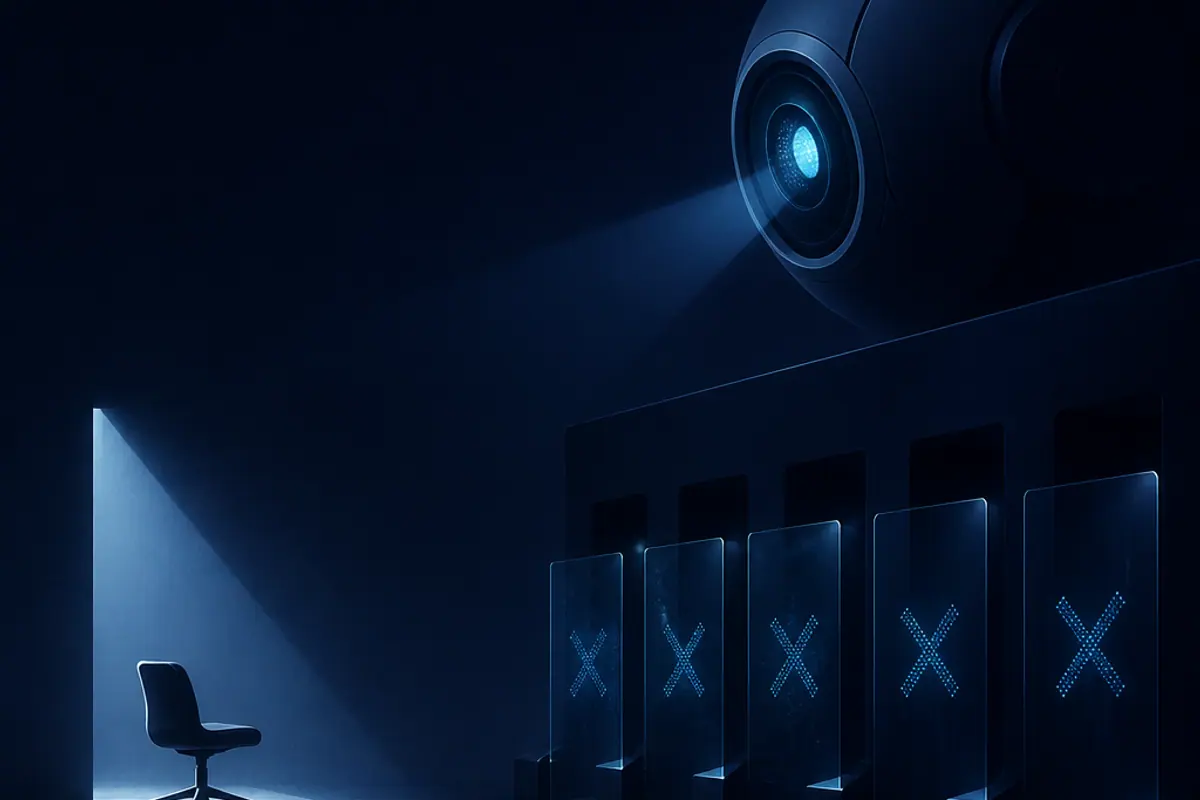
Are AI interview systems creating new forms of hiring discrimination? Research reveals concerning patterns of bias against women, minorities, and people with disabilities in algorithmic hiring tools, leading to legal challenges and growing calls for transparency in automated employment decisions.
While traditional hiring processes have always had flaws, automated interview systems powered by artificial intelligence have introduced new forms of potential discrimination that can be harder to detect and challenge. These systems, which analyze everything from facial expressions to voice patterns, are being used by hundreds of companies worldwide, often without candidates knowing how they're being evaluated.
Candidates increasingly encounter this reality directly. A qualified applicant completes an AI-scored video interview, such as those built by HireVue, and receives an automated rejection with no explanation of why they weren't selected.
This pattern reflects growing concerns about AI interview systems that promise efficiency and objectivity but may actually perpetuate or create new forms of bias in hiring.
The Reality of AI Interview Bias: What Research Shows
The use of AI in hiring has grown significantly, with 65% of recruiters reporting they have been using AI for recruitment purposes. However, mounting evidence reveals serious problems with these systems.
Documented Cases of Discrimination
The most well-documented case of AI hiring bias occurred at Amazon. Amazon's team developed an AI recruiting tool from 2014 to 2017 that systematically discriminated against women. The system penalized resumes containing the word "women's" and downgraded graduates of all-women's colleges. Amazon ultimately scrapped the project when they couldn't eliminate the bias.
Facial Recognition Bias in Hiring
Research by MIT's Joy Buolamwini has revealed significant accuracy disparities in facial recognition technology that affects hiring platforms. Her Gender Shades study found that facial analysis systems had error rates of 0.8% for light-skinned men compared to 34.7% for dark-skinned women. This research has been particularly relevant for video interview platforms that analyze facial expressions and movements.
As Buolamwini noted, when determining gender, the error rates of these systems were less than 1 percent for lighter-skinned males, but for darker-skinned female faces, the error rates were as high as 35 percent.
Current Legal Challenges
Several significant legal cases are challenging AI hiring discrimination:
Mobley v. Workday (2023-ongoing): Derek Mobley filed a class-action lawsuit alleging Workday's AI hiring tools discriminated against applicants over 40. In May 2025, a federal judge allowed the case to proceed as a nationwide class action.
ACLU v. Intuit and HireVue (2025): The ACLU filed a complaint on behalf of a Deaf Indigenous woman who was allegedly discriminated against by HireVue's AI interview platform when applying for a promotion at Intuit.
iTutorGroup Settlement: The EEOC's first AI discrimination settlement involved iTutorGroup paying $365,000 to applicants whose applications were allegedly rejected based on age by automated hiring software.
How AI Interview Systems Actually Work
Understanding the technology helps explain why bias occurs. AI interview platforms typically analyze:
Voice and Speech Patterns
Speaking pace and rhythm
Vocal pitch and tonal patterns
Word choice and language complexity
Accent and pronunciation differences
Facial Analysis (Now Largely Discontinued)
HireVue, one of the leading platforms, removed facial analysis from new assessments in early 2021 after criticism about bias and discrimination concerns. The company stated that nonverbal data contributed only about 0.25% to predictive power in most cases, making it not worth the potential bias concerns.
Natural Language Processing
Analysis of answer content and structure
Keyword detection and relevance scoring
Communication style assessment
Why AI Interview Bias Occurs
AI bias arises from two major technical factors: training data that overrepresents or underrepresents certain groups, and programming errors where developers inadvertently incorporate their own biases into algorithmic decision-making.
Training Data Problems
AI systems learn from historical data that often reflects past discrimination. When Amazon's algorithm analyzed 10 years of résumés, the majority came from men due to male dominance in tech, causing the algorithm to learn that male candidates were preferable.
Cultural and Accessibility Bias
University of Washington researchers found that large language models used for resume ranking favored white-associated names 85% of the time and female-associated names only 11% of the time.
Disability advocates note particular concerns. As disability researcher Shari Trewin explained, "The way that AI judges people is with who it thinks they're similar to - even when it may never have seen anybody similar to them - is a fundamental limitation in terms of fair treatment for people with disabilities".
The Regulatory Response
New York City Requirements
NYC Local Law 144, implemented in July 2023, requires companies using AI hiring tools to conduct annual independent bias audits and publish the results.
Federal Guidance
In May 2022, the U.S. Equal Employment Opportunity Commission warned that AI hiring tools could violate civil rights laws by discriminating against people with disabilities.
State-Level Action
Illinois enacted the Artificial Intelligence Video Interview Act in 2020, requiring employers to notify applicants about AI usage, explain the AI process, obtain consent, and destroy videos within 30 days if requested.
What Job Seekers Can Do
Know Your Rights
Request alternative assessment methods if you have a disability
Ask about AI usage in the hiring process
Report suspected discrimination to appropriate authorities
Research Company Practices
Look for companies that publish bias audit results
Check if employers mention AI usage in job postings
Research company diversity and inclusion commitments
Focus on Alternative Pathways
Employee referrals and networking consistently outperform online applications, with much higher success rates than platform-based applications.
Companies Reconsidering AI Interviews
Some major employers have scaled back or eliminated AI interview systems after discovering problems:
HireVue removed facial analysis from its platform in 2021, with CEO Kevin Parker stating that "when you put that in the context of the concerns people were having [about potential bias], it wasn't worth the incremental value we might have been getting from it".
The growing body of research and legal challenges is forcing companies to reconsider whether AI interview systems deliver on their promises of efficiency and fairness.
The Path Forward
The evidence suggests that current AI interview technology is not ready for widespread deployment without significant safeguards. As LinkedIn's John Jersin noted, "I certainly would not trust any AI system today to make a hiring decision on its own. The technology is just not ready yet".
Effective solutions require:
Mandatory bias auditing and public reporting
Alternative assessment options for all candidates
Transparency about AI usage in hiring decisions
Continued legal pressure through discrimination cases
The goal should not be to eliminate technology from hiring, but to ensure that automated systems actually improve fairness rather than perpetuating or amplifying existing biases.
Understanding how AI hiring tools work, and your rights as a candidate, can help protect you from algorithmic discrimination while you search for opportunities with employers who prioritise fair hiring practices.
Frequently asked questions
What is AI interview bias?
AI interview bias happens when automated hiring tools, such as video interview platforms or resume screeners, systematically favour or disadvantage candidates based on characteristics like gender, race, age, or disability rather than job-relevant skills. It usually stems from biased training data or flawed model design, not deliberate intent.
Will AI interviews become more accurate over time?
Technology may improve, but a fundamental challenge remains: there's limited scientific basis for judging job performance from facial expressions, voice patterns, or other behavioural signals captured during a stressful interview. Better engineering doesn't resolve that underlying validity problem on its own.
Can I refuse an AI-powered job interview?
It depends on the employer and jurisdiction. Some regions, such as Illinois and New York City, require companies to disclose AI use and, in some cases, offer alternative assessment methods. Ask the employer directly about their policy before you apply or interview.
How can employers reduce bias in AI hiring tools?
Independent bias audits, published results, human review of automated decisions, and offering non-AI assessment alternatives are the main safeguards regulators and researchers currently point to. None of these guarantee a bias-free system, which is why ongoing audits and transparency matter more than a one-off compliance check.
References and Sources
Facial Recognition Bias Research
MIT Media Lab (2018). "Gender Shades: Intersectional Accuracy Disparities in Commercial Gender Classification." Joy Buolamwini and Timnit Gebru. Retrieved from: http://gendershades.org/
MIT Technology Review (2018). Joy Buolamwini profile and research findings. Retrieved from: https://www.technologyreview.com/innovator/joy-buolamwini/
Legal Cases and Settlements
EEOC (2023). iTutorGroup settlement for $365,000. Multiple legal publications documented this as the first AI discrimination settlement.
Fisher Phillips (2025). "Discrimination Lawsuit Over Workday's AI Hiring Tools Can Proceed as Class Action." Legal analysis of Mobley v. Workday case progression.
ACLU (2025). "Complaint Filed Against Intuit and HireVue Over Biased AI Hiring Technology." Official complaint documentation.
Industry Research and Market Data
University of Washington (2024). "AI tools show biases in ranking job applicants' names according to perceived race and gender." Research by Kyra Wilson and Aylin Caliskan.
DemandSage (2025). "AI Recruitment Statistics 2025." Industry usage statistics and trends.
Amazon Case Documentation
- Reuters/Multiple Sources (2018). Amazon's AI recruiting tool discrimination case, widely reported across MIT Technology Review, ACLU, Built In, and academic sources.
Regulatory and Legal Framework
Holland & Knight (2025). "Artificial Intelligence in Hiring: Diverging Federal, State Perspectives on AI in Employment." Legal analysis of evolving regulation.
NPR (2022). "U.S. warns of discrimination in using AI to screen job candidates." Federal guidance on AI hiring discrimination.
HireVue Changes and Industry Response
Fortune (2021). "HireVue drops facial monitoring amid A.I. algorithm audit." Documentation of facial analysis removal.
Fast Company (2021). "Independent auditors are struggling to hold AI companies accountable." Critical analysis of algorithmic auditing.
Disclaimer
This analysis focuses on documented cases of AI hiring bias and established legal precedents. Individual experiences may vary, and the regulatory landscape continues to evolve rapidly. Readers should consult current legal guidance and employment attorneys for specific situations.
More on how we approach it: AI governance.

Sotiris Spyrou
Sotiris Spyrou is the founder of VerityAI, a Responsible AI advisory for boards and AI-deploying businesses. With 27 years across agencies and global in-house roles, including Global Head of SEO at Robert Half and Group Head of Search at Gamesys, he advises leaders on AI governance and risk, and on answer-engine visibility engineered without the dark patterns the rest of the industry is getting penalised for. He is the author of TRANSFORM, AI Moats, and Ethical AI.
Founder at VerityAI
Areas of Expertise: