MCP Servers: Supercharging Your Vibe Coding with Advanced Tools
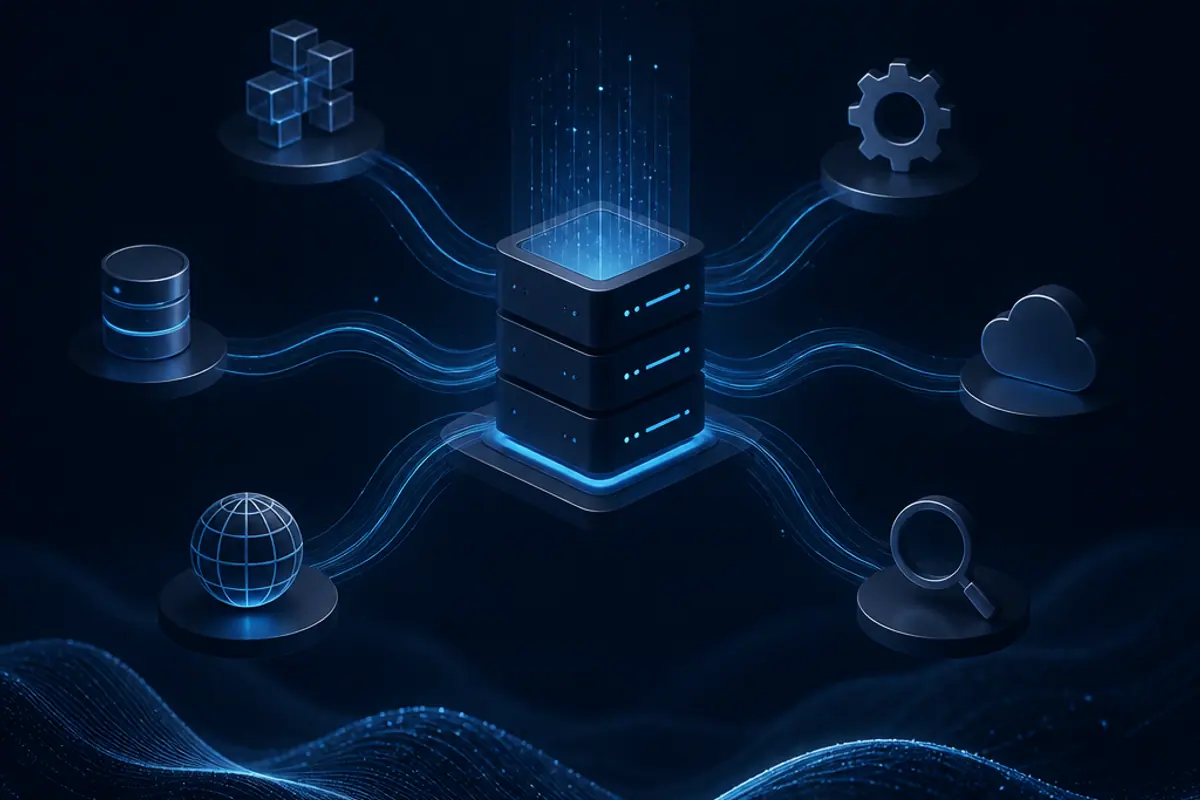
MCP servers are middleware tools that connect an AI coding assistant to external services, databases, and specialised functions, extending what the assistant can do beyond its core code-generation capability. As Vibe Coding continues to transform software development by enabling AI assistants to write code through natural language instructions, a powerful enhancement is gaining traction: MCP (Model-Completion-Protocol) servers. At VerityAI, we're exploring how these advanced tools can significantly extend the capabilities of AI coding assistants while ensuring proper validation and security.
Understanding MCP Servers in Vibe Coding
MCP servers are specialized tools that integrate with AI coding environments (like Windsurf, Cursor, or Client), providing additional capabilities beyond what the core AI assistant can offer. These servers act as middleware between your instructions and various external services or specialized functions, unlocking new possibilities for your Vibe Coding projects.
The Transformative Potential of MCP Integration
When properly implemented, MCP servers can substantially enhance Vibe Coding capabilities:
Specialized Domain Access: Connecting AI assistants to domain-specific tools and frameworks
External Service Integration: Enabling direct interaction with databases, APIs, and cloud services
Advanced Visualization: Supporting sophisticated graphical and visualization capabilities
Research Augmentation: Accessing up-to-date information and specialized knowledge
Development Environment Extensions: Enhancing the coding environment with additional tools
Popular MCP Server Examples
Several MCP servers have demonstrated particular value in the Vibe Coding ecosystem:
Unity MCP: Enabling direct AI interaction with the Unity game development environment
Firecrawl: Providing deep research capabilities through web search and content analysis
Database Connectors: Allowing direct interaction with various database systems
Design Tools: Supporting UI/UX design and visualization
Specialized Frameworks: Connecting to domain-specific development frameworks
The Security and Validation Challenge
While MCP servers offer powerful capabilities, they also introduce new considerations:
Data Access Control: Ensuring appropriate limitations on what MCP servers can access
Code Execution Boundaries: Establishing safe execution environments for MCP functionality
Authentication Management: Properly handling credentials for external services
Result Validation: Verifying the accuracy and security of MCP-sourced information
Integration Testing: Ensuring reliable interaction between AI and MCP systems
The VerityAI Approach to MCP Validation
Our independent validation platform helps ensure MCP integrations maintain security and reliability:
Access Pattern Analysis: Verifying appropriate access limitations and authentication handling
Security Boundary Verification: Ensuring proper isolation and execution constraints
Integration Testing: Validating reliable interaction between AI and MCP systems
Result Verification: Assessing the accuracy and trustworthiness of MCP-sourced information
Compliance Evaluation: Ensuring adherence to relevant regulations and policies
Implementing MCP Servers in Your Workflow
To effectively incorporate MCP servers into your Vibe Coding practice:
Start Simple: Begin with well-established, thoroughly documented MCP servers
Understand Boundaries: Learn what each MCP server can and cannot access
Test Incrementally: Integrate one capability at a time and validate before expanding
Monitor Behavior: Observe how the AI uses MCP functionality and adjust as needed
Maintain Security Awareness: Stay cognizant of potential security implications
Beyond Basic Integration
As your experience with MCP servers grows, consider these advanced approaches:
Custom MCP Development: Creating specialized servers for your specific domain needs
Workflow Automation: Building MCPs that automate common development tasks
Multi-MCP Orchestration: Coordinating multiple servers for complex workflows
Validation Integration: Incorporating automated testing and validation into MCP processes
The Future of MCP-Enhanced Vibe Coding
As MCP servers continue to evolve, they promise to further transform the Vibe Coding landscape:
Enabling more specialized domain applications
Supporting increasingly sophisticated development environments
Providing more seamless integration with external tools and services
Enhancing AI capabilities with specialized knowledge and functionality
By thoughtfully incorporating MCP servers into your Vibe Coding workflow while maintaining appropriate validation and security measures, you can significantly expand what's possible through AI-assisted development.
Visit VerityAI today to learn how our independent validation platform can help ensure your MCP integrations maintain security and reliability while unlocking powerful new capabilities for your AI-assisted projects.
Frequently asked questions
What is an MCP server?
An MCP server is a specialised tool that connects an AI coding assistant to external services, databases, or domain-specific functions. It sits between the assistant and those external systems, so the AI can act on them directly rather than being limited to generating code in isolation.
Is an MCP server the same as a plugin?
The two share a similar goal, extending an assistant's capability, but MCP servers are built to a shared protocol so different AI coding environments can connect to the same server. This makes them more portable across tools than a typical single-environment plugin.
What are the main risks of using MCP servers?
The biggest risks are around access control and authentication: an MCP server that can reach a database or external API needs clear boundaries on what it can read, write, or execute. Validating those boundaries before granting broad access is essential.
How should a team start using MCP servers safely?
Start with a single, well-documented server, understand exactly what it can access, and test it on a small task before expanding its role. Review how the AI actually uses the connection in practice rather than assuming it will behave as expected.
If you want support with this, VerityAI offers our development practice.

Sotiris Spyrou
Sotiris Spyrou is the founder of VerityAI, a Responsible AI advisory for boards and AI-deploying businesses. With 27 years across agencies and global in-house roles, including Global Head of SEO at Robert Half and Group Head of Search at Gamesys, he advises leaders on AI governance and risk, and on answer-engine visibility engineered without the dark patterns the rest of the industry is getting penalised for. He is the author of TRANSFORM, AI Moats, and Ethical AI.
Founder at VerityAI
Areas of Expertise: