From Cattle Herding to Human Flourishing: Rethinking AI Optimization
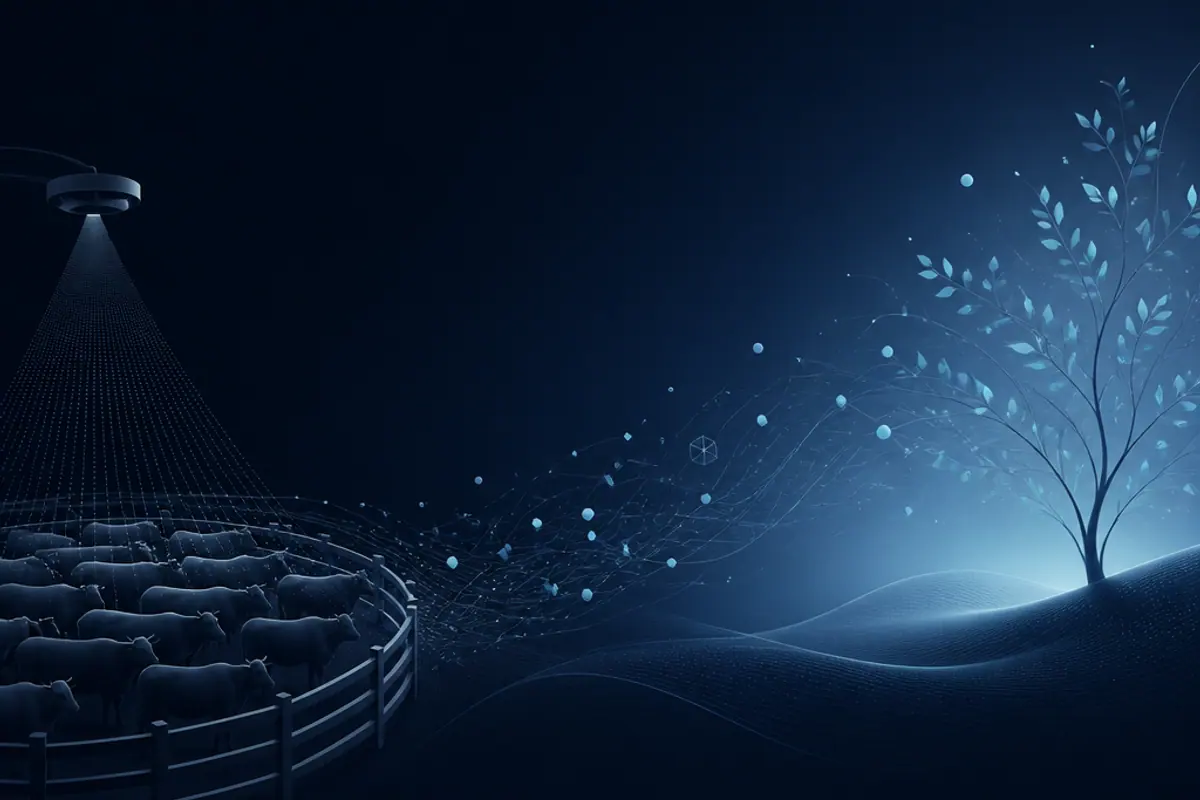
Cattle-herding AI describes systems designed to funnel human behaviour toward predictable, profitable outcomes rather than genuine wellbeing, treating users as a resource to be managed instead of people to be served.
The metaphor isn't subtle because the reality isn't subtle. When algorithms guide human behaviour toward predetermined outcomes - maximising clicks, extending platform time, increasing consumption - we've created digital cattle operations. Users become livestock in carefully designed systems that prioritise predictable, profitable behaviours over human autonomy and wellbeing.
But what if we designed AI differently? What if instead of herding human behaviour, we created systems that help humans flourish as creative, autonomous, and fulfilled individuals?
The distinction isn't just philosophical - it's the difference between sustainable businesses that create genuine value and extractive systems that mine human attention until the resource is depleted.
The Anatomy of Digital Cattle Operations
Modern AI systems often exhibit the hallmarks of livestock management rather than human empowerment:
Predictable Pathways: Like cattle chutes, algorithmic systems funnel users through predetermined sequences designed to maximise specific behaviours - clicking, purchasing, sharing, consuming.
Behavioural Conditioning: Variable reward schedules, notification systems, and engagement mechanics train users to respond predictably to stimuli, much like behavioural conditioning in animal husbandry.
Resource Extraction: The primary goal becomes extracting maximum value (attention, data, money) from users rather than providing maximum value to users.
Population Management: Users are segmented, targeted, and managed as demographic cohorts rather than treated as unique individuals with distinct goals and preferences.
Dependency Creation: Systems are designed to make users increasingly dependent on the platform rather than more capable of independent action.
The efficiency of these approaches explains their popularity. Digital cattle operations generate impressive metrics, scalable revenue streams, and predictable user behaviours. They also create what economists call "negative externalities" - costs borne by society rather than the companies generating them.
The Hidden Costs of Human Cattle Operations
While digital livestock management generates quarterly profits, it creates mounting societal costs that increasingly threaten long-term business sustainability:
Cognitive Degradation: Systems designed to minimise user decision-making gradually erode human capacity for autonomous choice and critical thinking.
Attention Fragmentation: Constant optimization for immediate engagement scatters human cognitive resources, making deep work, learning, and creativity more difficult.
Social Atomisation: Algorithmic systems often substitute digital interactions for real-world relationships, leading to increased isolation and decreased social capital.
Innovation Suppression: When AI systems optimize for predictable behaviours, they discourage the unpredictable human activities - experimentation, serendipity, creative risk-taking - that drive innovation.
Democratic Erosion: Cattle-herding algorithms tend to create echo chambers and amplify extreme content, undermining the diverse discourse necessary for democratic society.
The Alternative: Human Flourishing as Optimization Target
What would AI systems look like if they optimised for human flourishing rather than behavioural predictability?
Capability Enhancement: Instead of replacing human decision-making, these systems would augment human capabilities, making people more skilled, knowledgeable, and autonomous over time.
Serendipity Creation: Rather than trapping users in filter bubbles, flourishing-optimised AI would deliberately introduce beneficial randomness, expanding rather than narrowing human experience.
Goal Achievement Support: Systems would help users accomplish their own objectives efficiently rather than redirecting them toward platform-beneficial behaviours.
Relationship Facilitation: AI would strengthen real-world connections and communities rather than substituting digital interactions for human relationships.
Agency Preservation: The measure of success would be whether users become more capable of independent action, not more dependent on the system.
What Flourishing-Optimised AI Looks Like in Practice
A handful of patterns show up repeatedly where organisations have deliberately shifted an algorithm away from pure engagement:
Educational technology: redesigning a recommendation system to optimise for skill mastery rather than course completion rates. This typically means measuring whether users actually gain capability and go on to use it, rather than how long they stay logged in.
Financial services: rebuilding a personal finance AI to optimise for user financial health rather than product engagement, tracking savings behaviour and debt reduction instead of app opens or feature usage.
Healthcare: shifting a health monitoring platform from optimising for app engagement to optimising for health outcomes, such as medication adherence and preventive care behaviours, rather than daily active use.
Content platforms: restructuring a content algorithm to prioritise information value over engagement metrics, accepting that this can reduce time-on-platform in exchange for reader trust and comprehension.
Organisations that make this kind of shift generally report that some short-term engagement metrics fall while longer-term measures, such as retention, trust, and advocacy, improve. The exact scale of that trade-off varies by sector and cannot be generalised into a single set of numbers.
The Technical Architecture of Human Flourishing
Building AI systems that optimise for human flourishing requires fundamental changes in technical approach:
Multi-Dimensional Success Metrics Replace single-variable optimisation (engagement, time-on-platform, conversion) with multi-dimensional success frameworks that include user autonomy, capability development, and real-world outcome achievement.
Temporal Perspective Expansion Extend optimisation windows from immediate user actions to long-term user development. Success becomes measured in months and years rather than clicks and sessions.
Intent Alignment Architecture Build systems that identify and prioritise user-stated goals rather than platform-beneficial behaviours. The AI becomes a tool for user empowerment rather than user exploitation.
Adaptive Personalisation Create systems that evolve with users as they grow and change, supporting their development rather than locking them into behavioural patterns.
Exit Facilitation Design Include mechanisms that help users disengage from the system when they've accomplished their goals, rather than creating infinite engagement loops.
The Business Model Transformation
Shifting from cattle herding to human flourishing requires rethinking fundamental business model assumptions:
Value Creation Over Value Extraction Instead of extracting maximum value from users, focus on creating maximum value for users. This often leads to sustainable competitive advantages and customer loyalty.
Quality Over Quantity Metrics Measure success through user outcome achievement rather than usage volume. This typically results in higher customer lifetime value and lower acquisition costs.
Partnership Over Exploitation Treat users as partners in value creation rather than resources to be optimised. This approach builds stronger, more sustainable business relationships.
Long-term Over Short-term Optimisation Accept reduced immediate metrics in exchange for sustainable, long-term business growth and reduced regulatory risk.
Implementation Strategy: The Transition Framework
Moving from cattle-herding to flourishing-optimised AI requires systematic organisational change:
Phase 1: Current State Assessment Audit existing systems to understand how they currently influence user behaviour. Map the gap between stated company values and actual algorithmic optimisation targets.
Phase 2: Flourishing Metrics Development Create measurement systems for human capability development, autonomy preservation, and real-world outcome achievement alongside traditional business metrics.
Phase 3: Pilot Program Implementation Run small-scale experiments optimising for flourishing metrics while maintaining control groups optimised for traditional engagement metrics.
Phase 4: Evidence-Based Scaling Use pilot results to gradually shift larger systems toward flourishing optimisation, documenting business impact and user outcome improvements.
Phase 5: Cultural Integration Embed human flourishing principles into hiring, product development, and strategic planning processes to ensure sustainable organisational change.
Overcoming Implementation Challenges
The transition from cattle herding to human flourishing faces predictable obstacles:
Short-term Metric Pressure: Quarterly earnings expectations can create pressure to maintain engagement-optimised systems despite long-term benefits of flourishing approaches.
Technical Complexity: Measuring human flourishing is more complex than measuring clicks or time spent, requiring investment in new measurement systems and analytical capabilities.
Competitive Concerns: Fear that competitors will gain advantage through continued user exploitation can prevent companies from making ethical improvements.
Stakeholder Education: Investors, executives, and team members may need education about why traditional metrics can be misleading indicators of business health.
The Competitive Advantage of Human Flourishing
Companies that successfully make this transition often discover unexpected business advantages:
Regulatory Resilience: As governments increasingly scrutinise manipulative AI systems, flourishing-optimised companies face fewer compliance challenges and reputational risks.
Talent Magnetism: Top developers, designers, and executives prefer working for companies that create positive impact, giving flourishing-focused organisations advantages in competitive talent markets.
Customer Advocacy: Users who feel genuinely empowered become authentic advocates, reducing customer acquisition costs and increasing organic growth.
Innovation Differentiation: While competitors focus on attention capture, flourishing-optimised companies can differentiate through genuine problem-solving capabilities.
Market Evolution Leadership: Companies that anticipate the shift toward ethical technology position themselves as leaders in evolving markets rather than followers scrambling to catch up.
The Future of Human-AI Collaboration
The distinction between cattle herding and human flourishing represents more than a strategic choice - it reflects fundamentally different visions of human-AI collaboration.
The cattle-herding model assumes humans are resources to be optimised for system benefit. The flourishing model assumes AI is a resource to be optimised for human benefit.
As AI capabilities expand, this distinction becomes increasingly important. Do we want more powerful systems that are better at controlling human behaviour, or more powerful systems that are better at empowering human potential?
Making the Choice: Your Next Steps
Every algorithmic decision represents a choice between these paradigms. When designing recommendation systems, do we optimise for extended engagement or successful goal achievement? When building personalisation engines, do we create filter bubbles or expand user horizons? When measuring success, do we count clicks or count capabilities?
The transition begins with a simple question: What would our AI systems look like if we genuinely wanted users to flourish as autonomous, creative, and fulfilled human beings?
The answer to that question will determine whether your company contributes to human flourishing or digital cattle operations.
The choice is yours. The time is now. The future depends on which paradigm wins.
Frequently asked questions
What is cattle-herding AI?
Cattle-herding AI is a term for algorithmic systems built to steer human behaviour toward predictable, profitable actions rather than genuine outcomes for the person using them. It shows up as engagement loops, notification triggers, and recommendation engines that optimise for platform metrics over user autonomy.
How is human-flourishing AI different from cattle-herding AI?
Human-flourishing AI optimises for outcomes users actually want, such as skills gained, goals achieved, or time given back, rather than time spent or clicks generated. The technical build looks similar on the surface, but the target the system is trained toward is fundamentally different.
Can a business switch from engagement metrics to flourishing metrics without losing revenue?
Businesses that have made the switch generally report that trading some short-term engagement for user trust and retention pays off over a longer horizon, though the transition takes deliberate measurement and organisational buy-in rather than a simple metric swap. It isn't a quick fix, and it works best as a phased change rather than an overnight one.
Where does responsible AI governance fit into this shift?
Responsible AI governance gives an organisation the structure to check whether its systems are actually optimising for the outcomes it claims to care about, rather than relying on good intentions alone. It turns "we want to serve users" into a set of reviewable, auditable practices.
Related Articles
Your Call to Action
Ready to transform your AI systems from digital cattle operations to human flourishing platforms? Explore our human-centered AI development services and discover how flourishing-optimised systems can create sustainable competitive advantages.
More on how we approach it: responsible AI governance.

Sotiris Spyrou
Sotiris Spyrou is the founder of VerityAI, a Responsible AI advisory for boards and AI-deploying businesses. With 27 years across agencies and global in-house roles, including Global Head of SEO at Robert Half and Group Head of Search at Gamesys, he advises leaders on AI governance and risk, and on answer-engine visibility engineered without the dark patterns the rest of the industry is getting penalised for. He is the author of TRANSFORM, AI Moats, and Ethical AI.
Founder at VerityAI
Areas of Expertise: