AI Can Now Read Your Mind With 50% Accuracy - But Privacy Laws Never Saw This Coming
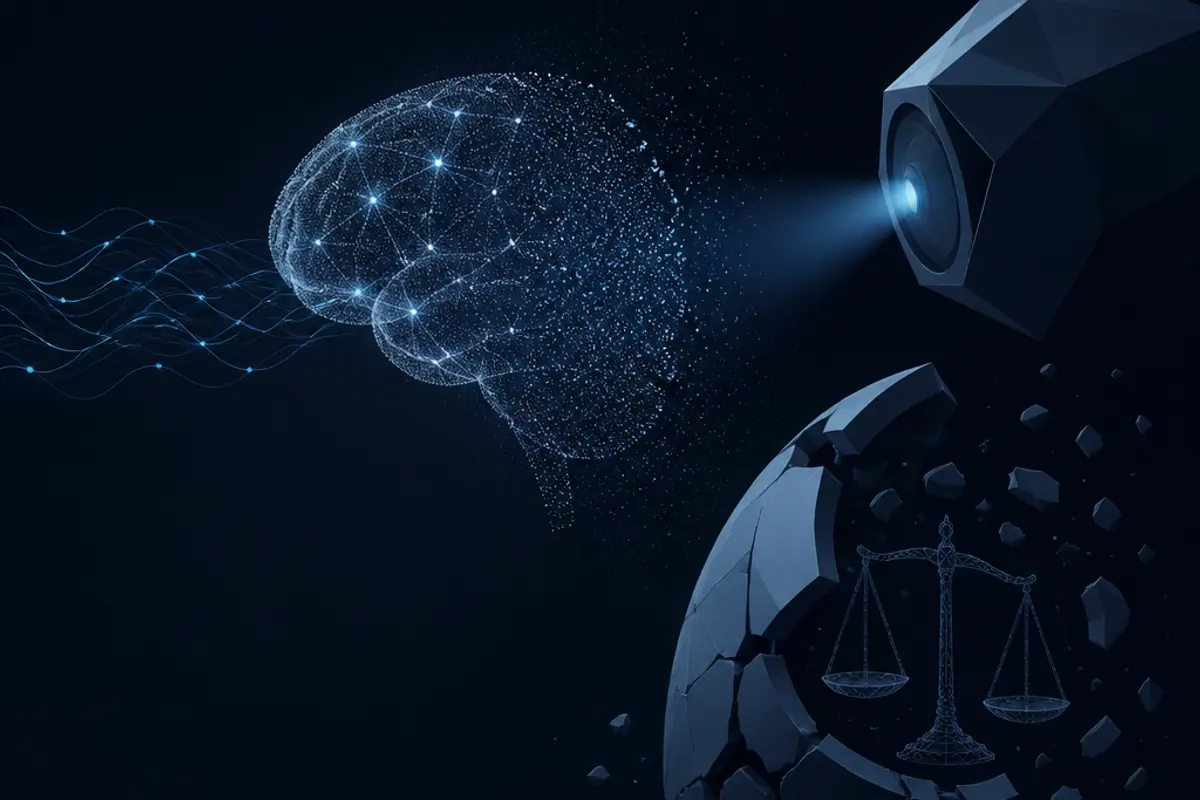
Brain-computer interfaces are devices that read electrical signals from the brain and use AI to decode them into words, commands, or intentions, and current privacy law was not written with this capability in mind.
Brain-computer interfaces can now decode thoughts into words with 50% accuracy using non-invasive EEG sensors and AI processing. The technology demonstrates live mind-reading capabilities - detecting silent speech, enabling hands-free object selection, and translating mental intentions directly into digital interfaces without requiring invasive implants or extensive training.
This isn't theoretical research - it's working technology that can capture brain signals, apply deep learning to decode intended words, and use large language models to correct mistakes in real-time. The demonstrations show both the remarkable potential and current limitations of technology that fundamentally challenges every assumption underlying privacy law and data protection frameworks.
Current privacy laws assume your thoughts are private. That assumption just became obsolete. When AI systems can decode neural signatures with sufficient accuracy to enable communication and device control, the entire legal and regulatory framework for mental privacy requires immediate reconsideration. Yet virtually no governance structures exist to address the compliance implications of mind-reading technology.
The Neural Data Revolution
The technical sophistication of current brain-computer interfaces extends far beyond simple signal detection. The system uses multiple AI technologies in combination - sensor processing to capture brain signals, deep learning to decode neural patterns into intended words, and large language models to match decoded content with contextual correction.
This hybrid approach achieves sufficient accuracy for practical applications whilst revealing the potential for rapid improvement. When 50% accuracy enables meaningful communication for people who cannot speak, and the technology works through natural thought processes without requiring invasive procedures, the barriers to widespread adoption become primarily regulatory rather than technical.
The individual variation in neural signatures - where some people "give off great neural signatures" whilst others present decoding challenges - creates a personalization dimension that traditional privacy frameworks don't address. When neural data processing requires individual calibration and produces person-specific insights, the privacy implications become highly personalised rather than generic.
The visual object selection capabilities demonstrate that the technology extends beyond language processing to attention and intention detection. AI systems can identify what someone is focusing on and interpret that focus as selection commands, enabling hands-free device control through thought patterns alone.
Privacy Law Obsolescence
Current data protection frameworks assume a clear distinction between external behaviour and internal mental processes. Privacy laws protect data that people share or that can be observed externally, but they don't address scenarios where technology can access mental processes directly.
The fundamental privacy principle that "thoughts are private" underlies most legal frameworks for mental privacy protection. When this assumption fails - when AI systems can decode thought patterns with meaningful accuracy - the entire legal foundation for mental privacy requires reconstruction.
Consider the implications for existing privacy rights:
Consent Mechanisms: How do you consent to neural data processing when the technology can potentially access thoughts about the consent process itself?
Data Minimisation: What constitutes the minimum neural data necessary for legitimate purposes when thought processes are inherently interconnected?
Purpose Limitation: How do you limit the use of neural data when the same brain signals could reveal information about multiple aspects of mental processing?
Right to Erasure: How do you delete neural data when the processing may have revealed insights that can't be "unknown"?
These questions don't have answers within current regulatory frameworks because the frameworks weren't designed to address direct neural data processing.
The "Turn It Off" Problem
The acknowledged ethical concern about "how do I turn it off?" represents a fundamental challenge to consent-based privacy models. Traditional data protection assumes that individuals can control when and how their data is processed, but neural data processing may operate continuously whenever the technology is active.
Unlike traditional interfaces where users consciously decide to input information, brain-computer interfaces may process neural signals continuously to maintain responsiveness. This creates scenarios where mental privacy invasion could occur without explicit intent or awareness.
The technical requirements for effective brain-computer interfaces - continuous signal monitoring, individual calibration, and contextual interpretation - may conflict with privacy principles that assume clear temporal boundaries around data processing activities.
When the technology works with "innate thought processes" rather than conscious data input, the distinction between intentional and unintentional data sharing becomes blurred in ways that existing consent frameworks can't adequately address.
Neural Data as a New Category
Neural data processing creates a new category of personal information that doesn't fit neatly into existing data protection classifications. Unlike traditional personal data that reflects past actions or stated preferences, neural data reveals real-time mental processes and potentially unconscious thought patterns.
The sensitivity of neural data exceeds most existing categories of protected information. While financial data reveals economic behaviour and health data reveals physical conditions, neural data could potentially reveal personality traits, emotional states, cognitive capabilities, and thought processes that individuals might not consciously recognise or want to share.
The real-time nature of neural data processing creates additional challenges. Traditional data protection frameworks assume that personal data exists in discrete units that can be collected, processed, and stored separately. Neural data processing may involve continuous streams of interconnected information that can't be easily segmented or controlled.
The interpretive dimension of neural data - where AI systems decode signals into meaningful content - creates questions about data ownership and accuracy that traditional frameworks don't address. When AI systems interpret neural signals incorrectly, who bears responsibility for the misinterpretation and its consequences?
Regulatory Blind Spots
The combination of non-invasive hardware and sophisticated AI processing creates regulatory blind spots that existing frameworks struggle to address. Medical device regulations may not apply to non-invasive consumer devices. Data protection laws may not adequately cover neural data. Consumer protection frameworks may not address the unique risks of mind-reading technology.
The 50% accuracy level represents a threshold where the technology becomes practically useful whilst remaining imperfect enough to create new categories of error and misinterpretation. When AI systems decode thoughts incorrectly, the resulting actions or communications may not reflect the individual's actual intentions, creating liability and accountability questions that current frameworks don't address.
The hardware limitations - cable requirements, electronic interference sensitivity, and individual calibration needs - may provide temporary barriers to widespread adoption, but these are engineering challenges rather than fundamental limitations. As the technology improves, the regulatory gaps will become more pressing.
The application scenarios - enabling communication for people who cannot speak, interfacing with wearable computers, and enabling silent communication - each create different regulatory challenges that may require separate governance approaches.
Competitive and Economic Implications
The potential for brain-computer interfaces to "eliminate the bottleneck between human thought and digital interfaces" represents a fundamental shift in human-computer interaction that could create significant competitive advantages for early adopters whilst raising profound questions about cognitive enhancement and workplace fairness.
When some individuals have direct neural interfaces whilst others rely on traditional input methods, the productivity and capability differences could be substantial. This creates questions about workplace discrimination, equal access to technology, and the potential for neural interface technology to create new forms of social and economic stratification.
The individual variation in neural signatures means that the technology may work better for some people than others, potentially creating new forms of technological discrimination based on neurological compatibility rather than traditional factors.
The Broader AI Governance Challenge
Neural data processing represents an extreme example of how AI capabilities can advance faster than governance frameworks can adapt. The challenges we're seeing across AI systems become more acute when the technology directly accesses mental processes that existing laws assume remain private.
The hybrid approach using multiple AI technologies - sensor processing, deep learning, and large language models - creates a complex system where traditional AI governance approaches may not be sufficient. Each component may be regulated differently, whilst the combined system creates capabilities that exceed the regulatory scope of individual components.
Building Neural Privacy Frameworks
The development of brain-computer interfaces requires proactive privacy framework development that addresses the unique characteristics of neural data processing. This can't wait for reactive regulation after widespread deployment - the privacy implications are too fundamental to address retrospectively.
Key elements of neural privacy frameworks must include:
Neural Data Classification: Clear categorisation of different types of neural information and their associated privacy protections, recognising that neural data may reveal more sensitive information than traditional personal data categories.
Continuous Consent Models: Frameworks for managing consent when neural data processing operates continuously, including mechanisms for real-time consent modification and clear communication about processing activities.
Accuracy and Interpretation Standards: Requirements for neural data interpretation accuracy, error handling, and accountability when AI systems misinterpret neural signals in ways that could affect individuals' rights or interests.
Mental Privacy Rights: Explicit recognition of mental privacy as a fundamental right that requires special protection when technology can access thought processes directly.
Neural Data Minimisation: Principles for limiting neural data collection and processing to specific, legitimate purposes whilst recognising the interconnected nature of thought processes.
Technical Safeguards and Governance
The current technical limitations of brain-computer interfaces - individual calibration requirements, hardware dependencies, and accuracy constraints - create opportunities to build privacy safeguards into the technology rather than trying to regulate it retrospectively.
Technical approaches to neural privacy protection might include:
Local Processing: Ensuring neural data processing occurs locally rather than being transmitted to external systems, reducing privacy exposure whilst maintaining functionality.
Selective Decoding: Limiting neural data interpretation to specific, authorised purposes rather than general thought monitoring.
Temporal Boundaries: Clear technical mechanisms for starting and stopping neural data processing, giving individuals control over when their mental processes are accessible to technology.
Accuracy Thresholds: Technical requirements for minimum accuracy levels before neural data interpretations can be used for consequential decisions.
The Mental Privacy Imperative
Brain-computer interfaces with 50% thought-decoding accuracy represent more than a technological milestone - they're a fundamental challenge to the legal and ethical frameworks that protect mental privacy. The technology demonstrates that the assumption underlying all privacy law - that thoughts remain private - is no longer technically valid.
This creates an urgent need for proactive governance development before brain-computer interfaces become widespread consumer technology. The privacy implications are too fundamental to address reactively, and the competitive advantages of neural interfaces may drive rapid adoption regardless of regulatory readiness.
Organizations developing or deploying brain-computer interface technology must address neural privacy challenges proactively rather than waiting for regulatory guidance that may not arrive in time. The technical capabilities already exceed the governance frameworks designed to manage them.
The choice isn't whether to develop neural interface technology - it's whether to develop it with adequate privacy protections or allow widespread deployment without appropriate safeguards. The window for building privacy-by-design into neural interfaces is narrowing as the technology approaches commercial viability.
Mental privacy represents the final frontier of personal data protection. When AI systems can read minds with meaningful accuracy, the governance frameworks that protect all other forms of privacy become inadequate. The time for building neural privacy protections is now, before the technology makes current privacy laws obsolete.
Prepare your privacy frameworks for technologies that can access mental processes directly
Frequently asked questions
What is a brain-computer interface?
A brain-computer interface is a system that reads electrical or other signals produced by the brain and uses software, often including AI, to translate those signals into words, commands, or actions. Non-invasive versions use external sensors such as EEG caps, while invasive versions use implanted electrodes.
Does current privacy law cover neural data?
Not clearly. Most privacy and data protection frameworks were written to cover information people share or that can be observed externally, not signals read directly from the brain. Neural data does not fit neatly into existing categories, which leaves open questions about consent, data minimisation, and deletion rights.
Why is consent difficult with brain-computer interfaces?
Consent frameworks generally assume a person can decide, in the moment, what information to share. Brain-computer interfaces that process signals continuously in order to work at all make it harder to draw a clear line around when processing starts and stops, which complicates traditional consent models.
What should organisations working with neural data do while regulation catches up?
Organisations can apply privacy-by-design principles now rather than waiting for specific neural data regulation to arrive: process data locally where possible, limit interpretation to the specific purpose it was collected for, and give individuals clear, practical control over when the technology is active.
This is the kind of work our AI risk and compliance advisory handles.

Sotiris Spyrou
Sotiris Spyrou is the founder of VerityAI, a Responsible AI advisory for boards and AI-deploying businesses. With 27 years across agencies and global in-house roles, including Global Head of SEO at Robert Half and Group Head of Search at Gamesys, he advises leaders on AI governance and risk, and on answer-engine visibility engineered without the dark patterns the rest of the industry is getting penalised for. He is the author of TRANSFORM, AI Moats, and Ethical AI.
Founder at VerityAI
Areas of Expertise: