AI Can Now Mass-Personalize 1000s of Cold Emails - The Legal Implications Are Terrifying
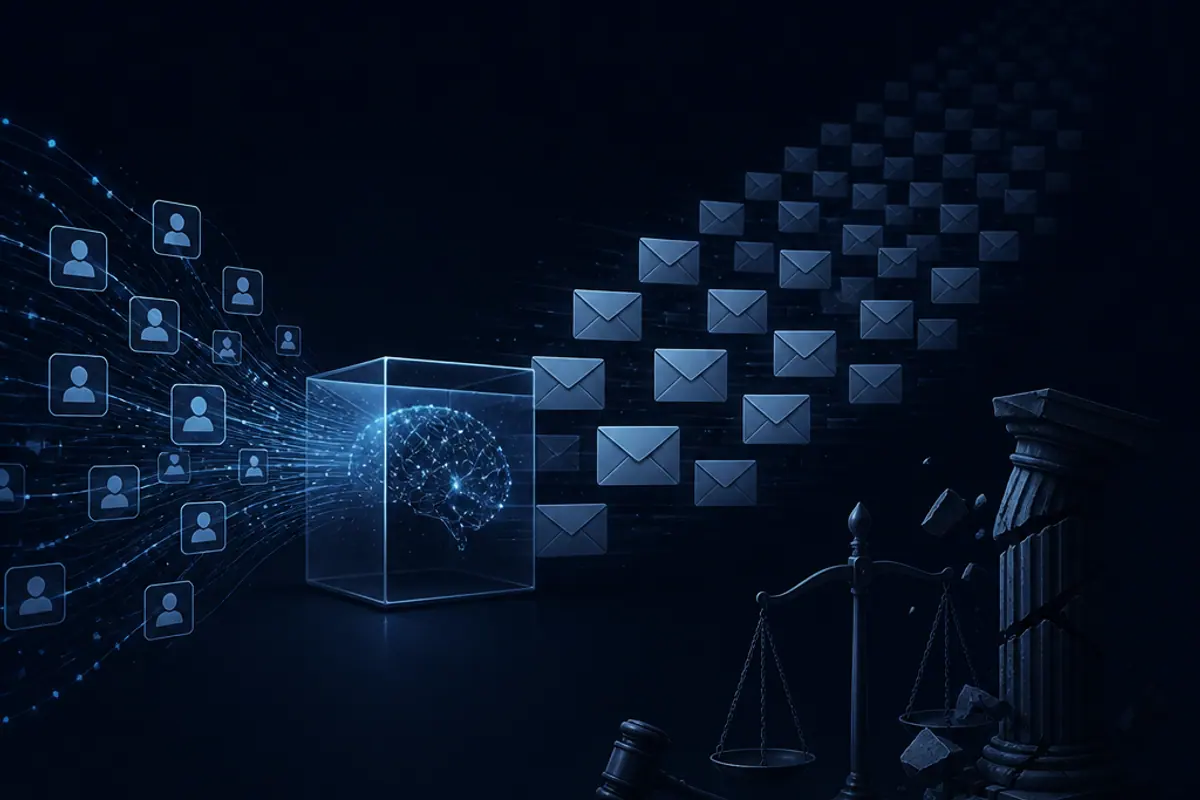
AI mass personalisation of cold email is the use of AI to scrape profile data and auto-generate individually tailored outreach at scale, and it's a legal disaster in the making because it typically relies on scraped personal data and industrial-scale messaging that fall foul of data protection and anti-spam law.
Marketing automation has evolved from simple mail merge to sophisticated AI systems that can craft thousands of individually personalized emails. These tools analyze LinkedIn profiles, extract personal details, and generate compelling outreach that appears hand-crafted whilst being systematically produced at industrial scale.
The technology is genuinely impressive - AI can now create email openings that reference specific career achievements, shared connections, and industry insights with remarkable sophistication. But beneath this technological marvel lies a compliance minefield that's catching businesses off-guard with devastating legal consequences.
The appeal is obvious: maintain authentic personalization whilst scaling outreach exponentially. The reality is more complex - each AI-generated email can trigger multiple legal violations simultaneously, creating systematic compliance exposures that compound with every message sent.
The New Frontier of Marketing Automation
Modern AI email personalization represents a quantum leap from traditional marketing automation. These systems don't just insert names into templates - they craft contextual narratives that demonstrate apparent understanding of individual recipients' professional situations.
The process typically involves LinkedIn profile analysis, where AI systems extract career history, recent activities, and professional interests. This data feeds sophisticated language models that generate opening paragraphs, value propositions, and call-to-action messages tailored to each recipient's apparent circumstances.
What makes this particularly powerful - and legally problematic - is the scale. Where traditional personalization might involve manual research for dozens of prospects, AI systems can process thousands of profiles simultaneously, generating unique content for each whilst maintaining consistent quality and messaging alignment.
The economics are compelling for businesses seeking to scale their outreach: significantly higher response rates compared to generic messaging, reduced manual effort in campaign development, and the ability to maintain personalization quality across large prospect volumes.
However, the legal framework surrounding this technology hasn't kept pace with its capabilities, creating a dangerous disconnect between what's technically possible and what's legally permissible.
The Multi-Layered Compliance Challenge
AI email personalization creates systematic legal exposures across multiple regulatory frameworks simultaneously, making compliance particularly complex:
Data Protection Violations
Every LinkedIn profile scraped for AI personalization represents potential data protection violations under GDPR, CCPA, and similar frameworks. These regulations require explicit consent for personal data processing, which automated profile scraping rarely obtains.
The sophistication of AI analysis can make violations more severe - extracting detailed personal insights from public profiles may constitute profiling activities that trigger additional regulatory requirements and consent obligations.
Anti-Spam Law Breaches
Sending thousands of AI-generated emails without explicit recipient consent violates anti-spam regulations globally. The personalization doesn't eliminate spam classification - it may make violations more serious by demonstrating systematic commercial messaging designed to evade detection.
The broader pattern of automated outreach systems often ignore fundamental consent requirements whilst focusing on technical sophistication, creating legal exposures that far exceed any business benefits.
Platform Terms Violations
The foundation of these systems - scraping LinkedIn profiles - directly violates platform terms of service. Each profile accessed represents a contract breach that could result in account termination, legal action, and damage claims from platform providers.
These violations aren't isolated incidents but systematic policy breaches that demonstrate intentional non-compliance with platform rules designed to protect user privacy and platform integrity.
Deceptive Practice Concerns
Creating false impressions of individual, personal outreach through AI-generated content may constitute deceptive business practices. When recipients believe they're receiving personally crafted messages that are actually systematically generated, this represents material misrepresentation about the nature of business communications.
The Industrial Scale Amplification Problem
Traditional marketing compliance violations typically affect limited numbers of recipients. AI personalization enables thousands of violations per campaign, multiplying legal exposure exponentially whilst creating evidence trails that demonstrate systematic rather than accidental non-compliance.
The automation documentation inherent in these systems - API calls, processing logs, template structures - creates comprehensive evidence of intentional large-scale legal violations that regulatory authorities can easily identify and prosecute.
Cross-jurisdictional campaigns compound these problems by triggering compliance obligations under multiple legal frameworks simultaneously. AI automation doesn't eliminate these obligations - it multiplies them across every jurisdiction where recipients are located.
The Sophisticated Deception Dilemma
The sophistication of modern AI personalization creates new categories of deceptive practices that traditional marketing compliance frameworks weren't designed to address:
False Relationship Implications: AI systems analyze public data to create personalized references that suggest genuine familiarity with recipients' professional circumstances. This manufactured intimacy may constitute fraudulent relationship representation.
Professional Knowledge Misrepresentation: When AI generates references to career achievements or industry connections, it creates false impressions about senders' actual knowledge of recipients' professional backgrounds.
Time Investment Illusions: Personalized emails suggest senders invested time understanding individual recipients. AI generation creates false impressions about the effort recipients received, potentially influencing response decisions unfairly.
Authenticity Fraud: The entire premise of personalized outreach - that senders have taken time to understand individual circumstances - becomes fraudulent when AI systems generate content automatically without human awareness of recipient situations.
Industry-Specific Regulatory Complications
Different sectors face unique compliance challenges with AI email personalization that compound general legal risks:
Financial Services: AI-generated financial service outreach may violate SEC marketing rules, FINRA communication standards, and consumer protection regulations requiring specific disclosure procedures.
Healthcare: Personalized healthcare marketing through AI may breach HIPAA provisions, FDA promotional regulations, and medical professional standards governing patient communications.
Legal Services: AI-generated legal service marketing may violate state bar rules about solicitation, advertising standards, and professional conduct requirements governing attorney communications.
Professional Services: Many professional sectors have specific rules about client acquisition, advertising practices, and communication standards that AI automation may inadvertently violate.
The Technical Implementation Compliance Gap
The technical processes for implementing AI email personalization create additional compliance vulnerabilities:
API Usage Violations: Using AI services for commercial email generation may violate provider usage policies if generated content constitutes spam or deceptive practices, risking service termination or legal action.
Data Processing Documentation: Regulations require detailed records of personal data processing activities. Most AI email implementations lack adequate documentation of data sources, processing purposes, or consent status.
Cross-Border Data Transfers: Processing profile data through AI services may involve international transfers requiring specific legal mechanisms that typical implementations don't include.
Vendor Compliance Requirements: Using AI platforms for commercial messaging creates vendor relationships requiring due diligence, data processing agreements, and ongoing compliance monitoring that organizations typically don't implement.
Building Responsible AI Personalization Frameworks
Rather than abandoning personalization benefits, organizations can develop compliant approaches that achieve similar objectives through responsible implementation:
Consent-First Personalization
Implement AI personalization systems that operate only with explicit recipient consent, using clear opt-in mechanisms and transparent disclosure about AI involvement in content generation.
Human-AI Collaboration
Use AI to enhance human-generated personalization rather than replacing human involvement entirely, maintaining human oversight and responsibility for all communications whilst leveraging AI efficiency.
Platform-Compliant Data Sources
Develop personalization approaches using official APIs and approved data sources rather than unauthorized scraping, ensuring compliance with platform terms whilst accessing necessary personalization data.
Transparent Automation Disclosure
Clearly communicate AI involvement in email personalization, allowing recipients to make informed engagement decisions whilst maintaining personalization benefits and legal compliance.
Industry-Specific Compliance Integration
Implement personalization systems addressing sector-specific regulatory requirements, ensuring compliance with professional standards and industry-specific legal obligations.
The Strategic Risk-Benefit Analysis
The business benefits of AI email personalization - improved response rates, scalable outreach, competitive advantages - must be weighed against systematic legal exposures that could result in:
The Compliance-Competitive Advantage Framework
Organizations developing compliant AI personalization capabilities will create sustainable competitive advantages based on legitimate relationship building and transparent communication practices.
The future belongs to businesses that achieve personalization benefits through responsible methods rather than those optimizing for short-term response rates whilst creating systematic legal liabilities.
This requires investment in legitimate relationship building, transparent communication practices, and compliance-integrated marketing systems that deliver personalization benefits without legal exposure.
Practical Implementation Guidelines
For organizations seeking to leverage AI personalization responsibly:
Conduct Legal Risk Assessment: Evaluate AI personalization tools against applicable regulations, platform terms, and industry standards before implementation.
Implement Consent Mechanisms: Develop clear opt-in processes for AI-powered personalization, ensuring recipients understand and approve AI involvement.
Maintain Human Oversight: Use AI to enhance rather than replace human judgment in personalization decisions, ensuring accountability and compliance responsibility.
Document Compliance Procedures: Maintain detailed records of data sources, processing purposes, consent status, and compliance monitoring activities.
Regular Compliance Auditing: Implement ongoing monitoring of AI personalization systems to ensure continued compliance as regulations and platform policies evolve.
The technology enabling AI email personalization is remarkable, but its power must be channeled through frameworks that respect legal boundaries and ethical standards. Organizations that master this balance will achieve both business success and regulatory compliance in an increasingly automated marketing landscape.
The sophistication of AI email personalization technology is undeniable, but so are the legal frameworks designed to protect individual privacy and prevent deceptive business practices. Organizations that recognize this reality and build compliant personalization capabilities will thrive in an increasingly regulated digital marketing environment.
Frequently asked questions
What is AI mass personalisation of cold email?
AI mass personalisation of cold email is the use of AI to analyse data such as LinkedIn profiles and automatically generate outreach emails that appear individually written for each recipient, produced at a scale no human team could match. The personalisation is systematic and automated rather than genuinely bespoke.
Is AI-personalised cold email legal?
It depends on how the personal data behind the personalisation was obtained and how the emails are sent. Scraping profile data without consent, and sending unsolicited commercial email without a lawful basis, both raise legal exposure under data protection and anti-spam law, regardless of how well-crafted the message appears.
Does personalising an email with AI count as spam?
Personalisation doesn't exempt an email from spam rules. Anti-spam law is concerned with consent and the nature of the communication, not how tailored the wording is, so an AI-personalised message sent without consent can still be unlawful spam.
How can businesses personalise outreach without the legal risk?
Using data sources recipients have knowingly shared, obtaining explicit consent before sending marketing messages, and disclosing when AI has been involved in drafting a message are the main ways to keep personalised outreach on the right side of the law.
Build compliant AI personalization strategies that deliver business results without legal exposure
This is the kind of work our responsible AI governance handles.

Sotiris Spyrou
Sotiris Spyrou is the founder of VerityAI, a Responsible AI advisory for boards and AI-deploying businesses. With 27 years across agencies and global in-house roles, including Global Head of SEO at Robert Half and Group Head of Search at Gamesys, he advises leaders on AI governance and risk, and on answer-engine visibility engineered without the dark patterns the rest of the industry is getting penalised for. He is the author of TRANSFORM, AI Moats, and Ethical AI.
Founder at VerityAI
Areas of Expertise: