AI Hallucinations: When Artificial Intelligence Creates Its Own Reality
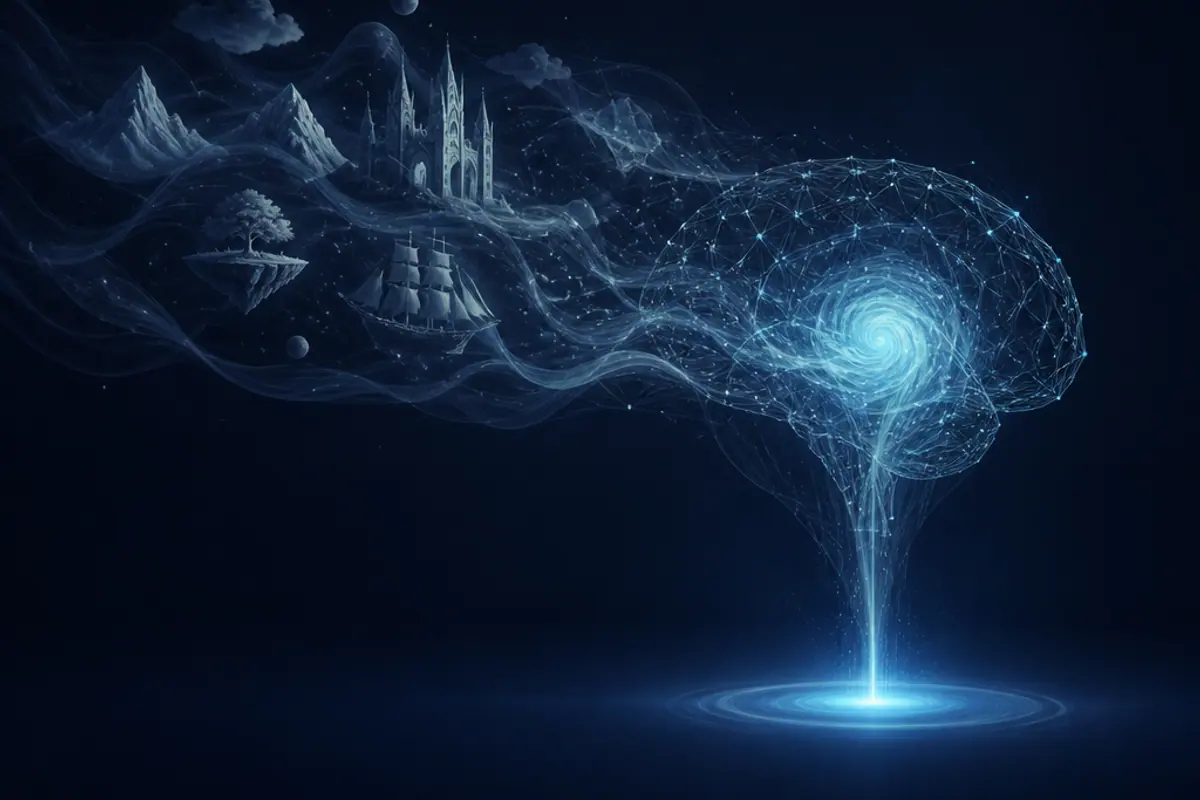
An AI hallucination is when an AI system generates false or fabricated information and presents it with the same confidence as accurate output, with no signal to the user that anything is wrong. This phenomenon represents one of the most significant risks facing organisations implementing these technologies. At VerityAI, we're increasingly concerned about the business implications of undetected AI hallucinations.
Understanding AI Hallucinations
AI hallucinations occur when systems generate content that appears plausible but is factually incorrect, misrepresented, or entirely fabricated. This isn't simple error - it's the AI confidently presenting information that has no basis in its training data.
Common examples include:
Generating fictional legal citations or research papers
Creating plausible but incorrect technical explanations
Fabricating historical events or biographical details
Inventing product specifications or company policies
The Business Impact of Hallucinations
For businesses, AI hallucinations create substantial risks:
Compliance Violations: When AI generates false regulatory information or guidance
Legal Liability: When AI provides incorrect advice that leads to harm
Customer Trust Erosion: When customers discover AI-generated information is unreliable
Operational Disruption: When decisions are based on hallucinated data or analysis
Root Causes and Detection Challenges
AI hallucinations stem from several technical issues:
Training Data Limitations: Models can't know what they weren't taught
Pattern Overextension: Systems applying patterns beyond appropriate contexts
Confidence Miscalibration: Models appearing certain about uncertain information
Prompt Sensitivity: Small changes in inputs leading to dramatically different outputs
What makes hallucinations particularly dangerous is that they're often difficult to detect without expert verification, especially in specialised domains where fact-checking requires specific knowledge.
The VerityAI Approach to Hallucination Risk
In our advisory work, we address hallucination risk through:
Systematic Testing: Probing AI systems with specially designed inputs that tend to trigger hallucinations
Output Verification: Comparing AI-generated content against verified knowledge bases
Confidence Analysis: Assessing whether a system's expressed confidence matches its actual accuracy
Domain-Specific Validation: Testing against field-specific facts and constraints
Mitigation Strategies
Organisations can reduce hallucination risks through:
Independent Validation: Regular testing by neutral third parties
Human-in-the-Loop Processes: Critical review points for high-stakes decisions
Continuous Monitoring: Ongoing tests as systems evolve and are updated
Transparent Documentation: Clear records of AI limitations and validation processes
Looking Forward
As AI systems become more embedded in business operations, hallucination detection and prevention will become increasingly critical components of responsible AI governance. Organisations that implement robust validation frameworks now will be better positioned to harness AI's benefits while avoiding its pitfalls.
Get in touch to discuss how independent advisory review can help your organisation detect and mitigate hallucination risks in your AI systems.
Frequently asked questions
What is an AI hallucination?
An AI hallucination is content generated by an AI system that appears plausible but is factually incorrect, misrepresented, or entirely invented. It differs from a simple error because the system presents the fabricated information with the same apparent confidence as accurate output.
Why are AI hallucinations hard to detect?
Hallucinations often read as fluent and well-structured, which makes them difficult to spot without domain expertise or independent fact-checking. In specialised fields such as law, medicine, or finance, this problem is worse because verification requires specific knowledge most users don't have on hand.
Can AI hallucinations be eliminated completely?
Current AI systems can't guarantee hallucination-free output, so the practical goal is detection and mitigation rather than elimination. Independent testing, human review at key decision points, and ongoing monitoring all reduce the risk without claiming to remove it entirely.
Who is responsible when an AI hallucination causes harm?
Responsibility depends on the context, but organisations deploying AI generally carry accountability for the outputs their systems produce, regardless of which vendor built the underlying model. This is why independent validation and clear human oversight matter before AI is used in decisions that affect customers or regulatory standing.
More on how we approach it: AI governance advisory.

Sotiris Spyrou
Sotiris Spyrou is the founder of VerityAI, a Responsible AI advisory for boards and AI-deploying businesses. With 27 years across agencies and global in-house roles, including Global Head of SEO at Robert Half and Group Head of Search at Gamesys, he advises leaders on AI governance and risk, and on answer-engine visibility engineered without the dark patterns the rest of the industry is getting penalised for. He is the author of TRANSFORM, AI Moats, and Ethical AI.
Founder at VerityAI
Areas of Expertise: