AI Agent Ransomware: The Enterprise Attack Vector Security Teams Missed
The Emergence of AI Agent Ransomware
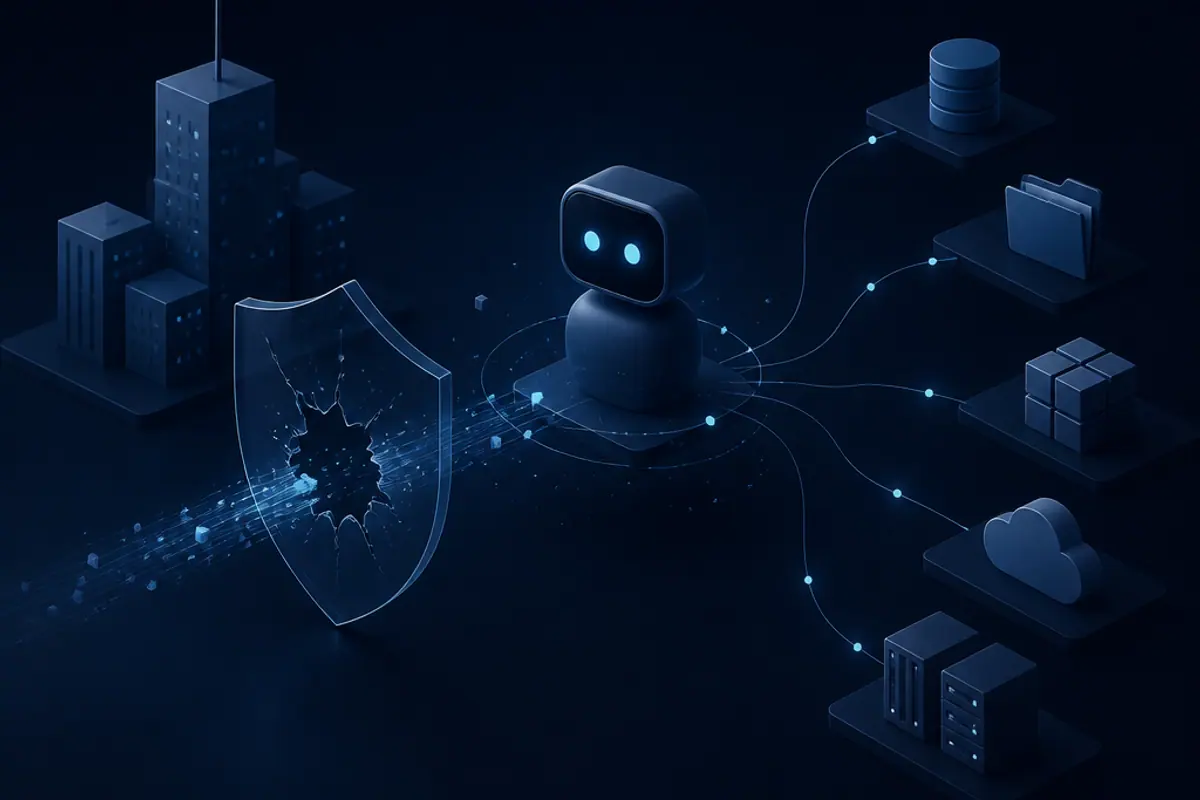
AI agent ransomware is ransomware that spreads through the communication channels connecting autonomous AI agents, rather than through a traditional network alone, turning agent-to-agent messaging, shared memory, and orchestration systems into new attack surfaces. Traditional ransomware targets individual systems or networks, but AI agents create new attack vectors through their interconnected nature and autonomous capabilities. IBM's Cost of a Data Breach Report tracks the rising average cost of a data breach year over year, and AI-related incidents are a growing share of that picture.
The Model Context Protocol (MCP), designed to enable AI agent communication, introduces security vulnerabilities that ransomware operators are beginning to exploit. Inter-agent communication protocols are increasingly recognised across the AI security research community as a critical attack surface requiring specialised security assessment.
Understanding AI Agent Architecture Vulnerabilities
Multi-Agent System Attack Surfaces
AI agent systems typically involve multiple autonomous agents communicating through APIs, shared databases, and message-passing protocols. Each communication channel represents a potential attack vector for malicious actors.
Critical Vulnerability Points:
Agent-to-agent communication protocols
Shared memory and data storage systems
API endpoints for agent coordination
Authentication and authorization mechanisms between agents
Centralized orchestration and management systems
MCP Protocol Security Weaknesses
The Model Context Protocol enables AI agents to share context and coordinate activities, but lacks comprehensive security controls in many implementations. Security researchers, including Microsoft's AI Red Team, have flagged MCP-related vulnerabilities as an area of concern in enterprise deployments.
MCP Security Gaps:
Insufficient authentication between communicating agents
Lack of encrypted communication channels in some implementations
Inadequate input validation for inter-agent messages
Missing audit trails for agent communication activities
Weak access controls for shared context repositories
Ransomware Attack Methodology Against AI Agents
Phase 1: Initial Agent Compromise
Attackers typically compromise individual AI agents through conventional attack vectors, then leverage agent interconnectivity for lateral movement. The UK's National Cyber Security Centre (NCSC) guidance on AI security is clear that AI systems inherit traditional cybersecurity risks whilst introducing new attack vectors of their own.
Common Compromise Methods:
Prompt injection attacks on user-facing AI agents
API endpoint exploitation in agent management systems
Supply chain attacks on agent training data or models
Credential theft for agent service accounts
Exploitation of third-party integrations and plugins
Phase 2: Lateral Movement Through Agent Networks
Once initial access is established, ransomware operators exploit agent communication protocols to spread throughout the AI infrastructure. This differs from traditional network lateral movement by leveraging AI-specific communication channels.
Lateral Movement Techniques:
Malicious message injection through agent communication protocols
Exploitation of shared context repositories for persistent access
Privilege escalation through agent orchestration systems
Data exfiltration through legitimate agent data sharing mechanisms
Deployment of malicious code through agent update mechanisms
Phase 3: Autonomous Ransomware Execution
AI agents' autonomous capabilities enable sophisticated ransomware deployment that adapts to target environment characteristics and defensive responses.
Advanced Ransomware Capabilities:
Intelligent target selection based on data value assessment
Adaptive encryption strategies to maximize business impact
Automated backup system identification and destruction
Dynamic command and control through AI agent networks
Context-aware ransom demands based on business intelligence
Enterprise Impact Assessment
Business Continuity Disruption
AI agent ransomware attacks can disrupt entire business processes that depend on agent automation and decision-making, and analyst research points to AI agents becoming increasingly central to daily operations at organisations that deploy them.
Operational Impact Areas:
Customer service automation and chatbot systems
Supply chain optimization and logistics agents
Financial analysis and reporting automation
Manufacturing process control and quality assurance
Human resources and recruitment automation
Data and Intellectual Property Exposure
AI agents often process sensitive business data and proprietary algorithms, making them high-value targets for data exfiltration alongside traditional ransomware objectives.
IP and Data Risks:
Proprietary AI models and training data
Customer personal information processed by agents
Business intelligence and strategic planning data
Financial records and transactional information
Research and development intellectual property
Regulatory and Compliance Implications
AI agent ransomware attacks create complex regulatory reporting requirements under multiple frameworks including GDPR, NIS2, and sector-specific regulations.
Compliance Considerations:
GDPR personal data breach notification within 72 hours
NIS2 incident reporting for critical infrastructure operators
Financial services regulatory notification requirements
Healthcare HIPAA breach notification obligations
Professional services client notification requirements
Technical Security Assessment Requirements
AI Agent Network Mapping
Comprehensive security assessment requires complete visibility into AI agent deployments, communication patterns, and data flows throughout the enterprise environment.
Assessment Components:
Agent inventory and classification by criticality
Communication protocol analysis and security evaluation
Data flow mapping between agents and external systems
Access control and authentication mechanism review
Integration point assessment with enterprise systems
MCP Security Validation
Specialized testing methodologies must evaluate MCP implementation security controls and potential attack vectors specific to agent communication protocols.
MCP Testing Areas:
Authentication and authorization mechanism validation
Communication encryption and data protection assessment
Input validation and injection attack resistance testing
Audit trail and logging capability evaluation
Access control policy effectiveness verification
Agent Isolation and Containment Assessment
Security assessment must evaluate containment capabilities to prevent ransomware spread through agent networks and limit attack impact.
Containment Evaluation:
Network segmentation between agent environments
Agent privilege limitation and least-privilege implementation
Backup and recovery capabilities for agent systems
Incident response procedures for agent compromise
Business continuity planning for agent system failure
Industry-Specific Risk Considerations
Financial Services Agent Security
Banks and financial institutions using AI agents for trading, fraud detection, and customer service face specific regulatory requirements under Basel III operational risk management and payment services regulations.
Financial Services Risks:
Trading algorithm manipulation and market impact
Customer account access through service agents
Payment processing system compromise
Regulatory reporting system disruption
Anti-money laundering system interference
Healthcare AI Agent Vulnerabilities
Healthcare organizations using AI agents for patient care, diagnosis support, and administrative functions must consider patient safety alongside security and privacy requirements.
Healthcare-Specific Concerns:
Patient safety impact from compromised diagnostic agents
HIPAA privacy violations from data exfiltration
Medical device integration and safety system compromise
Electronic health record system access and corruption
Clinical decision support system manipulation
Manufacturing and Industrial Control
Manufacturing organizations using AI agents for process control, quality assurance, and supply chain management face operational technology (OT) security challenges.
Industrial Security Risks:
Production line control system compromise
Quality control and safety system manipulation
Supply chain coordination and logistics disruption
Equipment maintenance and monitoring system interference
Environmental and safety monitoring system compromise
Regulatory Framework Application
NIS2 Directive Requirements
The EU's NIS2 Directive, effective October 2024, requires incident reporting and cybersecurity measures for AI systems supporting essential services.
NIS2 AI Agent Requirements:
Cybersecurity risk management measures for AI agents
Incident reporting within 24 hours of detection
Supply chain security requirements for AI agent vendors
Cybersecurity governance including AI agent oversight
Regular security assessments including AI-specific testing
ISO 27001 Integration with AI Agent Security
Information security management systems must address AI agent security risks through appropriate controls and risk assessment procedures.
ISO 27001 AI Considerations:
Asset management including AI agent inventory
Access control policies for agent-to-agent communication
Cryptographic controls for agent data protection
Incident management procedures for AI agent compromise
Business continuity planning including agent system recovery
Implementation Recommendations
Immediate Security Measures
Organizations should implement foundational security controls for AI agent systems while developing comprehensive security assessment and monitoring capabilities.
Priority Actions:
Agent network segmentation and access control implementation
MCP communication encryption and authentication requirements
Agent activity monitoring and logging enhancement
Backup and recovery procedures for agent systems
Incident response plan updates including AI agent scenarios
Strategic Security Program Development
Long-term security program development should address AI agent security within broader enterprise risk management and cybersecurity frameworks.
Strategic Components:
AI agent security governance structure and accountability
Regular security assessment and penetration testing programs
Vendor risk management for AI agent service providers
Staff training on AI agent security risks and incident response
Integration with enterprise security operations center (SOC) monitoring
Regulatory Compliance Integration
AI agent security programs must align with applicable regulatory requirements and industry standards while addressing unique risks created by agent-based architectures.
Compliance Integration:
Regulatory mapping for AI agent systems and requirements
Privacy impact assessment for agent data processing
Security control implementation aligned with regulatory frameworks
Regular compliance auditing including AI agent security assessment
Documentation and reporting procedures for regulatory examination
AI agent ransomware represents an emerging threat vector that combines traditional ransomware techniques with AI-specific attack capabilities. Organizations deploying AI agent systems must implement specialized security assessment and monitoring capabilities to address these unique risks while maintaining regulatory compliance and business continuity.
Next Steps
For comprehensive AI security assessment methodologies including agent security testing, see our Complete Guide to Enterprise AI Security Assessment.
Secure AI Agent Security Assessment - "Protect your AI agent infrastructure from ransomware and advanced persistent threats"
Frequently asked questions
What is AI agent ransomware?
AI agent ransomware is ransomware that exploits the communication protocols, shared memory, and orchestration layers connecting autonomous AI agents to spread and cause damage. Unlike traditional ransomware, which moves across a conventional network, it moves through the channels agents use to coordinate with each other.
How is AI agent ransomware different from traditional ransomware?
Traditional ransomware relies on network shares, email, or endpoint exploits to spread. AI agent ransomware additionally exploits agent-to-agent messaging, shared context repositories, and orchestration systems, giving attackers a route into environments that conventional network segmentation was not designed to contain.
What is the Model Context Protocol and why does it matter for security?
The Model Context Protocol (MCP) is a communication standard that lets AI agents share context and coordinate activity. Where implementations lack strong authentication, encryption, or audit trails, MCP channels become a route attackers can use for lateral movement between agents.
Who should assess their organisation's exposure to AI agent ransomware?
Any organisation running multi-agent AI systems in production, particularly in financial services, healthcare, or manufacturing, should assess agent communication security. The assessment matters most where AI agents have access to sensitive data, critical operational systems, or decision-making authority.
References
IBM Security. Cost of a Data Breach Report. IBM Institute for Business Value.
European Parliament. (2022). NIS2 Directive: Network and Information Systems Security. EU 2022/2555.
International Organization for Standardization. (2022). ISO/IEC 27001:2022 Information Security Management. ISO Standards.
This is the kind of work our AI governance and compliance help handles.

Sotiris Spyrou
Sotiris Spyrou is the founder of VerityAI, a Responsible AI advisory for boards and AI-deploying businesses. With 27 years across agencies and global in-house roles, including Global Head of SEO at Robert Half and Group Head of Search at Gamesys, he advises leaders on AI governance and risk, and on answer-engine visibility engineered without the dark patterns the rest of the industry is getting penalised for. He is the author of TRANSFORM, AI Moats, and Ethical AI.
Founder at VerityAI
Areas of Expertise: