AI Agent Platforms for Enterprise: The Evolution Beyond Simple Coding Assistants
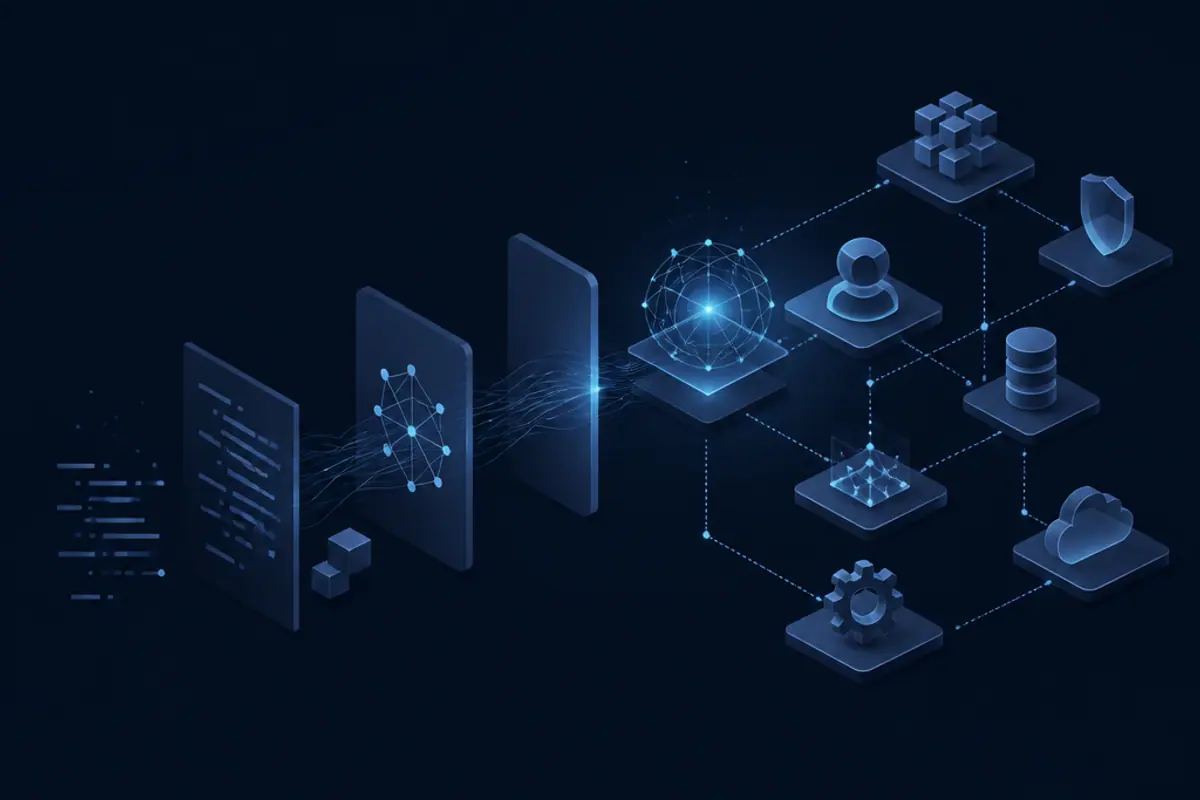
An AI agent platform is a system of specialised, coordinated AI agents that automate multiple stages of the software development lifecycle, such as coding, review, testing, and documentation, rather than assisting with a single task in isolation. The AI coding revolution is entering its second phase. While tools like GitHub Copilot and Cursor revolutionised code completion, a new generation of platforms is tackling the entire software development lifecycle. Factory AI's enterprise adoption reveals why sophisticated AI agent platforms are becoming essential infrastructure for serious development organisations.
The Limitation of First-Generation AI Coding Tools
Code Completion vs Complete Development
Traditional AI coding assistants excel at specific tasks:
Syntax completion and function generation
Individual file modifications with limited context
Developer-supervised workflows requiring constant oversight
Single-task focus without integration capabilities
However, enterprise software development involves far more than writing code. Developers spend a minority of their time actually writing code, with the majority focused on:
Understanding existing systems and dependencies
Planning and architectural decision-making
Code review and quality assurance processes
Documentation and knowledge management
Testing and deployment coordination
The fundamental limitation: First-generation tools optimise the smallest portion of the development process while ignoring the most time-consuming aspects.
Enterprise Requirements Drive Platform Evolution
The Factory AI Model: Specialised Agents for Complex Workflows
Factory AI's approach addresses enterprise complexity through specialised "droids" that handle distinct aspects of development:
Code Droid: Handles end-to-end feature development from requirements to implementation
Review Droid: Provides comprehensive code review with contextual insights
Documentation Droid: Generates and maintains system documentation automatically
Knowledge Droid: Creates design documents and architectural plans
Test Droid: Develops comprehensive testing strategies and implementations
Reliability Droid: Integrates with monitoring tools for incident response and resolution
This specialisation model reflects a crucial insight: enterprise development requires domain-specific expertise rather than general-purpose assistance.
Hybrid Local/Remote Execution: Enterprise Security Meets Scalability
One of Factory AI's key innovations addresses a critical enterprise concern: maintaining security while enabling collaboration.
Local Execution for sensitive work:
Code remains on developer machines
Security policies maintained within enterprise environments
Real-time collaboration without data exposure
Integration with existing development workflows
Remote Execution for scalable tasks:
Cloud-based processing for complex analysis
Parallel execution across multiple tasks
Resource-intensive operations without local limitations
Team collaboration through shared cloud environments
This hybrid approach allows enterprises to maintain security standards while accessing advanced AI capabilities - a requirement that simple coding assistants cannot address.
Real-World Enterprise Implementation: Lessons from Factory AI's Customers
Case Study Analysis: Enterprise Adoption Patterns
Factory AI's customer base includes established technology companies. Their implementation patterns reveal key insights:
Phase 1: Automation of Routine Tasks
Code review automation reduces cycle time
Documentation generation eliminates maintenance overhead
Bug triage and initial investigation become automated processes
Phase 2: Enhanced Developer Productivity
Product managers can create functional prototypes without engineering resources
Technical debt identification and remediation become systematic
Integration testing and deployment processes gain AI assistance
Phase 3: Workflow Transformation
Development focus shifts from implementation to architecture and planning
Quality assurance becomes embedded throughout the development process
Knowledge management transitions from manual to automated systems
Business Impact
Enterprise implementations report measurable improvements across engineering cycle time, code review effort, documentation maintenance, and bug detection speed. The pattern reflects the compound effect of automating multiple development lifecycle stages rather than optimising individual tasks in isolation.
Strategic Implications for Enterprise Technology Leaders
The Platform vs Point Solution Decision
Traditional Approach: Multiple specialised tools
GitHub Copilot for code completion
Separate documentation tools
Independent testing frameworks
Isolated code review systems
Platform Approach: Integrated AI agent ecosystem
Unified context across all development activities
Coordinated workflow automation
Consistent quality standards and practices
Reduced tool fragmentation and context switching
Enterprise Advantage: Platform approaches provide superior context preservation and workflow integration essential for complex business systems.
Investment and Implementation Considerations
Cost Structure Analysis:
Unified AI agent platforms typically price per developer per month, positioned to compete with the combined cost of a fragmented tool stack
Implementation overhead is generally reduced with unified platforms compared with maintaining several point solutions
ROI Calculation Framework:
Productivity improvements through development cycle acceleration
Quality improvements through reduced post-deployment issues
Resource optimisation through reduced routine task overhead
Knowledge management improvement through more current documentation
Risk Assessment and Mitigation
Technology Risks:
Vendor dependency on single platform provider
Integration complexity with existing enterprise systems
Security and compliance requirements for AI-generated code
Mitigation Strategies:
Gradual implementation with pilot projects
Maintain traditional development capabilities as fallback
Establish AI code review and validation processes
Implement comprehensive audit trails for compliance
Competitive Landscape Analysis
Factory AI vs Alternative Approaches
Comparison with Devin AI:
Factory AI: Enterprise-focused with proven customer implementations
Devin AI: Developer-focused with limited enterprise deployment
Comparison with GitHub Copilot Enterprise:
Factory AI: Complete lifecycle automation with specialised agents
GitHub Copilot: Advanced code completion within existing workflows
Comparison with Custom Internal Tools:
Factory AI: Immediate deployment with enterprise-grade capabilities
Custom Tools: Extended development time with uncertain outcomes
Strategic Positioning: Factory AI occupies the enterprise platform space between simple coding assistants and fully custom AI development solutions.
Implementation Roadmap for Enterprise Adoption
Phase 1: Assessment and Pilot (30-60 days)
Objective: Validate platform capabilities within existing workflows
Activities:
Identify pilot projects with measurable success criteria
Assess integration requirements with existing development tools
Establish baseline productivity and quality metrics
Train core development team on platform capabilities
Success Metrics:
Successful completion of pilot projects using AI agents
Positive developer feedback on workflow integration
Measurable improvements in pilot project outcomes
Phase 2: Controlled Rollout (60-120 days)
Objective: Expand usage across appropriate development teams
Activities:
Implement platform across 3-5 development teams
Establish governance frameworks for AI agent usage
Integrate with existing security and compliance processes
Develop internal best practices and training materials
Success Metrics:
Measurable improvement in development cycle times
Successful integration with enterprise security requirements
Positive impact on developer satisfaction and retention
Phase 3: Strategic Integration (120+ days)
Objective: Transform development workflows for competitive advantage
Activities:
Deploy across entire development organisation
Optimise workflows based on usage analytics and feedback
Establish advanced AI agent orchestration capabilities
Measure business impact and ROI realisation
Success Metrics:
Sustained productivity improvements across all teams
Demonstrable competitive advantages in time-to-market
Positive ROI on platform investment
Future Evolution and Strategic Positioning
The Trajectory Toward Autonomous Development
Factory AI's approach represents an intermediate step toward fully autonomous software development. Key evolution indicators:
Current State: AI agents handle routine tasks under human supervision
Near-term Future: AI agents coordinate complex multi-step development processes
Long-term Vision: AI systems manage entire feature development with minimal human intervention
Enterprise Preparation Strategy:
Develop AI agent collaboration capabilities within development teams
Establish governance frameworks that can scale with increasing automation
Maintain human expertise in system architecture and business requirements
Build competitive advantages through sophisticated AI workflow orchestration
Platform Ecosystem Development
Successful enterprise AI agent platforms will likely evolve toward:
Integration marketplaces for custom agent development
Industry-specific agent libraries for domain expertise
Enterprise compliance and governance tools for regulated industries
Advanced analytics and optimisation capabilities for workflow improvement
Strategic Recommendations for CTOs
Immediate Actions (Next 30 days)
Evaluate current development tool fragmentation and associated costs
Assess team readiness for AI agent collaboration workflows
Identify pilot project candidates with clear success metrics
Review security and compliance requirements for AI-generated code
Short-term Implementation (Next 90 days)
Launch structured pilot programs with Factory AI or similar platforms
Establish governance frameworks for AI agent usage
Train development teams on AI collaboration best practices
Measure baseline productivity metrics for ROI calculation
Strategic Positioning (Next 12 months)
Build competitive advantages through sophisticated AI workflow integration
Develop internal expertise in AI agent orchestration and management
Establish partnerships with leading AI platform providers
Create organizational capabilities for autonomous development adoption
The Competitive Imperative
Organisations that successfully implement AI agent platforms gain substantial competitive advantages in software development speed, quality, and innovation capacity. The question is not whether AI agents will transform enterprise development, but how quickly organisations can adapt to capture these advantages.
Factory AI's enterprise success demonstrates that sophisticated AI agent platforms are moving from experimental technology to essential infrastructure. Technical leaders who evaluate and implement these platforms now will be positioned to lead in the AI-augmented development era.
The future belongs to organisations that can orchestrate AI agents effectively while maintaining human expertise in architecture, strategy, and business requirements. The companies building this capability today will define competitive advantages for the next decade.
For organisations seeking guidance on AI agent platform evaluation and implementation, VerityAI's consultancy services provide assessment frameworks that align platform capabilities with enterprise requirements and strategic objectives.
In our advisory work on AI system development and validation, we help enterprises navigate the evolving landscape of AI development tools while maintaining quality standards and compliance requirements essential for business-critical systems.
As explored in our analysis of AI coding tool implementation challenges, successful adoption requires understanding both technical capabilities and organisational change management essential for sustainable transformation.
Contact us if you would like us to support your factory.ai workflow
For hands-on help, see VerityAI's AI adoption and transformation.
Frequently asked questions
What is an AI agent platform?
An AI agent platform is a coordinated system of specialised AI agents that each handle a distinct part of the software development lifecycle, such as writing code, reviewing it, generating documentation, or building tests. This differs from a single-purpose coding assistant, which typically supports one task within a workflow a developer still manages manually.
How is an AI agent platform different from a coding assistant like GitHub Copilot?
A coding assistant helps with code completion and suggestions within an existing workflow that a developer directs. An AI agent platform coordinates multiple agents across the wider development process, including planning, review, testing, and documentation, with less constant human direction at each step.
Does adopting an AI agent platform mean giving up human oversight of code?
No. A properly governed AI agent platform keeps humans responsible for architecture decisions, business requirements, and final approval of what gets shipped. The agents handle routine and repetitive parts of the lifecycle, freeing engineers to focus on judgement calls the platform is not designed to make.
What should an enterprise check before adopting an AI agent development platform?
An enterprise should check how the platform handles code security and data exposure, whether it integrates with existing development and compliance tooling, and whether it provides an audit trail sufficient for internal governance and any relevant regulatory requirements.

Sotiris Spyrou
Sotiris Spyrou is the founder of VerityAI, a Responsible AI advisory for boards and AI-deploying businesses. With 27 years across agencies and global in-house roles, including Global Head of SEO at Robert Half and Group Head of Search at Gamesys, he advises leaders on AI governance and risk, and on answer-engine visibility engineered without the dark patterns the rest of the industry is getting penalised for. He is the author of TRANSFORM, AI Moats, and Ethical AI.
Founder at VerityAI
Areas of Expertise: